

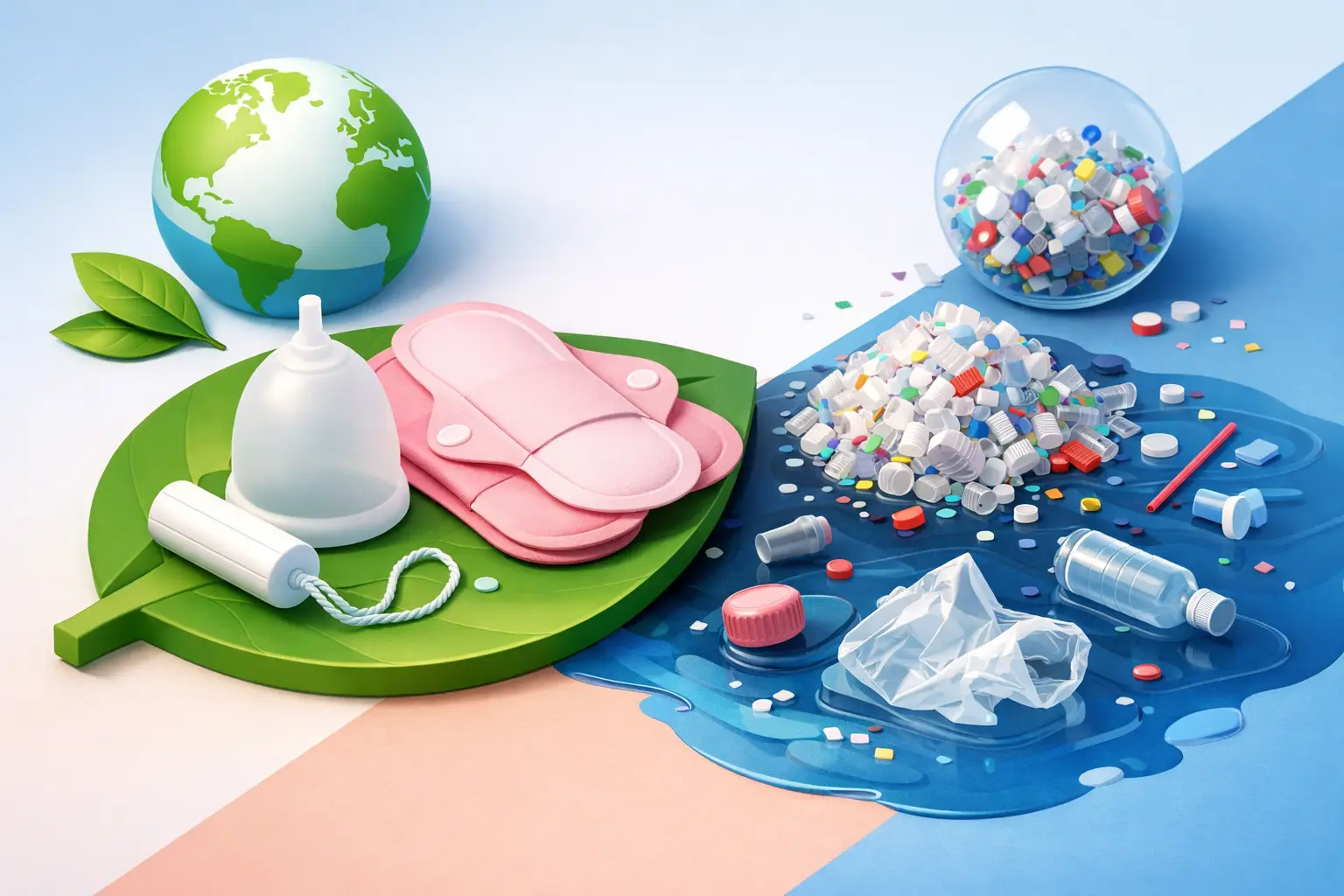
A period product sits close to your skin for hours at a time, often on the days when your body already feels more sensitive. That is exactly why more people are asking better questions about what their pads and liners are made from. Microplastic free period products are gaining attention not because they sound trendy, but because they speak to something practical – comfort, ingredient awareness and greater confidence in what touches your body every month.
What microplastic free period products actually mean
The term sounds simple, but it helps to be clear about it. Microplastics are tiny plastic particles, and in period care they can be linked to plastic-based materials used in top sheets, absorbent layers, back sheets or added fibres. Not every brand explains this well, which is where shopping can become frustrating.
When people look for microplastic free period products, they are usually trying to avoid unnecessary plastic exposure in the parts of the product that sit against the skin or form the body of the pad or liner. They are also often looking for a product that feels gentler, cleaner and more considered overall.
That does not always mean every single component of the full supply chain is plastic free. Packaging, adhesive strips or wrapper details can vary between brands. What matters is transparency. If a brand makes a clear claim, it should be able to explain what that means in practice.
Why more women are making the switch
For many women, the move starts with skin comfort rather than sustainability. If you have ever dealt with chafing, trapped heat, irritation or that not-so-fresh feeling after a long day, material choice matters. The wrong surface can leave skin feeling rubbed, damp or uncomfortable, especially during warmer weather, overnight wear or long shifts.
Microplastic free period products appeal to shoppers who read ingredient labels in other parts of their routine and want the same standard from period care. If you are careful about skincare, body care and what you use on sensitive areas, it makes sense to be just as selective with pads and liners.
There is also an environmental reason behind the shift. Traditional disposable period products often contain plastic-based elements that can take a long time to break down. While no disposable product is impact-free, choosing products made without microplastics can feel like a more thoughtful step for those trying to reduce plastic use where they can.
The comfort factor is not a small detail
When period care works well, you do not think about it much. You get on with school, work, commuting, errands or sleep without constantly checking for leaks, discomfort or odour. That is the standard most women want, and it is one reason materials matter so much.
A well-made microplastic free pad should still deliver on the basics that matter most – softness, dryness, flexibility and dependable absorbency. In fact, for many shoppers, the goal is not to trade performance for a better materials profile. It is to have both.
That is where design and product technology come in. Some brands now combine skin-conscious materials with features that support freshness and irritation reduction throughout the day. If a pad is marketed as better for sensitive skin but leaves you feeling damp or unprotected, it is not doing the full job. Real comfort means the product feels secure, breathable and dry enough to forget about for a while.
What to look for when comparing microplastic free period products
The first thing to check is whether the brand is specific. Vague claims such as natural, clean or eco-friendly can mean almost anything. A more trustworthy product description should clearly tell you whether the pad or liner is 100% microplastic free, and ideally explain how that supports comfort or skin feel.
Next, pay attention to claims around irritation and hygiene. Sensitive skin does not only react to fragrance or harsh ingredients. It can also react to friction, retained moisture and heat. A pad that stays drier for longer can make a noticeable difference, particularly on heavier days or overnight.
It is also worth looking for signs of testing or quality assurance. Claims such as clinically tested or designed for rash-free wear can offer extra reassurance, especially if you have had bad experiences with standard supermarket products before.
Absorbency still matters just as much as materials. A thin pad that shifts around, bunches up or fails during a busy day is not a better choice simply because it sounds cleaner on paper. The best microplastic free period products are the ones that manage to balance skin comfort with real-world reliability.
Are all period products with plastic equally problematic?
Not necessarily. This is where the conversation benefits from a bit of honesty. Some people want fully reusable options, some prefer disposables, and many use a mix depending on their routine, flow and comfort level. There is no single perfect answer for everyone.
Reusable products can reduce waste over time, but they are not always practical for every setting or life stage. Teens at school, women with long commutes, travellers, or anyone managing a heavy flow may prefer the convenience and reassurance of disposable pads. In those cases, choosing microplastic free period products can feel like a sensible middle ground – easier to use day to day, while still being more mindful about materials.
The key is to choose what works for your body and your lifestyle, without feeling pushed into a one-size-fits-all decision.
Microplastic free period products and sensitive skin
If your skin tends to react quickly, your period can make that feel worse. Hormonal changes, heat, friction and moisture can all add up. That is why skin-conscious period care is about more than softness alone.
A product designed for sensitive wear should help reduce the conditions that lead to discomfort. That means a surface that feels gentle, absorbent layers that do not leave you sitting in dampness, and construction that stays in place instead of rubbing throughout the day.
This is also why hygiene-led innovation matters. Features that support freshness and odour control can improve comfort in a very real way, especially when you are out for hours and need your product to keep up without fuss. At Elun, this thinking sits at the heart of product design, with 100% microplastic free period care paired with antibacterial nano ribbon technology to help support dryness, freshness and dependable daily comfort.
How to tell if a product is right for your routine
Think about when you need the most reassurance. For some, it is overnight. For others, it is during work, lectures, gym sessions or travelling. The right product is not only about what it avoids, but how well it performs in the moments you need it most.
If you mainly need daytime protection, a thinner pad or panty liner may be enough, provided it still feels secure and breathable. If your main concern is overnight coverage, longer pads with stronger absorbency are likely the better fit. If you are trying a new brand for the first time, sample packs can be useful because they let you test comfort and fit before committing to a larger pack.
This part matters because even the best material claim does not replace personal fit. Body shape, flow level and skin sensitivity all affect what feels right. A product can be beautifully made and still not be your favourite. That is normal.
Why this shift matters beyond one purchase
Choosing better period care is not about chasing perfection. It is about paying attention to something you use repeatedly and deciding that comfort, hygiene and material transparency are worth expecting, not just hoping for.
Microplastic free period products reflect a wider change in how women shop. There is less patience for vague promises and more interest in products that explain themselves clearly. If a pad claims to be gentler, shoppers want to know why. If it says it supports freshness, they want to understand how. That is a good shift. It raises the standard.
It also reframes period care as part of everyday wellbeing rather than a basic item you grab in a rush. The products you use during your cycle should help you feel protected, not distracted. Clean design, skin-conscious materials and dependable performance are not luxury extras. They are the new baseline many women expect.
If you have been thinking about switching, start with what matters most to you. Maybe that is reduced irritation. Maybe it is better dryness, a more thoughtful materials profile, or simply feeling more confident in the products you keep in your bag each month. Small changes in everyday essentials can have a surprisingly big effect on how comfortable you feel in your own skin.