

A period pad used for a few hours can stay in the environment for far longer than most of us ever see. That is one reason why is microplastic bad for the environment has become such an urgent question. For anyone trying to make safer, more thoughtful choices for their body and the planet, microplastics are not a distant issue. They are tied to the products we use every day, the water around us, and the waste we leave behind.
Microplastics are tiny plastic particles, usually smaller than 5 millimetres. Some are manufactured at that size, while others come from bigger plastic items breaking down over time. The problem is not just that plastic lasts. It is that it does not disappear in the way many people assume. It fragments into smaller and smaller pieces, spreading through rivers, seas, soil, air and living systems.
Why is microplastic bad for the environment in real terms?
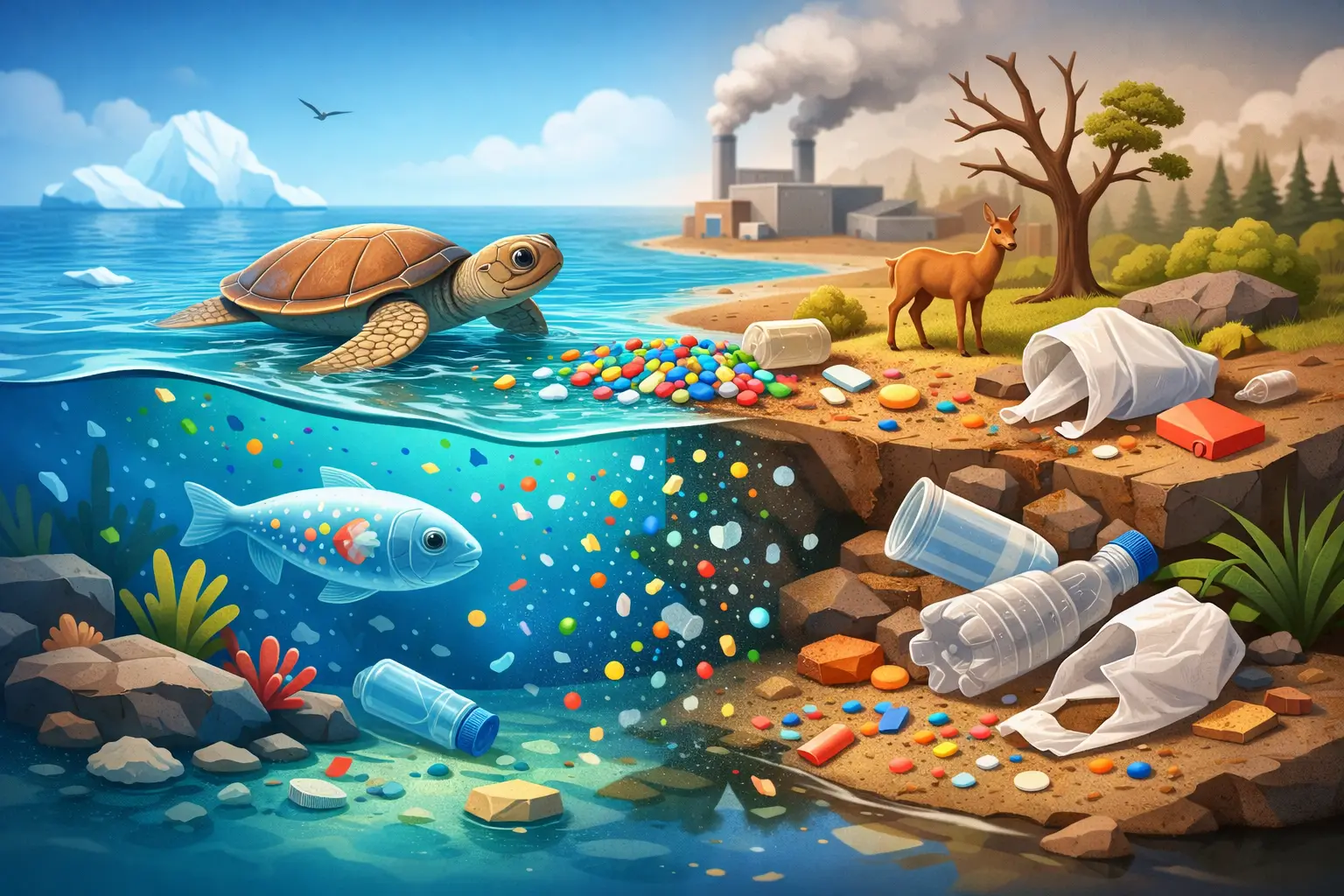
The simplest answer is that microplastic pollution moves easily, persists for a very long time and is extremely hard to clean up. Once these particles enter the environment, they can travel through waterways, settle into farmland, wash onto beaches and be eaten by animals at multiple levels of the food chain.
That persistence matters. A material that lingers for decades creates repeated exposure. A plastic wrapper, synthetic fabric fibre or disposable product does not stop being a problem once it is thrown away. It often becomes many smaller problems instead.
There is also a scale issue. Microplastics come from tyres, packaging, textiles, cleaning products, industrial waste and some personal care and hygiene items. That means pollution is not limited to one sector or one visible source. It builds quietly, from millions of routine actions.
Harm to wildlife and marine life
One of the clearest reasons microplastic is bad for the environment is the pressure it puts on wildlife. Fish, birds, shellfish and small marine organisms can mistake plastic particles for food. Once ingested, those particles may block digestion, reduce appetite or create internal stress.
For smaller organisms, the effects can be especially serious because a tiny amount of plastic represents a much bigger burden relative to body size. When those organisms are eaten by larger animals, the problem moves up the food chain. That does not mean every species is affected in exactly the same way, but it does mean the reach of microplastic pollution is unusually broad.
The damage is not always dramatic or immediate. Sometimes it shows up as slower growth, weaker reproduction or reduced survival rates over time. Those quieter effects can still disrupt ecosystems. When key species struggle, the balance of a habitat can shift.
Water pollution that keeps circulating
Water is one of the main ways microplastics spread. Rain can wash plastic fragments from streets into drains and rivers. Wastewater can carry synthetic fibres shed during washing. Larger plastic waste in lakes and seas gradually breaks into smaller pieces under sunlight and friction.
This is part of what makes the issue so frustrating. Water systems do not respect neat boundaries. Pollution released in one place can end up somewhere else entirely. Even where treatment systems remove some particles, not all are captured.
The result is a cycle that keeps circulating. Microplastics move through rivers into oceans, settle into sediment, resurface, and continue travelling. Cleaning them out once they are dispersed is far harder than preventing them at source.
Soil health matters too
When people think about plastic pollution, they often picture the sea first. But soil is increasingly part of the conversation. Microplastics can enter agricultural land through sewage sludge, litter breakdown, compost contamination and atmospheric fallout.
Healthy soil is alive with organisms that support plant growth, nutrient cycling and water retention. If microplastics alter that environment, the impact can spread beyond the ground itself. Research is still developing, and not every effect is fully understood yet, but there is growing concern that plastic particles may interfere with soil structure and the organisms that keep it functioning properly.
That uncertainty is not a reason to ignore the issue. It is a reason to take it seriously earlier, especially when environmental systems are already under pressure from climate change, chemical pollution and habitat loss.
Why tiny particles can carry bigger risks
Another reason why is microplastic bad for the environment is that these particles can interact with other pollutants. Plastic can attract and carry certain chemicals on its surface. In some cases, that may increase the way contaminants move through water or into organisms.
This area is complex, and scientists are still working through the full picture. The effects depend on the type of plastic, the surrounding environment and the species exposed. Still, the broader concern is clear enough: microplastics are not just inert litter. They can behave like mobile pollutants.
That matters because environmental harm rarely happens in isolation. Wildlife and ecosystems are already dealing with changing temperatures, habitat disturbance and chemical exposure. Microplastics add another layer of stress.
Everyday products play a bigger part than many people realise
For eco-conscious shoppers, one uncomfortable truth is that microplastics are often built into convenience. Many disposable and synthetic products rely on plastic layers, coatings or fibres because they are cheap, flexible and widely available. That includes products designed for hygiene and personal care.
There is a trade-off here. People need reliable, comfortable protection, especially during their period, and no one should be made to feel guilty for prioritising health and practicality. But it is also reasonable to ask what materials are being used and what happens after disposal.
That is where better design matters. Choosing products made with more thoughtful materials can reduce the plastic footprint attached to everyday routines. For brands in feminine care, this is not simply a sustainability talking point. It is part of building trust with customers who care about what touches their skin and what ends up in the wider environment.
What makes microplastic so difficult to solve?
The challenge is not only the amount of plastic being produced. It is also the way microplastics are embedded in daily life. They come from visible waste, but also from invisible shedding and wear. A synthetic top, a car tyre, a cleaning sponge or a disposable hygiene product can all contribute in different ways.
Because the particles are so small, they are difficult to monitor consistently and difficult to remove once released. That means solutions have to happen at multiple levels – product design, manufacturing, waste systems and consumer choice.
It also means there is no perfect single fix. Replacing one material with another only helps if the alternative genuinely performs better across use, disposal and environmental impact. Some substitutes sound greener than they are. Others offer real progress but may cost more or require wider infrastructure changes.
Why material transparency matters in personal care
For many women and menstruating consumers, shopping for period care is already a balance of comfort, absorbency, leak protection, skin sensitivity and price. Adding sustainability to that list can feel like one more thing to decode. Clear material information helps make that easier.
If a product contains plastic-based layers or components, consumers deserve to know. If it is designed to reduce plastic use, that should also be stated clearly and honestly. Confidence comes from transparency, not vague eco claims.
This is one reason 100% microplastic free period care stands out. It speaks to a growing expectation that hygiene products should support both personal wellbeing and more responsible material choices. At Elun, that focus sits naturally alongside comfort, freshness and protection, because safer-feeling care should not stop at performance.
Small choices are not small at scale
No individual purchase will solve plastic pollution. But repeated choices across millions of households shape demand. When more people look for low-plastic or microplastic-free options, brands and manufacturers pay attention.
That shift can lead to better product development, clearer labelling and stronger standards. It can also help normalise the idea that convenience should not automatically come wrapped in long-lasting plastic.
Progress is rarely instant. Some categories are easier to improve than others, and affordability remains part of the conversation. But asking better questions is a strong place to start. What is this product made from? How long will it last in the environment? Is there a lower-impact option that still meets my needs?
Microplastics are bad for the environment because they stay, spread and interfere – with wildlife, water, soil and the natural systems we all rely on. The encouraging part is that awareness is turning into action, and everyday essentials are part of that change. When comfort, hygiene and material care come together, better choices feel less like a compromise and more like the standard they should have been all along.