

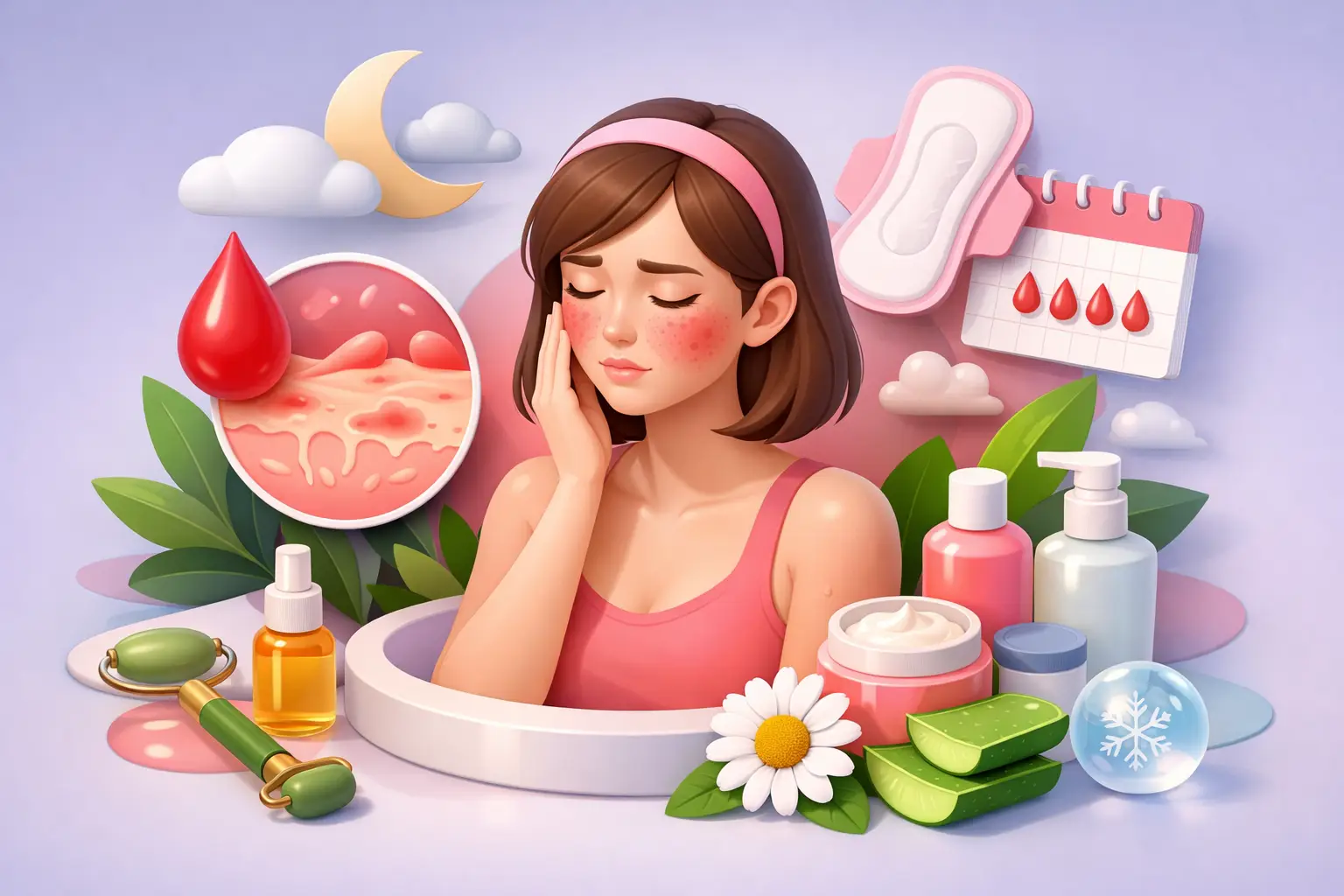
One month your usual routine feels fine. The next, your skin suddenly stings, feels hot, or comes up in a rash just as your period starts. If you deal with sensitive skin during period days, you are not imagining it. Hormonal shifts, friction, heat, moisture and the wrong materials can all make skin feel far more reactive than usual.
That change can show up in different ways. For some, it is itching around the bikini line or vulva. For others, it is redness on the inner thighs, a feeling of soreness where a pad sits, or skin that becomes easily irritated by products that normally cause no problem at all. The good news is that period-related sensitivity is common, and in many cases, it can be managed with a few smart changes.
Why sensitive skin during period happens
Your skin does not stay the same throughout your cycle. In the days leading up to and during your period, oestrogen levels drop. That matters because oestrogen helps support skin hydration and barrier function. When levels fall, skin can become drier, thinner-feeling and less resilient.
At the same time, the period itself creates a tougher environment for delicate skin. Blood, sweat and heat can sit close to the body for hours. Add movement from walking, exercise or simply getting through a busy day, and friction increases. If your period care product traps moisture, feels rough, or does not breathe well, that discomfort can build quickly.
There is also the issue of sensitivity stacking. Skin may already be more reactive because of shaving, tight clothing, fragranced washes, or existing conditions such as eczema. During your period, those small irritants can feel much bigger.
Common signs your period care might be irritating your skin
Not every bit of discomfort is a sign of a serious problem, but your skin usually tells you when something is off. You might notice itching that starts after a few hours of wear, redness where the pad edges rub, a warm or burning sensation, or little bumps where sweat and friction collect. Some people describe it as a nappy-rash type feeling, especially on heavier days or overnight.
If symptoms improve once your period ends or when you switch products, that is a strong clue that your skin is reacting to the environment around your period rather than to an infection or another ongoing condition.
That said, it depends on the symptoms. If you have unusual discharge, a strong persistent odour, broken skin, swelling, or pain that feels deeper than surface irritation, it is worth speaking to a pharmacist, GP or sexual health professional.
The biggest triggers to watch
For many people, the problem is not one single cause. It is the combination of moisture, heat and contact with materials that do not suit their skin.
Fragrance is a common culprit. Products that smell floral or heavily perfumed may seem fresher, but scent can irritate already-sensitive skin. Harsh surface materials can also be a problem, especially if you wear a pad for several hours. If the top layer feels scratchy or plastic-like, rubbing may increase as the day goes on.
Breathability matters too. Skin that stays damp is more likely to become sore. On heavier flow days, this can happen faster, especially if absorbency is not doing its job well. Fit plays a role as well. A pad that shifts, bunches or feels bulky creates more movement against the skin.
Even good hygiene habits can backfire if they are too aggressive. Over-washing, using scented intimate washes, or wiping repeatedly with fragranced tissue can strip the skin barrier further.
How to calm skin when your period starts
If your skin is already irritated, keep things simple. Wash with lukewarm water or a very gentle, unfragranced cleanser made for sensitive skin. Pat dry rather than rubbing. If you can, give the area a little air at home by wearing loose cotton underwear and avoiding tight leggings for a while.
It also helps to change your pad regularly. Even an absorbent product needs swapping often enough to keep the surface feeling dry and clean. Leaving any pad on for too long can increase dampness and rubbing, especially on warm days, while travelling, or overnight if your product is not designed for longer wear.
Try not to throw lots of new products at the problem all at once. A soothing barrier cream may help on the outer skin for some people, but it depends on the formula and where the irritation is. Avoid applying random creams internally or using strong antiseptic products unless a healthcare professional has advised it.
Choosing the right products for sensitive skin during period days
This is where small differences in product design can make a real difference. If your skin reacts easily, look for pads that prioritise softness, dryness and hygiene without unnecessary extras. A product can be thin and discreet, but still protective. In fact, bulky does not always mean better if it increases heat and rubbing.
Materials matter. A microplastic-free design can appeal to shoppers who want a gentler-feeling option and are also thinking about what sits against their skin for hours at a time. Clinically tested claims can offer extra reassurance, especially if you have had repeated irritation before.
Freshness matters as well, but not in the perfumed sense. Hygiene-led features that help reduce odour by controlling moisture and bacteria are often a better fit for sensitive users than simply masking smells with fragrance. That is one reason brands such as Elun focus on antibacterial protection and rash-free comfort. The aim is not just to absorb flow, but to create a drier, cleaner feel that helps skin stay calm for longer.
If you tend to flare up at night, pay attention to your overnight option too. Longer wear hours mean more chance for friction and warmth to build, so a night pad should feel secure without feeling heavy, stiff or sweaty.
Everyday habits that make a noticeable difference
The basics are not glamorous, but they work. Breathable cotton underwear can reduce trapped heat. Changing out of gym wear quickly helps if you are active on your period. If you shave or wax, consider timing it so freshly sensitised skin does not line up exactly with the start of your period.
It is also worth checking your laundry products. Strongly fragranced detergent can leave residue in underwear and add another layer of irritation at the worst time of the month. A gentler detergent is often a smarter choice if your skin is already reactive.
Stress and lack of sleep can affect how inflamed and uncomfortable your body feels overall, including your skin. They will not cause pad rash on their own, but they can make sensitivity feel harder to manage.
When it might be more than period sensitivity
Sometimes what looks like sensitive skin during period days is actually something else. Thrush, contact dermatitis, eczema, psoriasis and bacterial imbalance can all overlap with period-related irritation. If the same rash keeps coming back every month, it is worth paying attention to patterns.
Ask yourself when it starts, where it shows up, and whether it changes when you switch products. Irritation on the inner thighs may point more towards friction. A reaction only where the pad touches the skin may suggest a material issue. Persistent itching that continues after your period has finished may need medical advice.
There is no prize for putting up with discomfort. Skin that feels sore, itchy or inflamed is a sign that something in your routine needs adjusting.
A more comfortable period is possible
You should not have to choose between protection and comfort. If your skin becomes reactive every month, the answer is often a better combination of gentle care, breathable clothing and period products designed with sensitive skin in mind. Dryness, softness and hygiene are not nice-to-haves when your skin is struggling – they are the difference between getting through the day and constantly thinking about your pad.
Pay attention to what your skin is telling you. The more consistently you choose materials and products that support comfort, the easier it becomes to feel fresh, protected and confident all the way through your period.