

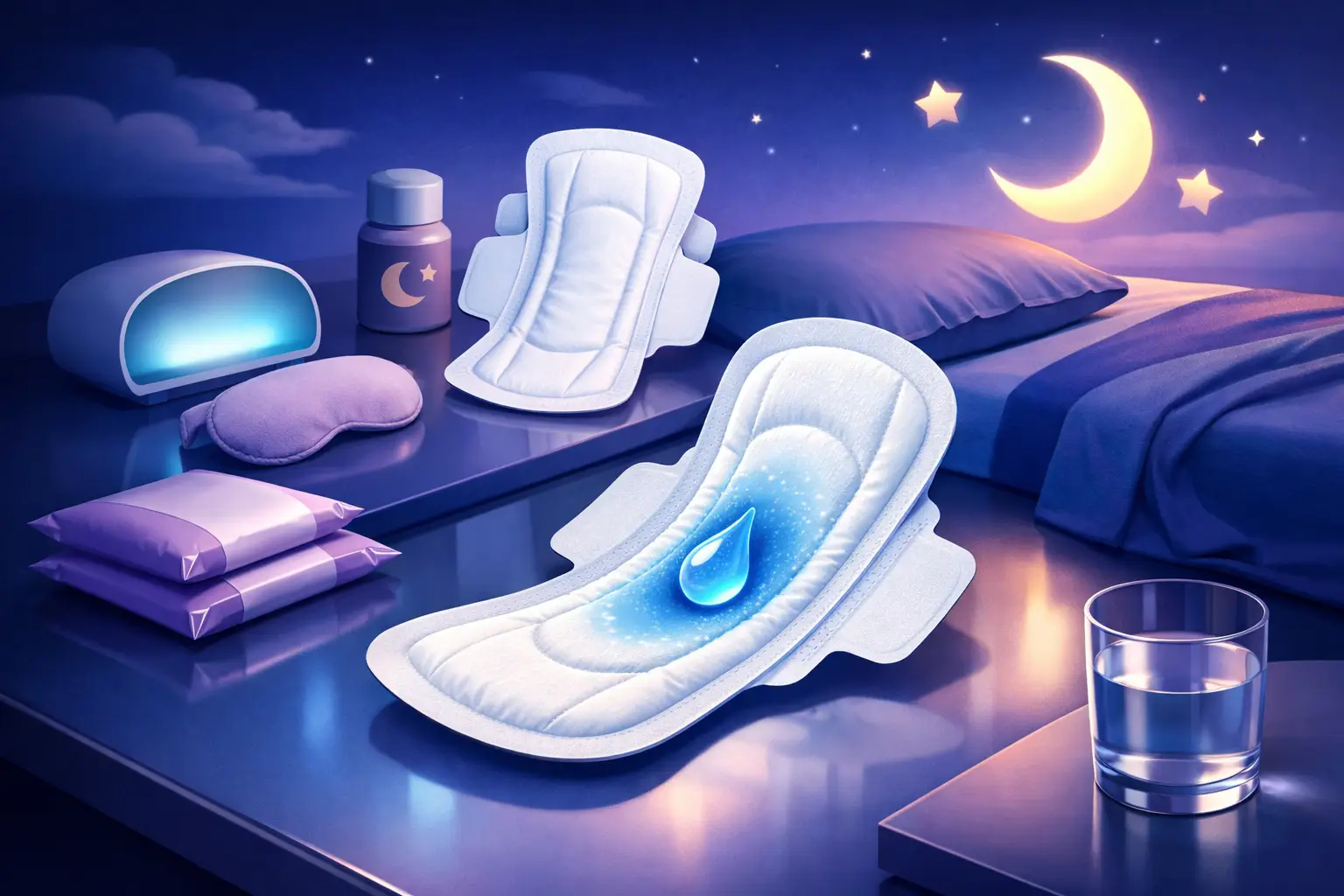
A night pad can look long, feel soft and promise high absorbency, yet still leave you waking up worried about leaks. That is why a useful night pad absorbency review needs to look beyond the words on the pack. Overnight protection is about how quickly fluid is taken in, where it is held, how the pad stays in place and how your skin feels after hours of wear.
For many people, nights are when period care has to work hardest. You are lying down, changing position and wearing the same pad for longer than you would during the day. The right choice should help you sleep comfortably, not make you feel bulky, damp or anxious about the sheets.
What night pad absorbency really means
Absorbency is not simply the total amount of fluid a pad can hold. In real life, performance comes down to three connected jobs: taking fluid in quickly, drawing it away from the surface and locking it into the core.
A pad with a slow top layer can feel wet even if its core has plenty of capacity. One that absorbs well in the centre but has limited coverage at the back may be less dependable when you sleep on your back. And a very thick pad is not automatically more protective if it bunches, shifts or leaves gaps around your underwear.
The best overnight pads balance fast absorption with a dry-feeling surface and generous coverage. This matters most on heavy-flow nights, but it also makes a difference when your flow is lighter and you simply want to wake up feeling fresh.
Fast intake helps prevent pooling
Fluid often arrives in a more concentrated rush when you first lie down, turn over or get up in the morning. A night pad should move that fluid through the top sheet rather than allowing it to sit on the surface.
When fluid pools, it can travel towards the edges, increase the chance of side leakage and create the clammy feeling that makes sleep uncomfortable. A quick-drying top layer is therefore not a minor extra. It is a core part of overnight confidence.
A secure core keeps protection working
Once fluid has entered the pad, the absorbent core needs to retain it under pressure. Your body weight, your sleeping position and normal movement can all press against the pad. If the core does not hold fluid securely, rewet can leave the surface damp.
This is where a pad’s construction matters more than marketing terms such as ‘super absorbent’. Look for clear reassurance around dryness, leakage protection and extended wear, rather than relying on thickness alone.
Night pad absorbency review: the features worth comparing
When comparing night pads, start with your own flow and sleeping habits. A pad that is ideal for a moderate-flow night may not provide enough reassurance on your heaviest night. Equally, the largest option may feel unnecessary or restrictive when your flow is slowing down.
Length is one of the first details to check. Overnight pads are usually longer than regular pads because coverage needs to extend further towards the back. This added length is particularly useful if you sleep on your back or move around a lot. It should feel protective without becoming stiff or uncomfortable.
Wings matter too. Well-positioned wings help anchor the pad around your underwear, reducing the chance of the pad folding or sliding as you turn. Strong adhesion can be helpful, but it should not make changing the pad frustrating or damage delicate underwear.
Then consider shape. Some people prefer a wider rear section for back-sleeping coverage, while others prioritise a flexible shape that follows the body. There is no universal winner. The right design is the one that remains flat, secure and comfortable through the night.
Finally, look at surface comfort. Overnight wear gives materials more time against your skin. If you are prone to irritation, heat or rashes, a dry, breathable-feeling surface and skin-conscious material choices can be as important as absorbency capacity.
Why sensitive skin changes the decision
A pad can protect your bedding and still be the wrong fit if it leaves your skin sore or uncomfortable. Friction, trapped moisture and prolonged contact with irritating materials can all make periods feel harder than they need to.
For sensitive skin, aim for a pad that supports a dry feeling for longer and avoids unnecessary harshness. Microplastic-free options may also appeal to people who are more mindful about what sits against their skin and the wider impact of disposable period care.
Elun night pads are designed around this balance of protection and comfort, with antibacterial nano ribbon technology that supports freshness, odour control and extended dryness. For someone who regularly wakes up feeling damp or irritated, that focus can be more meaningful than simply choosing the thickest pad on the shelf.
Antibacterial technology is not a replacement for changing pads regularly or following your normal personal hygiene routine. It can, however, offer added reassurance during an overnight wear period, when freshness and comfort matter most.
How to test whether a night pad works for you
A genuine review happens over more than one night. Your flow changes during your cycle, and a pad that performs well on a lighter evening should also be assessed on the night when you normally need the most protection.
Pay attention to how the pad feels when you first put it on, whether it stays centred overnight and how dry the top surface feels in the morning. Check the edges and back of your underwear for signs that fluid has travelled beyond the absorbent area. These details tell you more than whether there was a complete leak.
It is also worth noticing whether you slept differently. Did you wake up to adjust the pad? Did you avoid lying in your usual position? Did the pad feel noisy, bulky or too warm? Reliable protection should allow you to rest normally, rather than making you manage your period all night.
If you are testing a new product, a smaller pack can be a sensible place to begin. It lets you judge fit, comfort and performance without committing to a large supply. Once you know what works for your cycle, larger packs can make everyday preparation easier.
Common reasons night pads leak
Not every overnight leak means the pad has poor absorbency. Fit and timing can play a part. A pad may shift if it is too narrow for your underwear, if the wings are not secured evenly or if the knickers are loose enough to let the pad move as you turn.
Positioning matters as well. If you tend to leak towards the back while lying down, placing the pad slightly further back can improve coverage. This is a simple adjustment, but it can make a noticeable difference.
On exceptionally heavy nights, changing into a fresh night pad just before bed is usually wiser than wearing a pad that has already been used for several hours. If you consistently soak through a night pad very quickly, experience unusually heavy bleeding or have concerns about a change in your normal period pattern, speak with a healthcare professional.
Choosing protection that lets you switch off
The strongest night pad is not necessarily the longest, thickest or most heavily advertised. It is the one that absorbs quickly, stays dry against your skin, covers the areas you need and remains secure while you sleep.
Give yourself permission to choose differently for different nights of your period. A dependable overnight routine can be as simple as matching your pad to your flow, wearing well-fitting underwear and choosing materials that leave your skin feeling comfortable by morning. When your protection feels right, bedtime can go back to being just bedtime.