

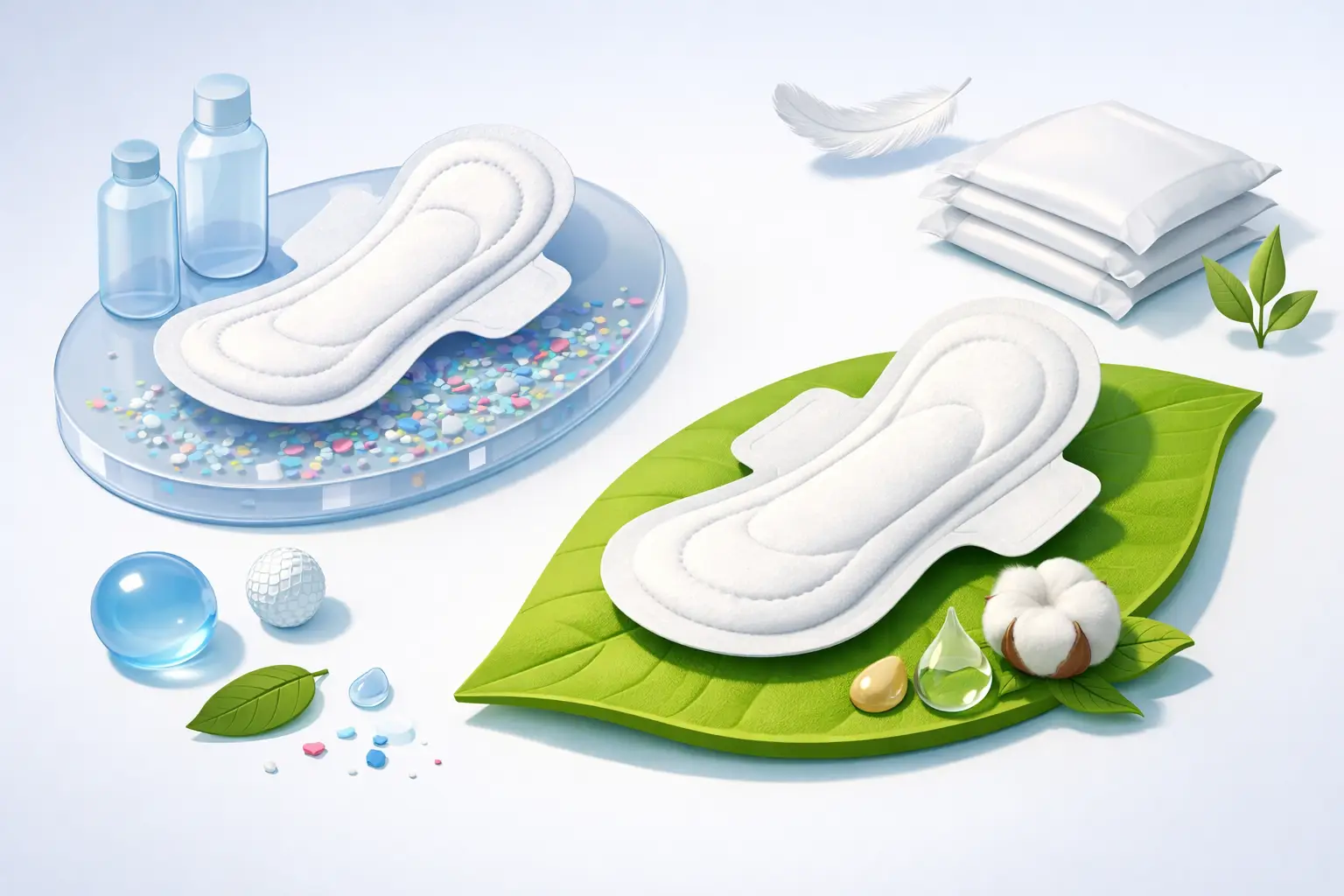
A period pad sits against one of the most sensitive areas of your body for hours at a time. That is why choosing microplastic free sanitary pads can feel like a small change with a very personal impact. For many people, it is about reducing contact with unnecessary plastic materials while still expecting the essentials: dependable absorption, a dry feel, secure fit and the confidence to get through a full day.
The right pad should never make you choose between comfort and protection. It should move with you at school, at work, on the commute, during exercise and while you sleep. Material choices matter, but so does how the pad performs when real life is busy.
What does microplastic free mean for sanitary pads?
Microplastics are tiny plastic particles that can be intentionally added to products or created as larger plastic materials break down over time. In period care, plastic can appear in different layers, including the topsheet, backsheet, wrappers, adhesives or absorbent components. Because pad construction varies widely, a pack that simply looks natural or uses words such as pure and gentle does not automatically mean it is microplastic free.
Microplastic free sanitary pads are designed without microplastics in the pad itself. This gives ingredient-conscious shoppers a clearer option when they want to reduce their reliance on plastic-based materials in everyday intimate care.
It is worth reading product information closely. A clear brand should explain what its claim covers rather than relying on vague green language. Look for straightforward details about the materials used, the purpose of each layer and the testing or quality standards behind the product.
Why material choice matters during your period
The skin around the vulva is delicate and can be more prone to discomfort when it is exposed to friction, heat and moisture. A pad that feels rough, traps dampness or shifts throughout the day can leave you feeling irritated and distracted, especially on heavier days.
Choosing considered materials is not a guarantee that every person will have the same experience. Skin sensitivities differ, and irritation can also be linked to fragrance, detergents, sweat, tight clothing or an existing skin condition. Still, a soft, breathable-feeling pad with a dry surface can make a meaningful difference to daily comfort.
For people who regularly experience rubbing or a rash-like feeling during their period, it can help to simplify your routine. Change pads regularly, choose a size that suits your flow, wear breathable underwear where possible and avoid heavily fragranced products if you know your skin reacts to them. If irritation persists, becomes painful or concerns you, speak to a pharmacist, GP or sexual health professional.
Comfort and protection should work together
A lower-plastic material choice only works if the pad also performs when you need it to. No one wants to spend the day worrying about leaks, bunching or whether they need to find the nearest loo.
A dependable sanitary pad needs to absorb fluid quickly, draw moisture away from the surface and hold it securely in the core. The wings should help the pad stay in place without digging in, while the shape should flex with your body rather than feel stiff under clothing. For night-time, length and back coverage become even more important because movement changes when you sleep.
At Elun, microplastic-free period care is paired with antibacterial nano ribbon technology, designed to support freshness, odour control and extended dryness. It is a practical approach to a familiar problem: feeling protected for longer without having to accept an uncomfortable, bulky pad.
The best choice depends on your flow and your plans. A slim pad may be ideal for the final days of a period or for carrying discreetly in a handbag. A more absorbent daytime pad can offer reassurance during meetings, lessons and travel. Night pads are built for longer wear and broader coverage, while panty liners can be useful for lighter days, spotting or everyday freshness. Using the right format is often more effective than trying to make one pad work for every moment of your cycle.
How to choose microplastic free sanitary pads with confidence
Start with the claim, then look beyond it. A well-made pad should be transparent about more than one feature. The material story matters, but so do comfort, fit, absorbency and how the product feels after several hours of wear.
Consider the topsheet first. This is the layer closest to your skin, so softness and dryness are key. If you are prone to sensitivity, seek products that are designed with skin comfort in mind and avoid assuming that a thinner pad is automatically gentler. Thin pads can be excellent, but the surface, absorbent core and flexibility all shape the experience.
Next, think about your typical flow. If your period starts lightly and becomes heavier on day two or three, a mix of pad sizes may be more useful than buying a single large pack. A small trial pack can help you test the fit and feel before committing, particularly if you are changing from a product you have used for years.
Finally, pay attention to the details that make periods easier to manage. Individually wrapped pads are useful for your school bag, desk drawer or holiday luggage. Secure wings help when you are moving around. A pad that stays dry and comfortable can give you one less thing to think about when your day is already full.
A realistic view of sustainability
Microplastic-free pads can be part of a more considered period routine, but they are not the only sustainability question worth asking. Packaging, sourcing, manufacturing, disposal and how many products you use across a cycle all play a role.
There is also no single period product that suits everyone. Reusable options may work well for some people, while disposable pads remain the most practical choice for others because of access to laundry, travel, time, comfort or personal preference. The most sustainable routine is often the one you can use consistently and comfortably, without compromising your wellbeing.
If disposables are right for you, choose only what you need and follow local disposal guidance. Sanitary pads should not be flushed, even when a product is marketed with environmental benefits. Wrapping and binning them correctly helps protect plumbing and waterways.
Small changes that make period care feel better
A more comfortable period routine is usually built from simple habits rather than complicated rules. Keep a few spare pads in the places you spend time, so you are never caught out. Change your pad when it feels damp, full or uncomfortable rather than waiting for a set number of hours. And choose underwear that gives the pad a secure, smooth base.
It can also be helpful to track your cycle for a few months. Once you know which days are heaviest, when cramps usually begin and what type of protection you prefer overnight, you can prepare with less stress. This is especially useful for teens finding their rhythm, people with unpredictable cycles and anyone returning to periods after pregnancy or a change in contraception.
Your period products should support your life, not interrupt it. Choosing microplastic free sanitary pads with soft comfort, reliable absorbency and thoughtful hygiene features is a simple way to feel more at ease in your body, whatever the day has planned.