

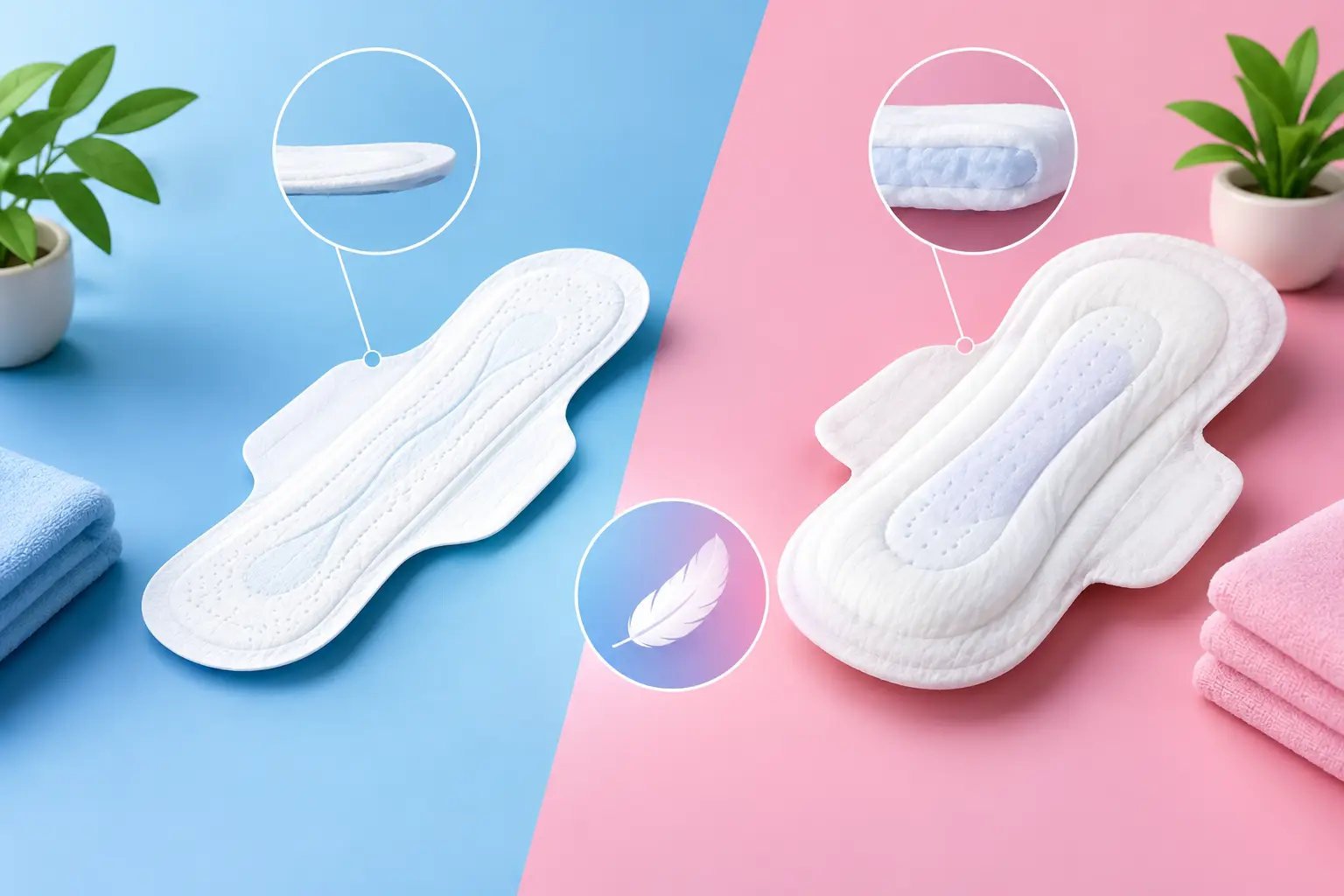
A pad should not dictate how you sit at your desk, move through a workout or sleep at night. Yet when comparing ultra thin pads versus thick pads, it is easy to assume that more bulk must mean more protection. In reality, the right choice comes down to your flow, your routine and how your skin feels after hours of wear.
Modern ultra thin pads are designed to absorb quickly while staying flexible and discreet. Thicker pads can still be reassuring for heavier days or overnight use, particularly if you prefer the feeling of a more substantial layer. The best pad is the one that helps you feel dry, protected and comfortable enough to forget it is there.
Ultra thin pads versus thick pads: the real difference
The visible difference is straightforward. Ultra thin pads sit closer to the body and are made to feel light under underwear, leggings, school uniform or workwear. Thick pads have more noticeable cushioning and may feel more structured when worn.
What is less obvious is that thickness alone does not tell you how much fluid a pad can manage. Absorbency depends on the design of the core, how quickly liquid is drawn away from the surface, and how evenly it is held inside the pad. A well-designed thin pad can offer dependable daytime protection without feeling bulky.
That said, no single style is right for every moment of your period. A light-flow day spent commuting, working or travelling calls for something different from a heavy night, when you may be lying down for several hours and want wider coverage and extra reassurance.
Why ultra thin pads are a favourite for daytime
For many people, ultra thin pads are the easier everyday choice because they move with the body. They can feel less noticeable when you are walking between meetings, sitting in class, exercising gently or wearing fitted clothes. Their slim profile also makes them simple to carry in a handbag, coat pocket or wash bag.
Comfort is not only about thinness, though. The top layer matters just as much. If moisture stays against the skin, even a slim pad can begin to feel damp, warm or irritating. Look for a pad that pulls fluid away quickly and helps the surface feel dry between changes.
For sensitive skin, materials and hygiene features deserve attention too. Friction, trapped moisture and prolonged wear can all contribute to discomfort. Choosing a clinically tested, microplastic-free option with a skin-conscious design can make your period routine feel more considered, especially if you are prone to irritation.
Ultra thin pads are especially useful when your flow is light to moderate, or when you need reliable protection without the sensation of wearing a thicker product. They can also be a practical choice at the beginning or end of your period, when a panty liner may feel too light but a fuller pad feels unnecessary.
Thin does not mean less secure
A common concern is that a thinner pad will leak more easily. This is understandable, but it is not automatically true. Security comes from the whole construction: the absorbent core, leak barriers, adhesive backing, length and wing shape all play a part.
The key is to match the pad to your flow. If you regularly soak through a pad quickly, move up to a higher absorbency or change more often rather than relying on one product for the whole day. Even the most absorbent pad works best when it is changed at sensible intervals.
When thicker pads make more sense
Thicker pads still have a place, and there is no prize for choosing the thinnest option if it does not make you feel secure. Some people prefer the added cushioning of a thicker pad during a heavier flow. Others find it more reassuring at night, when changing is less convenient and movement can shift the way fluid is absorbed.
Night pads are often longer and wider at the back, giving better coverage when lying down. That shape can matter more than overall thickness. If overnight leaks are a concern, choose a pad made specifically for sleep rather than simply doubling up on a daytime style.
A thicker pad may also suit you on your heaviest day if you know you cannot easily take a break to change. This could be during an exam, a long shift, a journey or an event. Comfort is personal, and feeling protected can be more valuable than a barely-there fit in those moments.
The trade-off is that bulkier pads can feel warmer or less flexible, especially in close-fitting clothing. If you notice rubbing, dampness or a pad that bunches as you move, it may be worth trying a high-absorbency thin design or a different shape with wings.
How to choose the right pad for your flow
Start with the part of your period you are shopping for, not the product category alone. Your needs can change from morning to evening and from day two to day five.
For lighter days, choose a slim pad or liner that feels breathable and stays in place. For regular daytime flow, an ultra thin pad with wings often balances discretion and protection well. For heavier days, prioritise absorbency, a fast-drying surface and side barriers. At night, look for extra length and rear coverage so you can rest with more confidence.
It also helps to consider your usual clothing. A pad that feels excellent with loose trousers may feel different under gym leggings or fitted jeans. If discretion is a priority, ultra thin pads are usually the more comfortable option. If your main concern is maximum reassurance during a particularly heavy flow, a more absorbent or overnight pad may be the better fit.
Keeping a small mix of products at home or in your bag can remove the pressure to make one pad do every job. A mini pack is useful for trying a new style before committing, while a combination of daytime and night pads means you can adjust as your flow changes.
Freshness, dryness and skin comfort matter too
A pad can be absorbent and still not feel good against your skin. Freshness is closely linked to how quickly fluid is moved into the core and how well the pad manages moisture over time. Odour can also become more noticeable when fluid and warmth are held close to the body for too long.
Changing regularly is one of the simplest ways to support comfort and hygiene. It is also worth choosing pads that are gentle on skin and made without unnecessary materials. If you have experienced rashes or irritation, avoid treating discomfort as something you simply have to put up with. Try a different pad style, change more frequently and speak to a healthcare professional if irritation persists.
Elun’s antibacterial nano ribbon technology is designed to support freshness, odour control and a drier feel, while its microplastic-free pads are made with sensitive-skin comfort in mind. These details matter because period care should provide protection without asking your skin to compromise.
The choice is allowed to change
Ultra thin pads versus thick pads is not really a question of which one is universally better. It is a question of what helps you feel most comfortable at a particular point in your cycle. A slim pad may be perfect for a busy weekday, while a longer, more protective option earns its place on a heavy night.
Pay attention to how a pad feels after a few hours, not just when you first put it on. When your protection stays dry, fits your life and treats your skin kindly, you have found a better way to move through your period with confidence.