

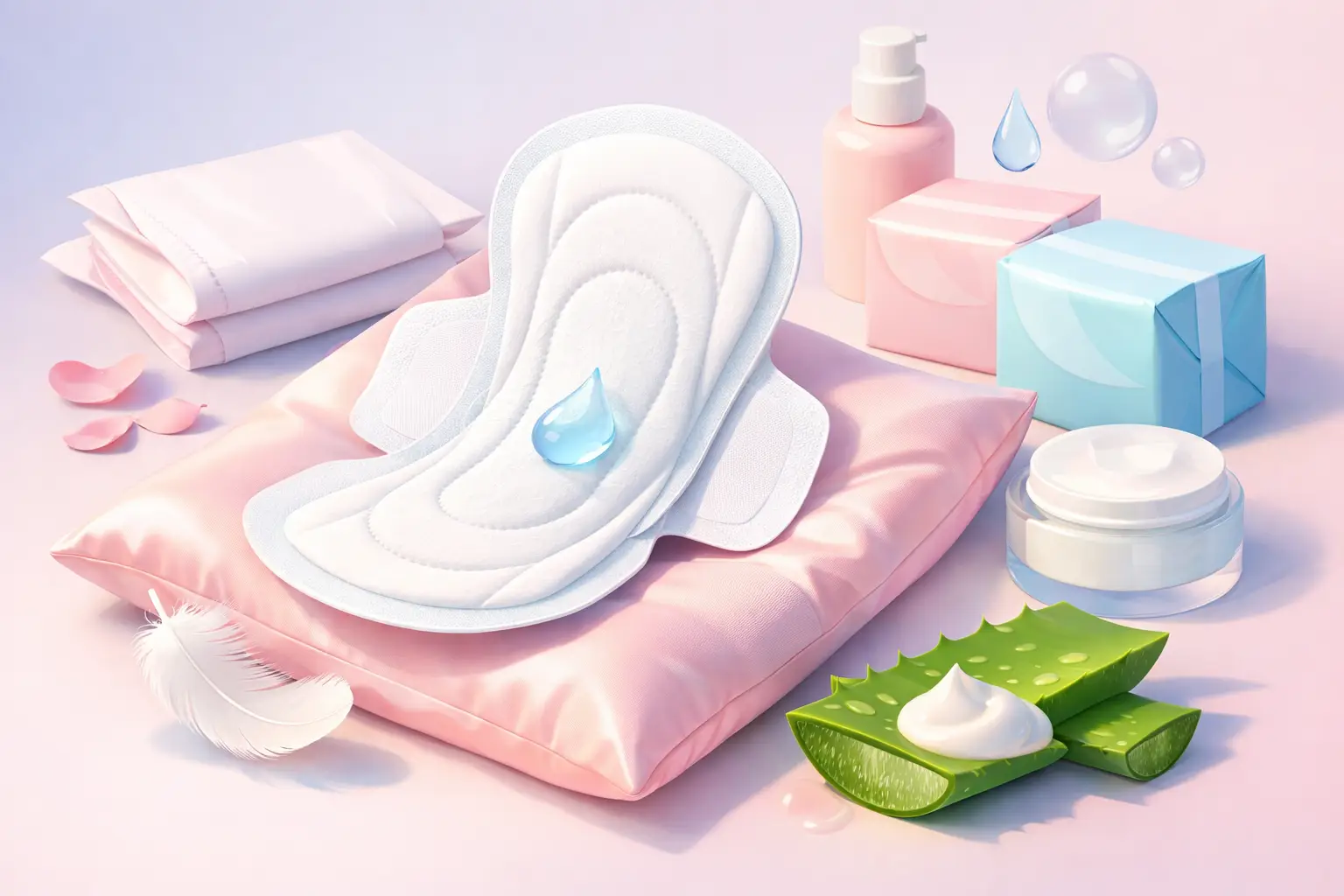
If your pad leaves you feeling sore, itchy or overly aware of every movement, it is not just a minor annoyance. For many people, sensitive skin period pads are the difference between getting through the day comfortably and counting the hours until you can change. When your skin is already more reactive during your period, the wrong materials, trapped moisture and friction can quickly turn a normal cycle into days of irritation.
That is why choosing a pad for sensitive skin is not really about softness alone. It is about how the whole product works against the things that usually trigger discomfort – heat, dampness, rubbing, odour build-up and prolonged contact with the skin. A pad can look slim and still feel harsh after a few hours. Another can feel cushioned at first but become clammy over time. Comfort comes from performance, not just texture.
What makes skin react during your period?
Sensitive skin tends to be less forgiving when the area is warm, covered and exposed to moisture for long periods. During your period, that combination is hard to avoid. The skin around the vulva is delicate to begin with, and repeated contact with a pad can create friction that shows up as redness, stinging or a rash-like feeling.
The issue is not always your flow or even the frequency of changes. Sometimes it is the pad itself. Synthetic-feeling top sheets, poor breathability and designs that hold moisture close to the skin can all make irritation worse. Fragrance can also be a problem for some people, especially if they already deal with sensitivity in skincare or intimate care products.
This is where the details matter. A pad designed for sensitive skin should help keep the surface drier, reduce rubbing and avoid unnecessary harsh components. It should also stay secure without becoming stiff or bulky, because movement is another common cause of rubbing and discomfort.
How to choose sensitive skin period pads
The best sensitive skin period pads usually share a few key traits. First, they are gentle where it matters most – on the surface that sits against your skin for hours. Second, they manage moisture well, because dryness is often what helps prevent that sticky, overheated feeling that leads to irritation. Third, they offer reliable absorbency so you are not forced to compromise between comfort and protection.
Material choice matters too. More shoppers now look for products that are clinically tested and free from unnecessary extras. Microplastic-free construction is also becoming a bigger priority, especially for people who care about what touches their body as much as what ends up in the environment.
There is also a hygiene piece that often gets overlooked. When a pad stays fresher for longer, it can help reduce the unpleasant dampness and odour that make many people want to change before the pad is actually full. That matters on long workdays, school runs, commuting days and nights when uninterrupted sleep is the goal.
Why dryness and freshness matter for sensitive skin
A lot of irritation starts with moisture sitting too close to the skin. Even if your flow is not especially heavy, a pad that feels wet on the surface can create a warm, humid environment that does your skin no favours. Add walking, sitting, exercise or simply a busy day, and friction increases.
That is why freshness is not just a nice extra. It is part of skin comfort. Pads that are built to support odour control and reduce surface wetness can feel more comfortable for longer, especially if your skin tends to react by the second or third day of your cycle.
This is one reason some women move away from standard supermarket options and look for products with more considered hygiene technology. Elun, for example, focuses on antibacterial nano ribbon technology to support freshness, reduce odour and help maintain a drier feel through the day and night. For sensitive skin, that kind of design can make a real difference because it addresses the conditions that often lead to discomfort rather than simply covering them up.
The trade-off between thinness and protection
Most people want a pad that feels discreet under clothes and does not bunch up while walking. Thin pads are often more comfortable in that sense, but thinness on its own is not enough. If a slim pad lacks absorbency or shifts around, sensitive skin can end up dealing with more rubbing and more frequent changes.
The ideal balance is a pad that bends with your body while still giving reliable protection. For lighter days, a liner or lighter pad may feel best because there is less bulk. For heavier flow or overnight use, you may need more coverage, but that should not mean accepting a thick, plasticky feel.
This is where trying different formats really helps. Many people do not use the same product every day of their cycle, and they should not have to. A pad that feels perfect on day four may not be enough on day one. Sensitive skin often benefits from matching the product to the flow so the area stays as dry and comfortable as possible.
Night-time comfort needs a different approach
Night can be the hardest time for sensitive skin because you are wearing one product for longer and changing position repeatedly while asleep. If your pad traps heat or does not keep moisture away from the skin, you are more likely to wake up feeling uncomfortable even if there was no leak.
A good night pad for sensitive skin needs to do two jobs at once. It should give extended absorbency and wider protection, but it also needs to stay breathable and comfortable enough for hours of wear. Longer length, secure fit and a dry-feeling top layer matter more here than extra bulk.
If you ever wake up with irritation but no obvious reason, your overnight pad is worth reconsidering. People often blame hormones alone, when the real issue is a product that cannot keep up with longer wear time.
What teens and first-time buyers should look for
For teens, comfort can shape confidence more than anything else. If a pad feels obvious, causes itching in class or leaves skin irritated after PE, period care quickly becomes stressful. Sensitive skin period pads for younger users need to feel simple, secure and discreet, without sacrificing protection.
Smaller pack sizes can help here because they make trying a new product less of a commitment. Sample packs are especially useful when someone is still figuring out flow patterns, preferred pad shapes and what their skin tolerates best. It is a practical way to build trust in a product before moving on to larger packs.
The same goes for adults who have used one brand for years but are starting to notice more irritation than they used to. Skin can change. What worked in your late teens may not suit you in your thirties, after pregnancy, or during periods of stress and hormonal shifts.
Signs your current pad may be the problem
If your skin feels relieved the moment you remove your pad, pay attention to that. Itching, heat, chafing, recurring redness and a damp feeling after only a short time can all point to a product mismatch rather than a one-off bad day.
Leaks can be another clue. Not only because they are inconvenient, but because a pad that does not fit your body or flow properly can move around and create extra friction. That constant adjustment against the skin often gets dismissed as normal, but it does not have to be.
A better product should help you feel less aware of it. That is usually the simplest sign you have found the right fit – your day is not organised around your pad.
Comfort, hygiene and peace of mind should work together
The best period care does not ask you to pick one benefit and give up the rest. You should not have to choose between skin comfort and absorbency, or between hygiene and a more conscious material choice. Sensitive skin deserves products that feel gentle, protect properly and support everyday confidence at the same time.
When you are comparing options, look past the front-of-pack promises and think about how a pad will actually perform across a real day – walking, sitting, commuting, sleeping, rushing, and forgetting about your period for an hour because everything still feels fine. That is what good period care should do.
If your current routine leaves your skin irritated, it may be time for a change that feels less like coping and more like care. The right pad should help you feel dry, comfortable and sure of yourself from morning to night, which is exactly how period protection ought to feel.