

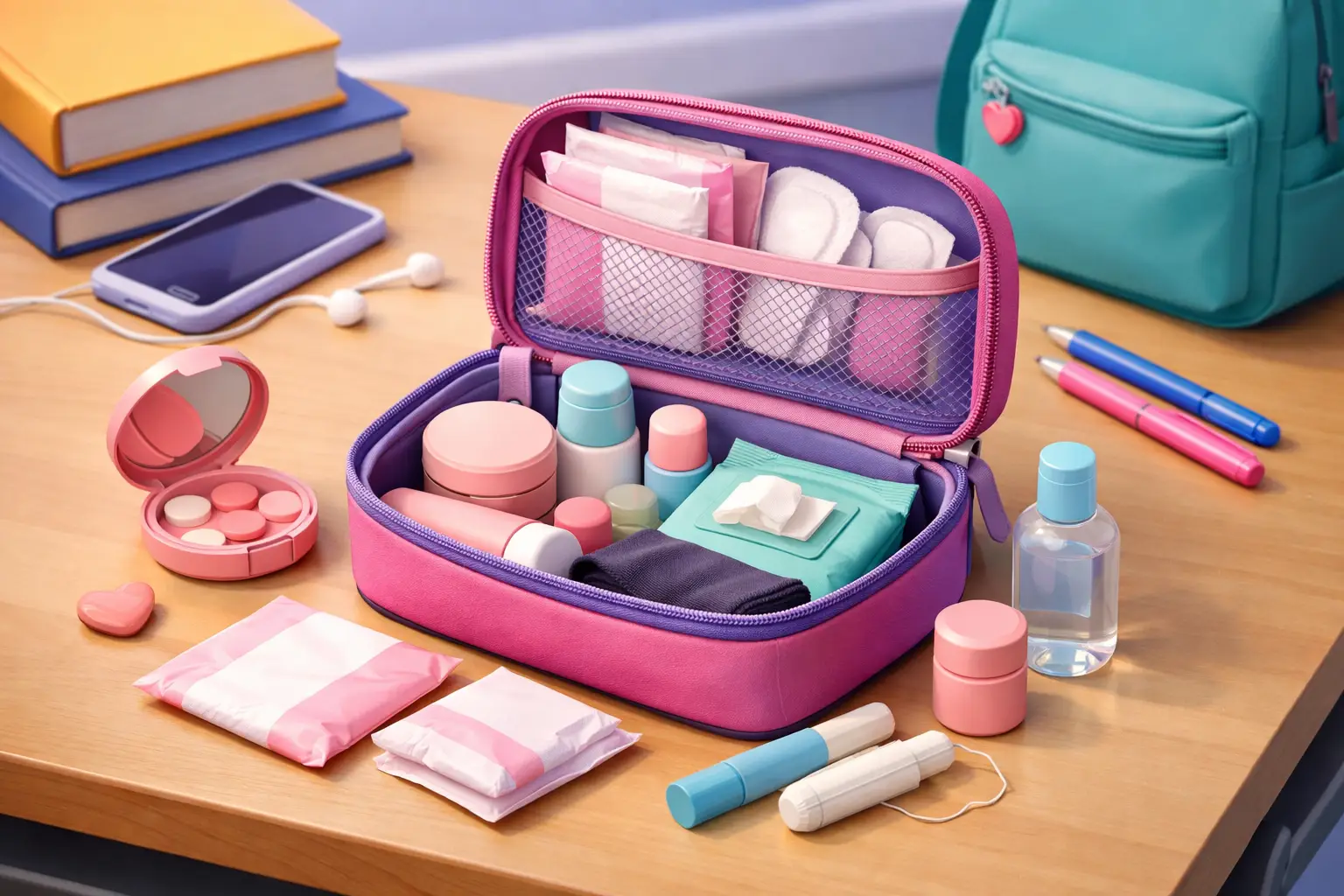
A forgotten pad at the bottom of a school bag can turn an ordinary lesson into a day of worry. This school period kit example is designed to prevent that feeling: a small, private collection of essentials that helps a student manage their period comfortably, cleanly and confidently from registration to the journey home.
The best kit is not the biggest one. It is one that fits easily into a backpack, stays organised, and contains products a student already knows feel good against their skin. With a few thoughtful choices, a period arriving early or running heavier than expected does not have to interrupt the school day.
What belongs in a school period kit?
Start with a compact, wipe-clean pouch that does not look like a medical bag. A simple zip pouch, pencil case or small cosmetic bag works well. Choose something easy to find inside a larger school bag and discreet enough to carry to the toilet.
For most students, the core kit should contain four to six period pads in a mix of absorbencies, two panty liners, a spare pair of underwear, tissues and a small disposal bag. That is enough for a typical school day without making the pouch bulky. If periods are still unpredictable, packing a couple of extra pads offers valuable reassurance.
The right pad mix depends on the individual cycle. A student with a light flow may be happy with regular pads and panty liners. Someone who experiences a heavier first or second day may need more absorbent pads, plus one longer pad for the journey home or an after-school club. It is better to pack products that are genuinely comfortable than to carry lots of unfamiliar options.
For sensitive skin, look for pads made with comfort and hygiene in mind. Soft, breathable, microplastic-free options can feel kinder during a long day of sitting in lessons, walking between classrooms and taking part in PE. Pads with reliable absorbency and odour control also help a student feel fresh without needing to change constantly.
A simple school period kit example
Imagine a student with a medium flow who is usually at school from 8.30am until 3.30pm, sometimes staying for sports practice. Their pouch might include:
- Three regular or daytime pads for planned changes during the day.
- Two higher-absorbency pads for a heavier flow, unexpected leak protection or the trip home.
- Two panty liners for the start or end of a period, or for extra freshness.
- One spare pair of clean underwear in a small separate bag.
- Tissues, a disposal bag and a small packet of unscented wipes where school rules allow.
- Any prescribed medication they are allowed to carry, stored and used in line with school policy.
This is a practical starting point, not a fixed rule. A student who has very heavy periods may need a larger kit and should speak with a parent, carer, school nurse or GP if their flow regularly soaks through protection quickly or causes them to miss school. A student with a light, short period may only need a mini pouch with a few pads and underwear.
Choose products for comfort, not just convenience
School days can be long, and an uncomfortable pad becomes more noticeable with every lesson. Thickness is only one consideration. A pad should stay in place, absorb efficiently and feel gentle against the skin, particularly for students prone to rubbing, rashes or irritation.
Avoid relying on heavily fragranced products to feel clean. Periods are natural, and freshness should come from changing pads regularly and using dependable, hygienic protection rather than masking odour with perfume. Unscented products are often a more comfortable choice for sensitive skin.
It also helps to think about clothes. Darker leggings, tights or trousers can provide peace of mind on heavier days, but they should never be the only plan for avoiding leaks. The aim of a period kit is to give students practical protection, not make them feel they have to hide their period.
Elun pads are designed for this kind of everyday confidence, combining skin-conscious comfort with antibacterial nano ribbon technology to support freshness, dryness and protection through busy days.
How many pads should a student take to school?
As a useful rule, pack enough for one more change than seems necessary. If a student normally changes twice during school hours, three pads is a sensible minimum, with heavier pads available as a backup. On the first few cycles, or when periods are irregular, taking five or six pads is often more reassuring.
Pads should be changed every few hours, or sooner if they feel full, damp or uncomfortable. There is no prize for making one pad last all day. Regular changes support comfort and help a student stay focused on school rather than their period.
Why spare underwear matters
A spare pair of underwear is one of the most useful items in any school period kit, even though it is easy to overlook. Leaks can happen because a period begins unexpectedly, a pad shifts during PE, or a day turns out to be heavier than usual. Having a clean pair ready can transform an awkward moment into a manageable one.
Pack the underwear in a small, opaque bag with a disposal or zip bag beside it. If an accident happens, used underwear can be wrapped and taken home discreetly. There is no need for a student to feel embarrassed or to spend the rest of the day uncomfortable.
Keep the kit private, clean and ready
A period kit only works if it is replenished. Make checking it part of a simple routine at the end of each period or at the start of every month. Replace used pads, add fresh underwear, remove old tissues and make sure the pouch is still clean and dry.
Keep pads in their individual wrappers until they are needed. This protects them from dust, spills and the general chaos of a school bag. If a pouch gets wet, dry it fully before restocking. A waterproof inner lining is useful, but not essential.
It is also worth keeping a small second stash at home near the front door. On rushed mornings, a student can refill their school pouch in seconds. Families may prefer to keep a few products in a PE bag as well, especially when changing rooms and sports fixtures make a trip back to a locker difficult.
Prepare for school routines and unexpected moments
Every school handles period care slightly differently. Some provide free pads in toilets, pastoral offices or the school nurse’s room. That support is valuable, but a personal kit means a student is not dependent on supplies being available at the exact moment they need them.
Before a period starts, it can help to identify the most private toilets, where sanitary bins are located, and which trusted adult to approach if help is needed. A form tutor, pastoral lead, school nurse or receptionist can often provide a change of clothes, a pad or a quiet space. Asking for help is sensible, not dramatic.
For students who worry about carrying a pouch, a pad can be slipped into a blazer pocket, cardigan pocket or pencil case before leaving for the toilet. Still, the full kit should stay in the school bag. Keeping everything together makes it far less likely that essentials disappear when they are needed most.
Pain and fatigue also deserve a plan. A refillable water bottle, a small snack and a warm layer can make uncomfortable days easier. If cramps are severe, pain is worsening, or periods consistently interfere with normal school life, speak to a healthcare professional. Period pain should be taken seriously, particularly when it regularly prevents a student from learning, sleeping or enjoying activities.
Make confidence part of the kit
The most helpful item in a school period kit is not something that fits inside the pouch. It is the reassurance that a period is normal, manageable and never a reason to feel unprepared. Let students choose the pouch, try their preferred pads at home, and pack the products that help them feel most comfortable.
A small kit cannot control every surprise, but it can give a student choices when they need them most. That quiet sense of readiness makes room for what school should really be about: learning, friendships and getting on with the day in comfort.