

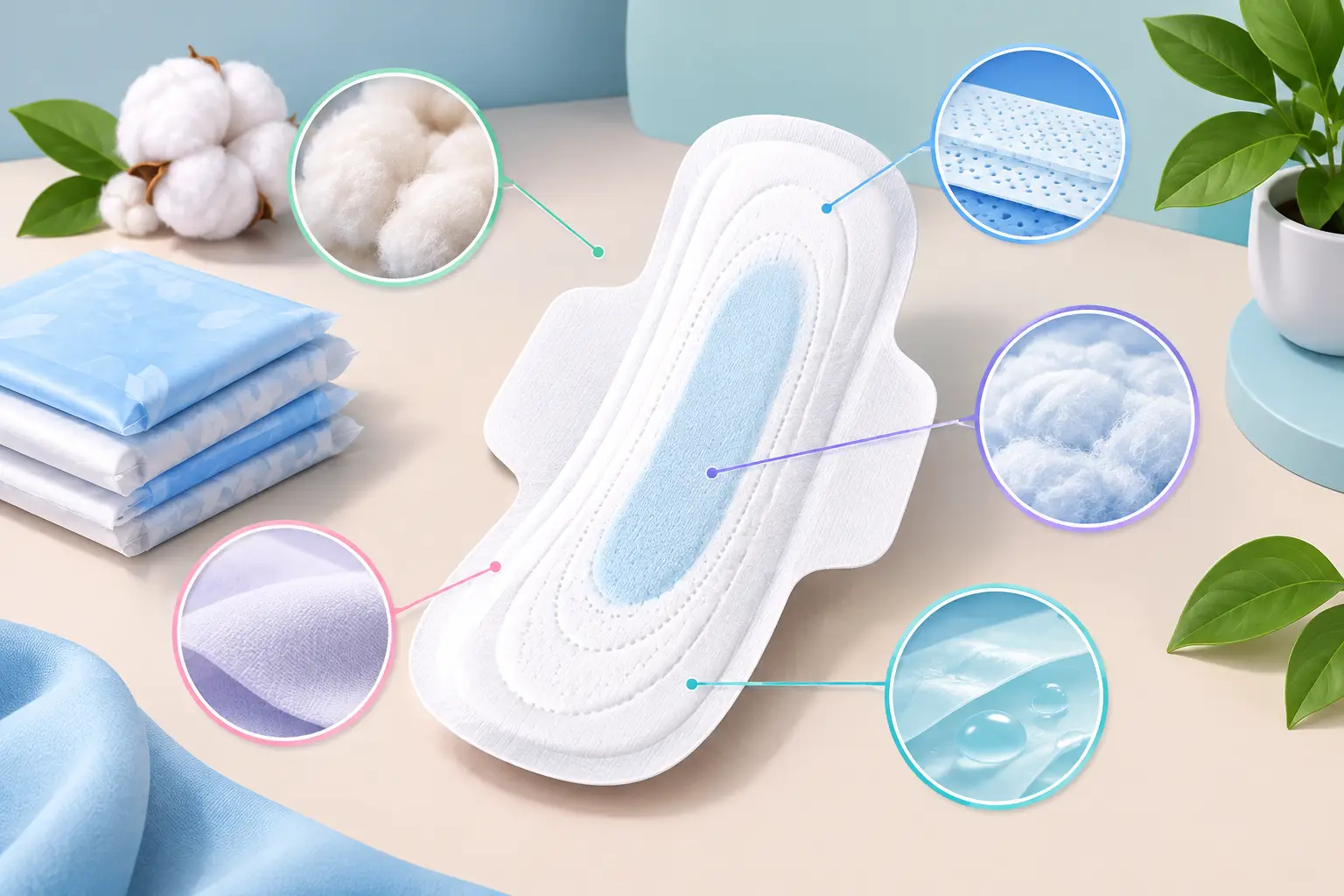
A pad can look thin, soft and discreet in its wrapper, yet still leave you feeling hot, damp or irritated by lunchtime. That is why a sanitary pad materials guide is useful: the materials touching your skin, drawing fluid away and protecting your underwear all affect how secure and comfortable your period feels.
The best choice is not always the pad with the biggest absorbency claim. For sensitive skin, comfort often comes from a combination of a gentle topsheet, fast fluid transfer, a breathable-feeling back layer and reliable leak protection. Knowing what each layer does makes it easier to choose protection that suits your flow, routine and skin.
Sanitary pad materials guide: the layers that matter
Most disposable pads have three working layers. The top layer sits against your body. The absorbent core manages menstrual fluid. The back layer helps stop leaks from reaching your underwear. Wings, adhesives and side barriers add security, but these three layers do most of the day-to-day work.
A pad can perform well in one area and feel less comfortable in another. A highly protective back layer, for example, may feel warmer if it does not allow enough air circulation. A very soft topsheet may feel lovely at first touch but need a strong transfer layer beneath it to avoid moisture sitting near the skin. The goal is balance, not one impressive-sounding ingredient.
The topsheet: the layer against your skin
The topsheet is the first material to consider if you are prone to rubbing, rashes or that sticky feeling during your period. It is usually made from non-woven fibres, which are pressed or bonded into a soft fabric-like surface rather than woven like clothing.
A good topsheet should feel smooth, stay reasonably dry and allow fluid to pass through quickly into the core. When fluid remains on the surface, skin stays exposed to moisture and friction. That can be especially uncomfortable on busy days, in warm weather or when you are wearing fitted clothes.
Some topsheets are made with synthetic fibres, while others incorporate plant-based fibres such as cotton or cellulose-derived materials. Neither category is automatically better for everyone. Cotton can feel familiar and soft, but performance depends on how the whole pad is designed. Synthetic non-wovens can move fluid quickly and remain dry-feeling when used well. If your skin is sensitive, focus on the finished pad: softness, dryness, breathability and the absence of materials that you know do not agree with you.
The absorbent core: where protection is built
Inside the pad, the core absorbs and holds fluid. Many pads use a combination of fluff pulp, often sourced from wood fibres, and superabsorbent polymer. Fluff pulp spreads fluid across the pad, while superabsorbent material locks it away into a gel-like form.
This combination is one reason modern pads can be much thinner than older designs without sacrificing protection. A thin pad is not automatically less absorbent. What matters is how quickly fluid is pulled down, how evenly it is distributed and whether the core can hold it under pressure when you sit, walk or sleep.
For lighter days, an overly thick core can feel bulky without adding much benefit. For a heavy flow or overnight use, a larger core and wider back section can offer more reassurance. If you regularly experience leaks at the front or back, consider the shape and length as well as the listed absorbency. Your sleeping position and body movement matter just as much as the material inside.
The back layer: leak protection with comfort in mind
The back layer is the barrier that prevents fluid from passing through the pad. It is commonly made from a thin film or a laminated material, sometimes paired with a fabric-like outer layer to make it feel softer and quieter.
A completely impermeable barrier is useful for preventing leaks, but comfort depends on how the full pad handles heat and moisture. Look for a design that feels light and flexible rather than stiff or plasticky. A pad should move with your body, not bunch up as you walk between meetings, sit through lessons or travel home.
If you dislike the sensation of heat during your period, change your pad regularly and choose a shape suited to your flow. Even the most carefully designed materials cannot stay comfortable indefinitely once a pad has absorbed fluid.
What to look for when skin feels sensitive
Sensitive skin does not always react to one single material. Irritation can be caused by friction, prolonged dampness, heat, fragranced products, adhesives or simply wearing a pad for too long. This is why it helps to think beyond the word “natural” on a pack.
Fragrance is one of the clearest factors to consider. A scented pad may feel fresh initially, but fragrance is unnecessary for period protection and can be unwelcome for people with easily irritated skin. A clean, dry pad and regular changes are a better approach to freshness than covering odour with perfume.
Also check for claims around microplastics and surface materials. Many conventional period products contain plastic-based components, particularly in back sheets, wrappers and fibres. Microplastic-free construction may be a meaningful priority if you want to reduce unnecessary plastic exposure, though it is still worth looking at the whole product rather than relying on one label alone.
Hygiene-focused technology can also make a practical difference. Elun pads use antibacterial nano ribbon technology to support freshness and extended dryness, while keeping their pads 100% microplastic free. For anyone who feels less confident on long workdays, school days or overnight, that added focus on skin comfort and odour control can be reassuring.
Materials and freshness are closely connected
Period odour is normal. It usually develops when menstrual fluid is exposed to air and mixes with natural skin bacteria over time. It is not a sign that you are unclean. However, a pad that draws fluid away quickly and holds it in the core can help you feel fresher through the day.
This is where material design becomes more than a technical detail. A dry-feeling topsheet reduces the sensation of wetness. An absorbent core limits fluid movement. Antibacterial technology may support a fresher experience for those who need to wear a pad for several hours. Together, these details can make a real difference to confidence, particularly when changing facilities are not immediately available.
No pad should be treated as something to wear all day without changing. Replace it according to your flow and comfort, usually every few hours, and sooner when it feels full or damp. For overnight protection, choose a dedicated night pad rather than trying to make a daytime pad last longer than it should.
Choosing materials for your routine
Your ideal pad can change across the same period. A panty liner may be enough for spotting or discharge, but it is not designed to manage a proper menstrual flow. A regular pad may suit your daytime routine, while a longer, wider night pad gives more coverage when you are lying down.
On your heaviest days, prioritise a quick-drying top layer, a high-performing core and wings that stay in place. If you are active, flexibility matters as much as absorbency. For long journeys, pack spare pads and choose a product that feels discreet without compromising on protection. If you are testing a new material or brand, trying it first on a lighter day can help you notice how your skin responds without the pressure of needing maximum coverage.
It is also worth paying attention to patterns. If irritation appears only after exercise, heat and friction may be the issue. If it happens with one type of pad but not another, the topsheet, fragrance or fit could be a factor. Persistent itching, pain, swelling or unusual discharge deserves advice from a pharmacist, GP or sexual health professional, as it may not be caused by your period product.
A better pad starts with how it feels
The right materials should help you forget about your pad, not make you check it every hour. Choose a soft surface, dependable absorbency and leak protection that works with your body, then give yourself permission to change products as your flow changes. Comfort is not a luxury during your period – it is part of feeling protected, prepared and able to get on with your day.