

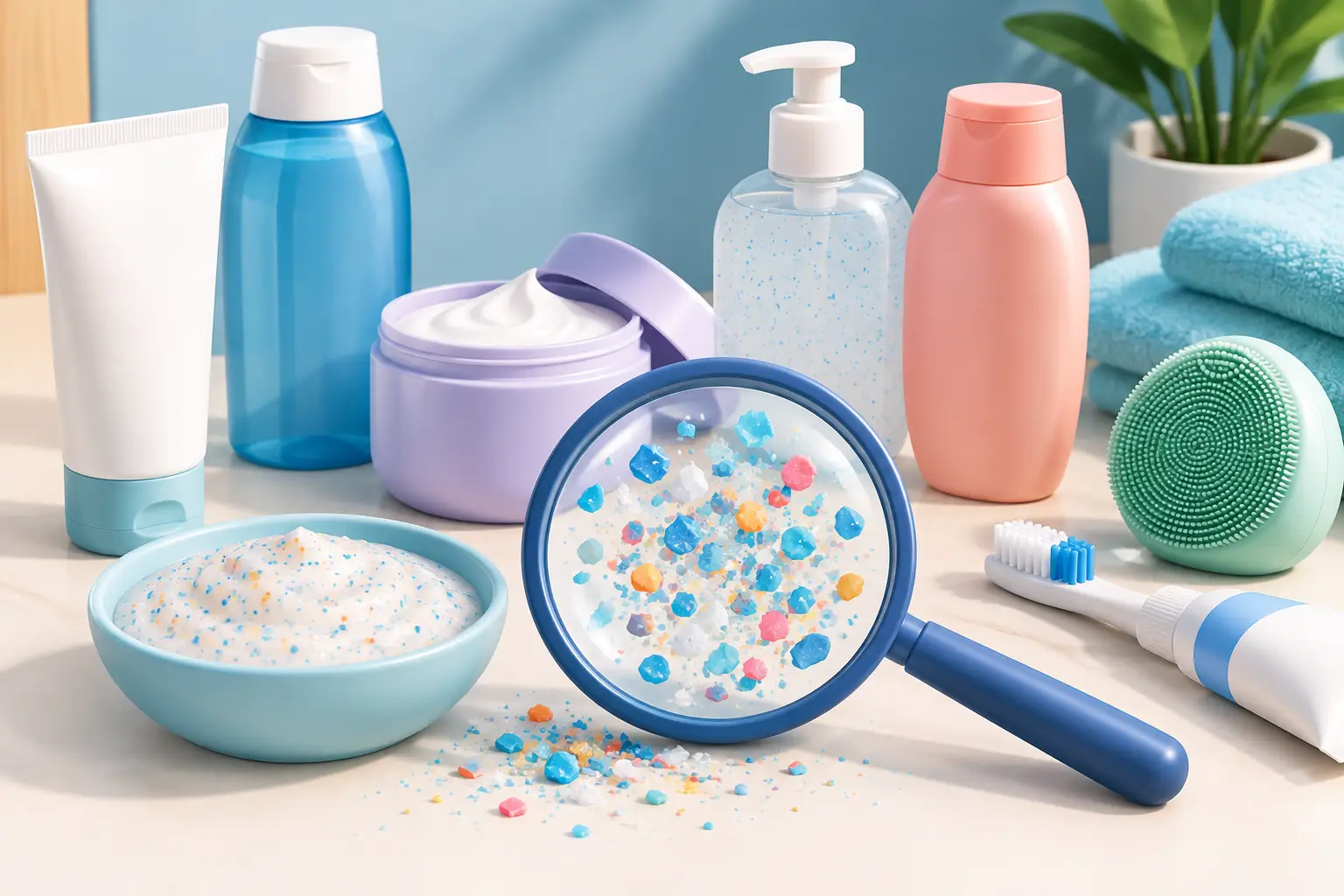
A face wash that feels gritty, a glittery body product, a silky primer, a period pad that sits against your skin for hours – everyday routines can contain more plastic than most labels make obvious. This personal care microplastics guide is here to help you ask clearer questions, read claims with confidence and make choices that feel right for your body and your bathroom shelf.
Microplastics can sound like a distant environmental issue. But for people with sensitive skin, or anyone choosing products for intimate care, materials matter on a much more personal level. You do not need to panic or throw away every product you own. A few informed swaps can make your routine feel simpler, gentler and more considered.
What are microplastics in personal care products?
Microplastics are very small pieces of plastic, generally defined as being smaller than five millimetres. In personal care, they may be deliberately added to create texture, sparkle, exfoliation or a smooth finish. They can also appear when larger plastic materials break down over time.
The obvious example is the tiny plastic bead once used in exfoliating scrubs. In the UK, the use of plastic microbeads in rinse-off cosmetics and personal care products has been restricted, but that does not mean every product is entirely free from plastic-based ingredients or plastic components.
Some cosmetics use synthetic polymers to help a formula spread, form a film or stay put. Packaging can also shed or contain plastic, while many disposable hygiene products rely on plastic layers for moisture resistance and shape. These are related concerns, but they are not all the same thing. A useful guide should make room for that distinction rather than treating every ingredient with a long chemical name as identical.
Why personal care choices deserve a closer look
Most people are not trying to build a perfect bathroom cabinet. They want products that work: a cleanser that feels good, a moisturiser that suits their skin and period protection that stays dry, comfortable and secure through a long day.
The challenge is that personal care is often used repeatedly and close to the body. A pad, panty liner or acne patch may be worn for hours. A face mask sits directly on the skin. When you are prone to irritation, rashes or discomfort, it makes sense to consider not only fragrance and active ingredients, but also the materials touching you.
There is also an environmental reason to pay attention. Tiny plastic particles can be difficult to capture once they enter waterways, while disposable products made with conventional plastic components can add to wider waste concerns. Choosing less plastic where practical is not about perfection. It is about making everyday care more thoughtful, one product at a time.
Personal care microplastics guide: where to look first
Start with products you use often or leave on the skin. This gives you the most meaningful place to focus without making your routine feel overwhelming.
Scrubs, cleansers and wash-off products
Exfoliating products are worth checking because texture is sometimes created with polymer particles. Look for clear descriptions of the exfoliant used. Ingredients such as sugar, salt, finely ground oats, clay or plant powders are easy to understand, though even natural exfoliants should be used gently if your skin is reactive.
Physical exfoliation is not automatically better simply because it is plastic-free. Over-scrubbing can weaken your skin barrier, especially if you have acne, dryness or sensitivity. The right choice depends on your skin and how often you use it.
Make-up, body care and styling products
Glitter, long-wear formulas and products marketed for a very smooth or blurring finish can contain synthetic polymers. This does not mean a product is unsafe or unsuitable, but it is a reason to look beyond the front-of-pack promise.
Ingredient lists may include terms such as polyethylene, polypropylene, nylon or acrylates copolymer. These names can be useful clues, although they do not tell the whole story about particle size, purpose or environmental impact. If a brand makes a microplastic-free claim, the most reassuring approach is transparency about what that claim covers.
Period products and intimate care
Menstrual care deserves its own standard of attention. Your period products need to absorb effectively, protect against leaks and help you feel fresh at school, work, on holiday or overnight. But comfort should not require you to ignore the materials closest to your skin.
Many conventional pads and liners use plastic-based top sheets, back sheets, adhesives or absorbent components. Materials are often necessary for performance, so it helps to avoid all-or-nothing thinking. Instead, seek brands that clearly explain their construction and are specific about their microplastic-free approach.
A 100% microplastic-free period product claim can be particularly meaningful when it is paired with comfort-focused design, reliable absorbency and testing that supports sensitive-skin use. Elun Hygiene, for example, centres its menstrual care around microplastic-free materials, rash-free comfort and antibacterial nano ribbon technology designed to support freshness and extended dryness.
Patches, strips and single-use treatments
Nose strips, acne patches and sheet masks are convenient, especially before an event or when you need targeted care. Their materials vary widely. Look for straightforward information on what the patch, backing and packaging are made from, particularly if you use these products regularly.
For acne-prone skin, effectiveness still comes first. A patch that protects a spot from touching and picking may be genuinely helpful. The goal is not to reject every single-use solution, but to choose products with clear material information and use them intentionally.
How to read claims without getting lost in the label
Terms such as “plastic-free”, “microplastic-free”, “biodegradable” and “natural” can be useful, but they are not interchangeable. A product may have plastic-free packaging while containing synthetic ingredients. Another may be microplastic-free but still come in a plastic tube. Neither claim is automatically misleading, but each answers a different question.
Look for specific language. Does the brand explain whether its claim relates to the formula, the product materials, the packaging or all three? Does it share enough detail for you to understand what you are buying? Clear information is a sign that a brand expects customers to make informed choices.
Be equally cautious with vague “clean” claims. Clean is not a regulated guarantee of gentleness, sustainability or freedom from plastic. If you have sensitive skin, fragrance, essential oils and strong actives may matter more to your comfort than whether a product uses a fashionable label.
A practical way to make better swaps
You do not need to replace everything at once. When you finish a product, use that moment to compare alternatives. Prioritise items that are used frequently, worn for a long time or cause you discomfort.
When assessing a new product, consider these five questions:
- What is the product made from, and is the brand clear about it?
- Is the microplastic-free claim specific rather than vague?
- Will it suit your skin type and everyday routine?
- Does it deliver the protection, absorbency or performance you actually need?
- Can you choose a format with less unnecessary packaging or waste?
For period care, remember that the cheapest option is not always the best value if it leaves you changing more often, worrying about leaks or dealing with irritation. A pad should support your day quietly: thin enough to move with you, absorbent enough to keep you dry and comfortable enough that you are not counting down the hours until you can change it.
Keep comfort at the centre of your routine
Reducing microplastics is one part of a more mindful personal care routine, not a test you can fail. Your needs may change with your skin, your cycle, the season and your schedule. Someone travelling may value individually wrapped liners; someone with very sensitive skin may prioritise a simple, fragrance-free formula; someone managing a heavy flow may need stronger overnight protection.
The best choices balance material awareness with real-life comfort. Read beyond the boldest claim, choose brands that communicate clearly and let how your skin feels guide you. Small decisions made with care can bring more confidence to the products you rely on every day.