

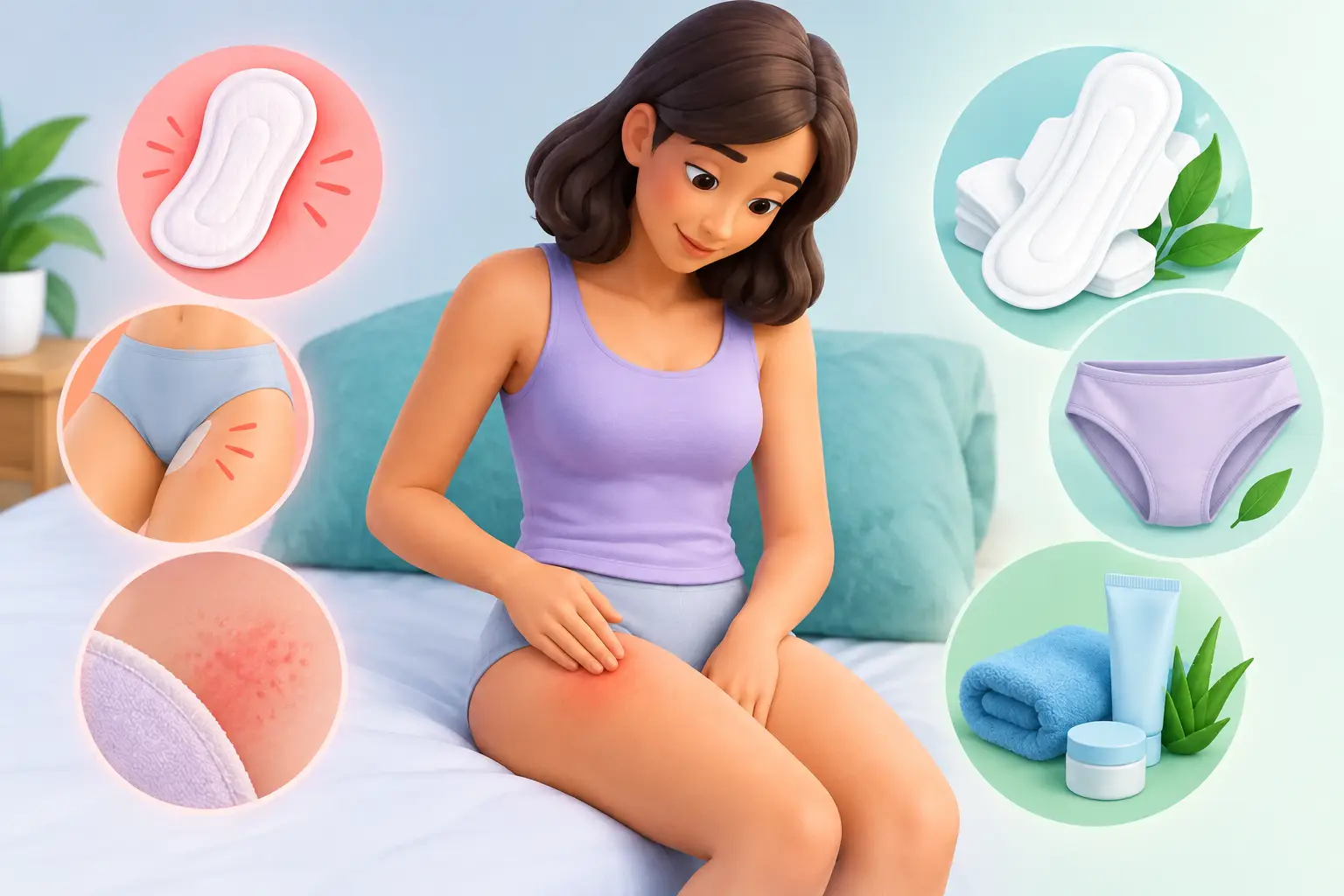
That sore, itchy or burning feeling during your period can make even a reliable pad feel impossible to wear. Pad rash causes are rarely about one thing alone. More often, irritation develops when warmth, moisture, rubbing and skin sensitivity build up over several hours. The good news is that small changes to your routine and the pads you choose can make a real difference.
A period should not leave your skin feeling raw or uncomfortable. Understanding what is behind the irritation helps you protect your skin, feel fresher through the day and get back to moving with confidence.
What does a pad rash look and feel like?
A pad rash is irritation on the vulva, groin, inner thighs or the skin around the bikini line where a pad sits or rubs. It may look red, bumpy or dry. You might notice itching, stinging, tenderness or a burning sensation, especially when you walk, exercise or use the toilet.
It can appear during your period, shortly afterwards, or after wearing a pad for a long stretch, such as overnight or on a busy day away from home. Mild irritation often settles once the trigger is removed and the area is kept clean and dry. Persistent, severe or recurring symptoms deserve closer attention.
The most common pad rash causes
Moisture and trapped heat
Menstrual fluid, sweat and normal discharge can leave the area around a pad damp. Pads are designed to absorb fluid, but once a pad becomes saturated or is worn for too long, moisture can sit close to the skin. Add the warmth created by close-fitting underwear and clothing, and the result is a humid environment that can make sensitive skin feel sore.
This is why changing regularly matters even on lighter days. The right frequency depends on your flow, activity level and the absorbency of your pad, but a fresh pad helps reduce prolonged contact with moisture and keeps you feeling more comfortable.
Friction from movement
Walking to work, sitting through lessons, travelling, working out or simply moving through a busy day can create repeated rubbing between the pad, underwear and skin. Friction is more likely when a pad shifts, bunches up, feels bulky or does not suit the shape of your body and underwear.
Chafing can affect anyone, but it is especially common in warm weather, during exercise and on heavier-flow days when you may be wearing a larger pad. A flexible, secure pad that stays in place can help reduce movement and rubbing without making you feel restricted.
Sensitivity to fragrances, dyes or adhesives
Some people have naturally reactive skin. For them, added fragrance, colouring, lotions, certain adhesives or other materials in period products may contribute to contact irritation. This does not mean every scented pad will cause a rash, nor that every rash is an allergy. It simply means your skin may be happier with simpler, skin-conscious materials.
If irritation appears each time you use a particular product, stop using it for a cycle or two and choose an unscented alternative. Avoid adding perfumed intimate washes, deodorant sprays or fragranced wipes while your skin is sore, as these can make matters worse.
Infrequent pad changes
A pad that has reached its limit is more likely to feel damp, rub against the skin and lose its fresh feel. Leaving one on for many hours can also allow odour-causing bacteria to multiply on the surface, which may increase discomfort for some people.
There is no need to change a pad obsessively if it is still dry and comfortable. But waiting until it feels wet, heavy or irritated is not ideal either. Build changes into natural points in your day: before leaving home, at lunchtime, after exercise and before bed.
Tight or non-breathable clothing
Synthetic, very tight underwear, leggings and jeans can trap heat and sweat around the groin. When this is combined with a pad, the skin has less chance to stay cool and dry. You do not need to overhaul your wardrobe during your period, but breathable cotton underwear and looser clothing when possible can bring welcome relief.
Existing skin conditions or infections
Not every itch during your period is a pad rash. Eczema, psoriasis, thrush, bacterial vaginosis, folliculitis and some sexually transmitted infections can all cause irritation in the same area. A rash may also be linked to shaving, a new laundry detergent, fabric softener, body wash or a change in discharge.
If symptoms include unusual discharge, a strong odour, blisters, sores, swelling, pain when passing urine, fever or significant pain, speak to a GP, sexual health clinic or pharmacist. Seek medical advice too if a rash does not improve after a few days of gentle care, keeps returning or becomes severe.
How to soothe a pad rash safely
The first step is to remove the likely irritant. Change into a clean, fresh pad or, if your flow allows, take a short break from pads at home and wear breathable underwear. Wash the external area gently with lukewarm water. Harsh soap, scrubbing and scented products can strip the skin barrier further, so less is usually more.
Pat dry rather than rubbing. Wear loose, breathable clothing where you can, and avoid shaving or waxing until the skin has recovered. A cool compress over underwear can also calm a burning sensation for a few minutes.
Be careful with creams. Products made for other areas of the body can sting delicate vulval skin, and heavily fragranced creams may create another trigger. A pharmacist can advise on an appropriate bland barrier product or treatment if you are unsure, particularly if you have eczema or suspect thrush.
How to help prevent pad irritation next cycle
Comfort starts with choosing a pad that suits both your flow and your skin. A pad that is too small for a heavy day can become saturated quickly, while an unnecessarily bulky option on a light day may create extra friction. Keep a few absorbencies available so you can match your protection to what your body needs.
Look for pads that feel soft, stay secure and support a drier surface throughout wear. For sensitive skin, fragrance-free and microplastic-free options can be a considered choice, especially if you are trying to identify whether materials are contributing to irritation. Elun pads are designed with comfort, freshness and antibacterial nano ribbon technology in mind, offering dependable protection for days when you need to feel dry and confident.
A few everyday habits can strengthen your prevention routine:
- Change pads regularly, and sooner after exercise, swimming or heavy sweating.
- Choose clean, breathable underwear and avoid staying in damp clothing.
- Carry spare pads in your bag so you are never forced to wear one for longer than feels comfortable.
- Keep fragranced washes, sprays and wipes away from the vulval area, particularly when skin is irritated.
- Notice patterns across two or three cycles, including the products, clothing and activities that coincide with symptoms.
When it may not be your pad
It is easy to blame the pad because the discomfort appears during your period. Yet hormonal changes can make skin more sensitive, and period blood itself can alter moisture and friction in the area. Your detergent, a new pair of underwear or prolonged time in gym clothes could be part of the picture too.
Try changing one factor at a time. For example, switch to an unscented pad while keeping the rest of your routine the same. If that helps, you have a useful clue. If it does not, look at how often you change, what you wear and whether your symptoms could need medical advice. This approach is kinder to your skin than repeatedly trying several new products at once.
Your period care should support your day, not distract from it. Listen to early signs of discomfort, choose protection that keeps you feeling dry and secure, and give sensitive skin the gentle treatment it deserves.