

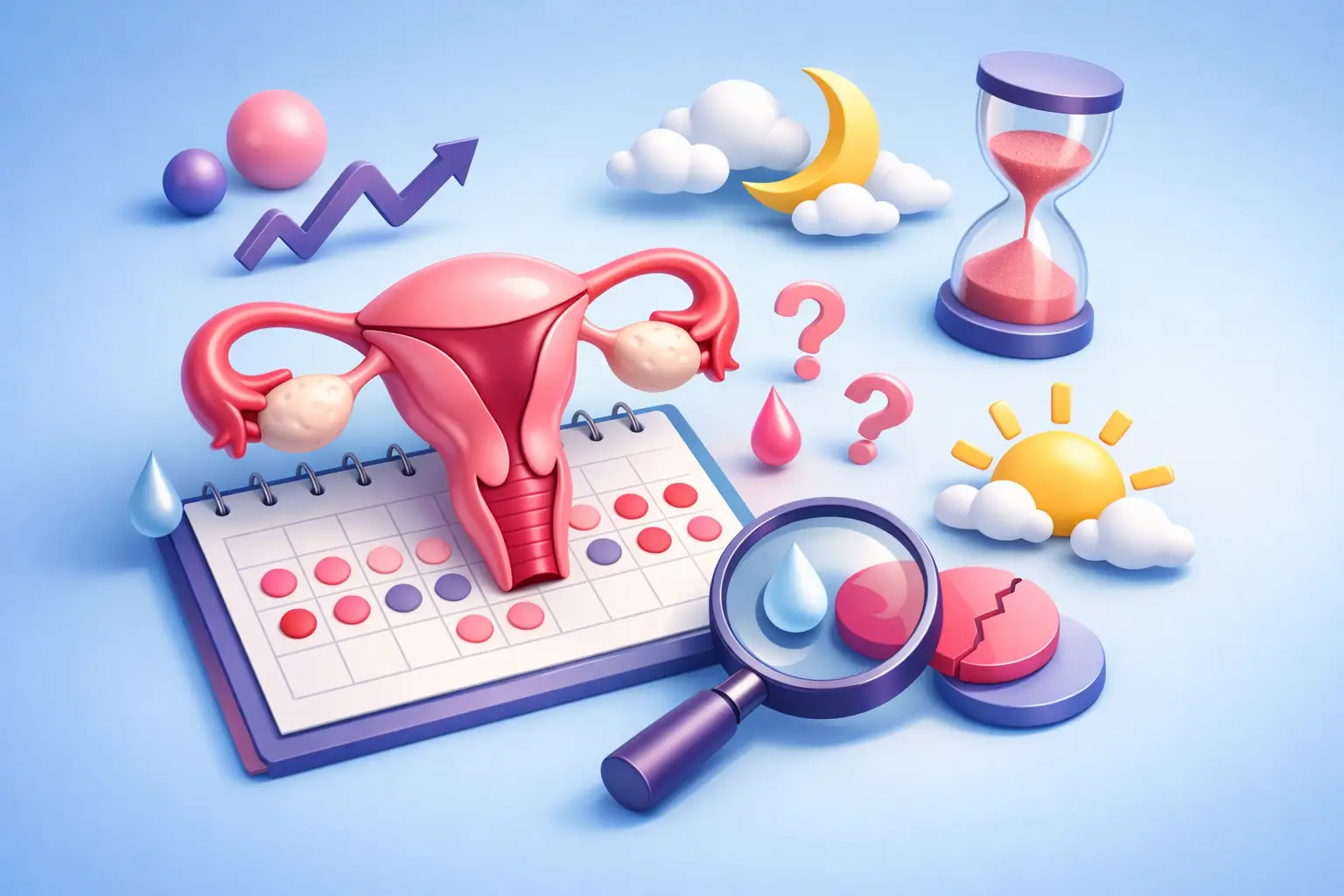
A late period can throw off more than your calendar. An irregular period cycle can leave you second-guessing your body, your plans, and even whether what you are experiencing is normal. The truth is that period timing can shift for many reasons, and not every change means something is wrong.
What counts as an irregular period cycle?
A period cycle is measured from the first day of one period to the first day of the next. While 28 days is often treated as the standard, a healthy cycle can be shorter or longer. For many people, anything from around 21 to 35 days can still fall within a typical range.
An irregular period cycle usually means your periods do not follow a fairly predictable pattern. That might look like periods arriving much earlier than expected, coming late, being missed altogether, or changing dramatically in flow and length from one month to the next. For teens in the first few years after periods begin, irregularity is especially common because hormones are still settling.
Common reasons your cycle may change
Hormones are usually the main reason periods become unpredictable. Stress is a big one. Emotional pressure, poor sleep, major life changes, and even intense travel can affect the signals between the brain and ovaries.
Weight changes can play a part too. Rapid weight loss, under-eating, excessive exercise, or significant weight gain can all interfere with ovulation. If you have been training hard, skipping meals, or feeling run down, your cycle may respond before the rest of your body catches up.
Conditions such as polycystic ovary syndrome, thyroid disorders, endometriosis, and perimenopause can also lead to irregular periods. Some forms of contraception may cause spotting, lighter bleeding, or missed periods, especially in the first few months. Pregnancy is another possibility if your period is late and there is any chance of conception.
Even everyday illness can make a difference. If your body is dealing with infection, fatigue, or recovery, your cycle may shift temporarily. One irregular month on its own is not always a red flag. A repeating pattern is more worth paying attention to.
When should you get medical advice?
It is sensible to speak to a GP if your periods suddenly become very irregular, you regularly miss periods, or your bleeding is unusually heavy, painful, or prolonged. The same applies if you bleed between periods, after sex, or after menopause.
If you are soaking through pads very quickly, passing large clots, feeling faint, or dealing with pain that disrupts daily life, do not brush it off. Changes in your cycle can sometimes point to a treatable health issue, and getting checked earlier can bring peace of mind as well as proper support.
Track patterns, not just dates
One of the most helpful things you can do is track your cycle for a few months. Note when bleeding starts and ends, whether the flow is light or heavy, and any symptoms such as cramps, headaches, acne, bloating, or mood changes. Patterns matter more than one-off surprises.
This kind of tracking can make medical appointments more useful too. Instead of trying to remember vague details, you can show what has actually been happening over time. That makes it easier to spot whether the issue is stress-related, hormonal, or something that needs further investigation.
How to stay comfortable during an irregular period cycle
When your period timing is unpredictable, preparation matters. Keeping a few essentials in your bag, desk drawer, or car can save a lot of stress. Panty liners can help on uncertain days, while dependable day pads and night pads give extra reassurance when flow turns up unexpectedly or becomes heavier than usual.
Comfort is not just about absorbency. If your skin feels sensitive during hormonal changes, the materials in your period care can make a real difference. Breathable, irritation-conscious products help reduce that hot, damp feeling that often makes periods feel worse. Freshness matters too, especially when you are at work, in class, travelling, or sleeping.
That is why many people look for protection that feels gentle as well as secure. At Elun, the focus is on skin-conscious comfort, dryness, and freshness, so you can feel protected even when your cycle is less predictable than you would like.
Small changes that may help
You cannot always control your cycle, but you can support your overall wellbeing. Regular meals, enough sleep, gentle movement, and stress management can help keep hormones more stable. If your cycle has changed alongside a new workout routine, diet shift, or stressful period, that context matters.
Be careful not to self-diagnose too quickly, though. Social media can make normal variation seem alarming or make medical conditions sound simple to identify at home. Irregular periods can have overlapping causes, and what applies to one person may not apply to another.
Irregular periods are common, but they should not be ignored
There is a difference between occasional variation and a pattern that keeps disrupting your life. If your cycle changes once, it may simply be your body responding to stress, illness, or routine changes. If it keeps happening, becomes painful, or leaves you worried, it is worth getting advice.
Your period does not need to arrive like clockwork to be healthy. But you do deserve answers, comfort, and protection you can trust while you figure out what your body is telling you.