

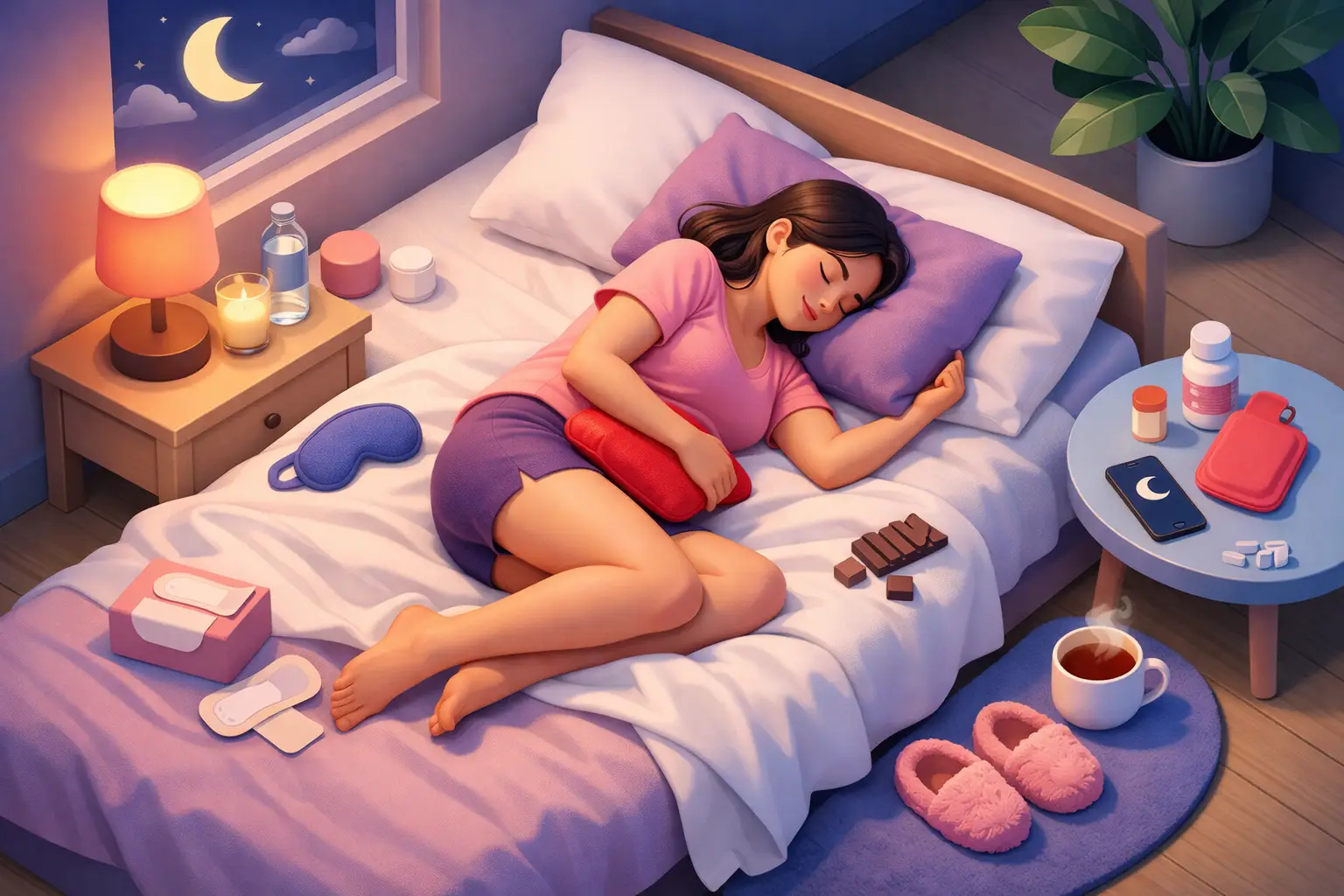
A period should not mean lying awake, worrying about leaks, cramps or whether your pad will still feel comfortable by morning. The key to how to sleep on your period is creating a bedtime routine that supports your body and gives you reliable overnight protection. A few small changes can make nights feel calmer, cleaner and far more restful.
Start with dependable overnight protection
Night-time bleeding can feel unpredictable because you stay in one position for hours. Blood may move towards the back or sides of your underwear, particularly when you sleep on your back or side. A regular daytime pad may not offer the length, absorbency or rear coverage you need for a full night’s sleep.
Choose a night pad designed for extended wear, ideally with a longer back section and secure wings. Put on a fresh pad just before bed rather than relying on one you have worn during the evening. This gives you the best chance of starting the night dry and comfortable.
For sensitive skin, comfort matters just as much as absorbency. Look for a pad that feels soft, stays in place and helps manage moisture without feeling bulky. Elun night pads are made for this kind of reassurance, with a thin, flexible fit and antibacterial nano ribbon technology designed to support freshness, dryness and odour control overnight.
Wear close-fitting but comfortable cotton underwear to help keep your pad secure. If you have a heavier flow, period underwear as a backup layer can offer extra confidence. It is not essential for everyone, but it can be especially helpful on your heaviest nights, when travelling or when sleeping away from home.
How to sleep on your period with fewer leaks
Your best sleeping position depends on your flow, cramps and what feels natural for your body. There is no single position that prevents every leak, but a well-fitted night pad and the right setup can reduce the chance of waking up uncomfortable.
Sleep on your side for comfort and control
Many people find side sleeping the most comfortable option during their period. It can feel supportive when you have cramps and may help keep your pad sitting closely against your body. If you tend to leak towards the front or back, make sure the pad is centred before you settle in and that the wings are firmly secured.
Try placing a pillow between your knees. This can take pressure off your hips and lower back, particularly if you wake with an aching pelvis or sore legs during your period.
Lie on your back if cramps feel worse at night
Sleeping on your back with a pillow under your knees can ease tension through the lower back and stomach. This position also allows your body to rest in a neutral alignment. If you often leak at the back, choose a pad with longer rear coverage and avoid underwear that shifts as you turn over.
Be cautious with sleeping on your front
Some people find sleeping on their front comforting because gentle pressure against the abdomen can temporarily ease cramps. Others find it increases discomfort, particularly if breasts feel tender or your stomach is bloated. If this is your usual position, use a slimmer pillow or no pillow at all if it feels more comfortable for your neck.
There is no need to force a new position if it stops you falling asleep. Your protection should work with the way you naturally rest, not make bedtime another thing to manage.
Ease cramps before you get into bed
Period cramps can feel sharper when you are tired, cold or tense. Preparing your body before bed can reduce the discomfort that keeps you awake or wakes you later in the night.
A warm bath or shower can relax tight muscles and help you feel clean before changing into fresh underwear and a new pad. If a bath is not practical, place a covered hot water bottle or heat pad over your lower stomach or back for 15 to 20 minutes. Avoid falling asleep with a hot water bottle, as prolonged heat can irritate or burn the skin.
Gentle movement can help too. A short walk around the house, light stretching or slow hip circles may ease the clenched feeling that comes with cramps. Keep it simple. The aim is not a workout, but helping your body release some tension before it is time to rest.
If you usually take over-the-counter pain relief for period cramps, take it only as directed on the label and make sure it is suitable for you. A pharmacist can advise if you are unsure, particularly if you have asthma, stomach problems, are taking other medicines or have a health condition.
Make your bed feel more period-proof
A little preparation can remove a lot of mental noise. If you are worried about leaks, place a dark towel or washable bed protector over your sheet. It is a practical backup, not a sign that you should expect a leak. Knowing your bedding is protected can make it easier to relax.
Keep a small period kit beside the bed with a spare night pad, clean underwear, wipes or a flannel, and a comfortable pair of pyjamas. If you do wake up feeling damp or need to change, everything is within reach and you can get back to sleep sooner.
Breathable pyjamas can also make a difference. Choose loose cotton or another soft fabric that does not trap heat. Feeling overheated can make bloating, night sweats and general period discomfort feel more intense. If your bedroom runs warm, use lighter bedding and keep a glass of water nearby.
Avoid irritation while you sleep
Longer wear means your skin has more contact with your period product, moisture and friction. A pad should be changed according to its instructions and sooner if it feels full, damp or uncomfortable. Fresh protection before bed and again when you wake is a simple habit that supports comfort and hygiene.
If you are prone to itching, rashes or irritation, avoid heavily fragranced washes, deodorising sprays and harsh soaps around the vulva. Wash the external area gently with warm water or a mild product that suits your skin, then pat dry rather than rubbing. The vagina cleans itself, so internal cleansing products are not needed and can disrupt its natural balance.
It may also help to avoid tight synthetic underwear overnight. If you have had irritation before, note what changes when you switch pads, detergents or underwear fabrics. Small patterns can be useful when choosing products that feel better for your skin.
When period sleep problems need more support
A difficult night now and then is common, especially during a heavy or painful part of your cycle. But severe pain, very heavy bleeding, dizziness, exhaustion or sleep disruption that affects your everyday life deserve attention. Speak to your GP or a sexual health professional if cramps are getting worse, pain is not helped by usual measures, or you are soaking through protection unusually quickly.
You do not have to simply put up with a period that leaves you anxious at bedtime. Conditions such as endometriosis, fibroids and adenomyosis can affect bleeding and pain, and getting support may help you find a better plan for your body.
Tonight, keep the routine simple: choose protection you trust, create a comfortable sleep setup and give yourself permission to rest. Your period may be part of the month, but it does not have to take over the night.