

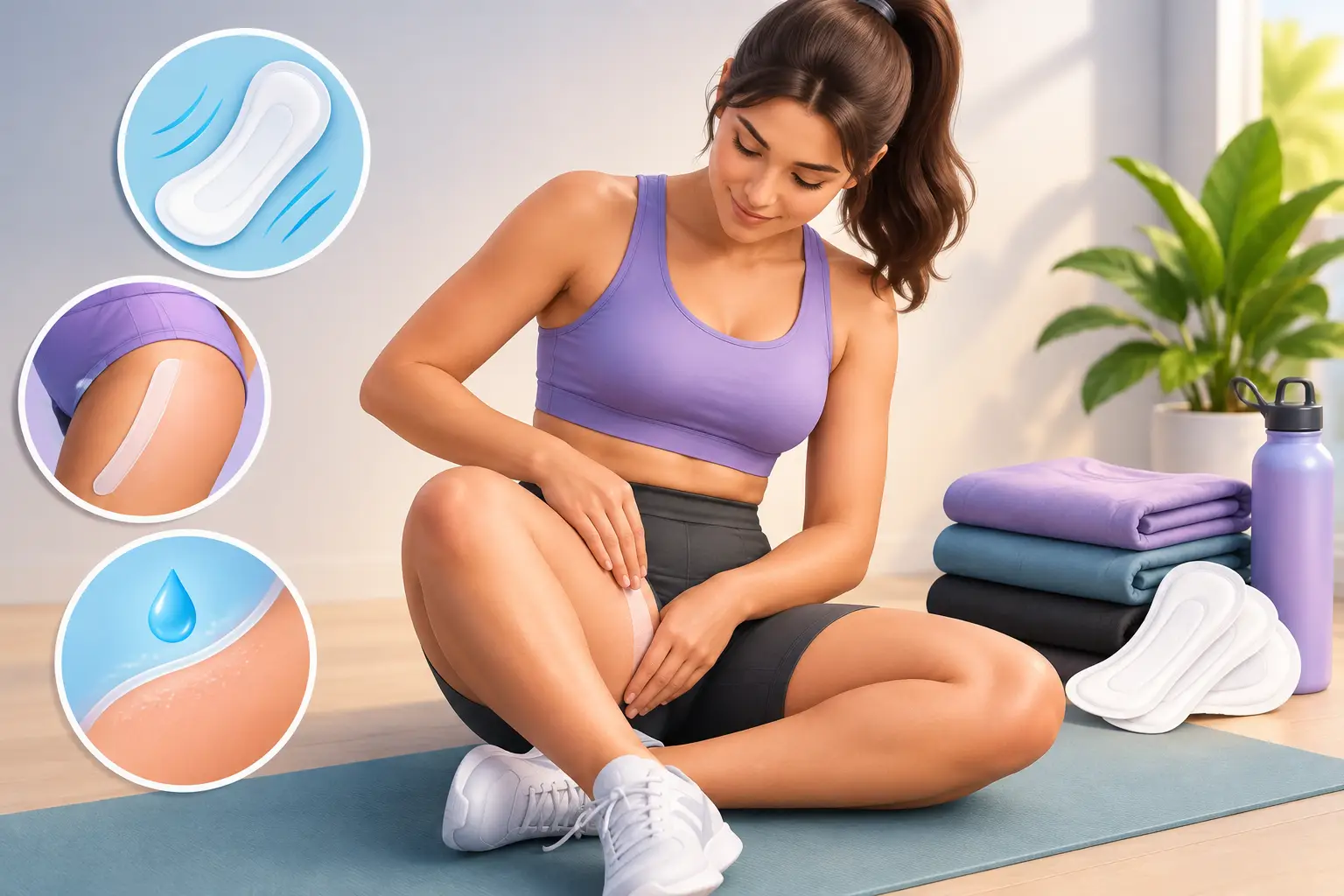
Pad chafing can turn an ordinary period day into one where every walk, meeting and school lesson feels uncomfortable. Learning how to reduce pad chafing often comes down to a few practical changes: choosing the right pad, keeping the area dry and giving sensitive skin a little more care.
Chafing is common, and it is not something you simply have to put up with. Your period protection should help you feel secure, fresh and free to move, not leave you sore, itchy or distracted.
Why pads can cause chafing
Chafing happens when skin repeatedly rubs against a pad, its wings or damp fabric. Heat, sweat and menstrual flow can make this friction stronger, especially on busy days, in warm weather or when you are exercising. Once skin becomes irritated, even a soft pad can feel uncomfortable.
A pad that is too wide, too long or not suited to your flow can also shift as you move. This creates rubbing at the groin, inner thighs or along the edges of your underwear. Wearing a pad for too long may add to the problem because moisture stays close to the skin.
Some people are also more sensitive to fragrances, dyes, rough top sheets or certain adhesives. If discomfort appears whenever you use a particular type of pad, the material may be as relevant as the fit.
Choose a pad that suits your body and flow
The best protection is not always the thickest pad. A bulky pad can bunch up, trap warmth and rub as you walk. Look for a pad that feels thin, flexible and secure enough to move with your underwear rather than against your skin.
Match the size to the moment. A shorter pad may feel more comfortable for lighter days or daytime movement, while a longer night pad can offer better coverage when you are lying down. Using an oversized pad during the day can create unnecessary friction, just as using a pad that is too small can lead to shifting and frequent adjustments.
Absorbency matters too. When a pad cannot manage your flow quickly enough, the surface may feel damp. A fast-absorbing, breathable pad helps keep moisture away from the skin, supporting a drier and more comfortable feel. If you often experience leaks or dampness, changing to a higher absorbency for your heavier days may be more helpful than wearing the same pad for your whole period.
For sensitive skin, consider pads made with skin-conscious materials and without ingredients that you know irritate you. Elun pads are designed for breathable comfort, extended dryness and freshness, with microplastic-free materials and antibacterial nano ribbon technology for added confidence through the day.
Change pads before moisture builds up
One of the simplest ways to reduce pad chafing is to change your pad regularly. There is no single timetable that suits every person because flow changes from day to day. On heavier days, you may need to change more often; on lighter days, it can still be useful to change before the pad feels damp or starts to bunch.
As a general habit, check your pad every few hours and change it sooner after exercise, long walks or hot commutes. A fresh pad reduces prolonged contact with moisture and helps prevent odour from becoming a worry.
Avoid trying to make a pad last longer just because it has not leaked. Comfort is a valid reason to change. If the surface feels wet, the edges are rubbing or the pad has moved from its original position, it has done its job and it is time for a new one.
Get the fit right in your underwear
Your underwear plays a bigger part in comfort than it may seem. Loose or stretched underwear can let a pad move around, while very tight underwear can press the pad into the skin and hold heat close to the body. Choose knickers that hold the pad securely without digging in.
Place the pad so the most absorbent section sits where your flow is heaviest. Take a moment to smooth it flat before getting dressed, paying attention to the wings and edges. If the wings crease, pull or sit on the sensitive inner thigh area, try a different pad shape or underwear style rather than continuing with an uncomfortable fit.
Breathable cotton-rich underwear is often a comfortable choice, particularly during warm weather or when you are prone to sweating. It may help reduce the humid conditions that make friction worse. However, everyone’s preferences differ, so focus on fabrics and fits that leave you feeling dry rather than restricted.
Keep cleansing gentle
When the skin around the vulva feels irritated, it is tempting to cleanse more often or use strongly scented products to feel fresher. This can sometimes make soreness worse. The vulva is sensitive, and fragranced washes, deodorant sprays, scented wipes and harsh soaps can disrupt the skin barrier.
Wash the external area gently with lukewarm water. If you use a cleanser, choose one that is mild and suitable for intimate skin, then rinse it away carefully. Pat dry with a soft towel instead of rubbing. During the day, use plain, fragrance-free toilet tissue where possible and avoid scrubbing after using the loo.
You do not need to wash inside the vagina. It naturally cleans itself, and internal cleansing products can cause irritation. Keeping care simple is often the kindest option when skin is already uncomfortable.
Reduce friction when you are active
Chafing may feel worse on days when you are running, cycling, walking long distances or wearing fitted clothing. You do not have to skip movement during your period, but it can help to plan your protection around it.
Choose a fresh, secure pad before activity and change soon afterwards. Breathable leggings, shorts or trousers that do not create extra rubbing can make a noticeable difference. If pad wings are the main source of discomfort, try a pad style with a different wing shape or place more focus on a close, supportive underwear fit.
It also helps to carry a small period pouch with spare pads and underwear when travelling or out for the day. Knowing you can change whenever you need to removes the pressure to stay in a pad that no longer feels comfortable.
Soothe irritated skin carefully
If you already have mild chafing, give the area a break from anything that could sting or rub. Switch to a fresh, soft pad, wear loose clothing when possible and keep the skin clean and dry. A cool compress over underwear for a short time can feel soothing if the area is warm or tender.
Avoid applying perfumed lotions, essential oils or random home remedies to intimate skin. Even products that are gentle elsewhere on the body can irritate this area. If you use a protective barrier product, choose one intended for sensitive external skin and follow the instructions on the packaging. It should not interfere with pad adhesion or be used internally.
Try not to scratch, even when itching is frustrating. Scratching can damage the skin further and prolong the irritation. Keeping nails short can help if you find yourself doing it without thinking.
When pad chafing needs medical advice
Chafing should begin to improve once the friction and moisture are reduced. If soreness continues, becomes severe or repeatedly returns despite changing your routine, speak to a pharmacist, GP or sexual health clinic. What feels like pad chafing can sometimes be caused by contact dermatitis, thrush, a skin condition or another issue that needs different care.
Seek advice sooner if you notice swelling, broken skin, blisters, unusual discharge, a strong smell, pain when passing urine, fever or a spreading rash. You deserve clear answers and treatment that helps you feel comfortable again.
Your period care should fit around your life, whether you are at work, at school, travelling or resting at home. Small changes in pad fit, absorbency and changing habits can protect sensitive skin and bring back the quiet confidence of forgetting you are even wearing a pad.