

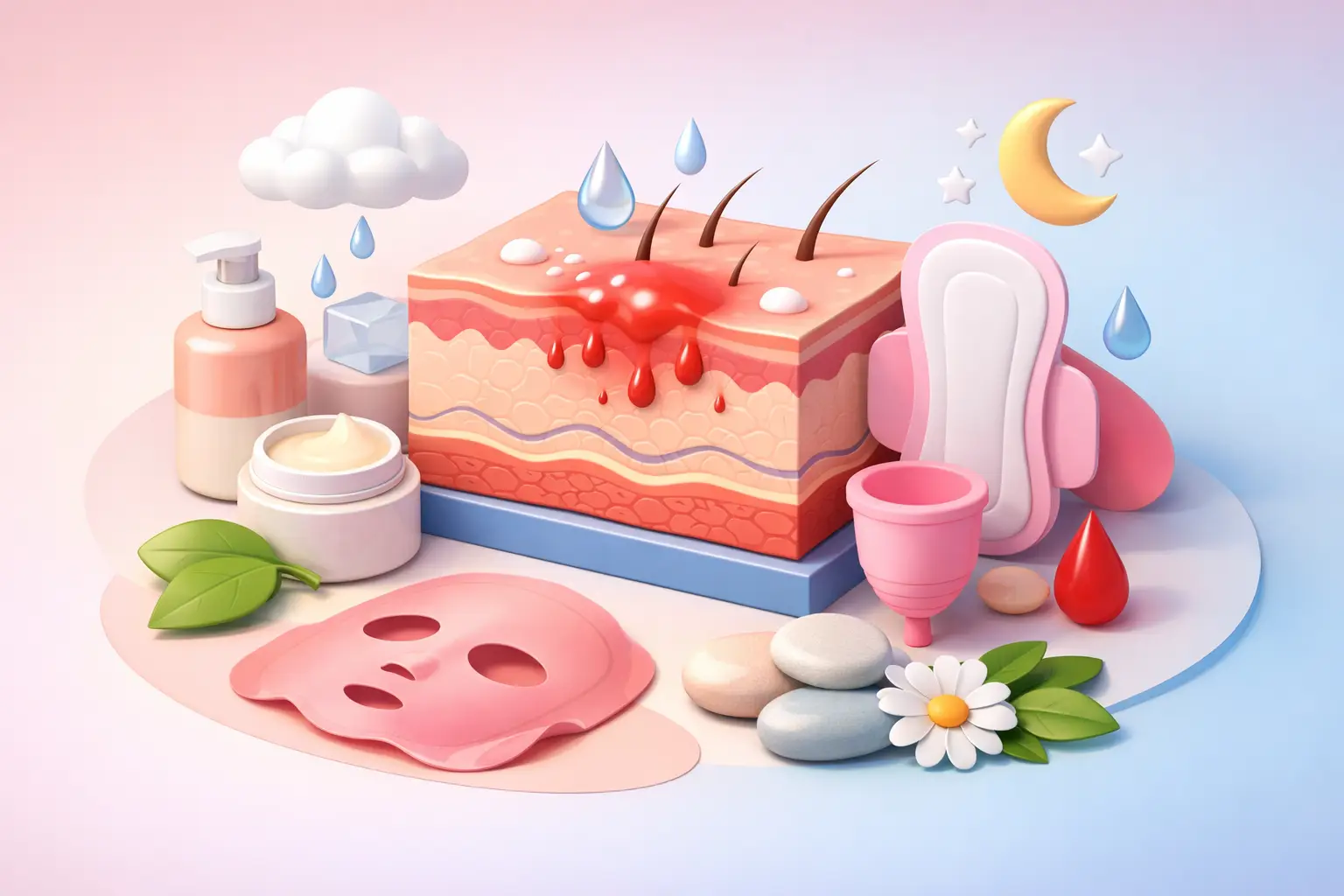
If your period leaves you dealing with itching, redness or that sore, rubbed feeling by day two, you do not need telling how disruptive it is. A proper guide to sensitive skin periods starts with one simple truth – discomfort is not something you should have to put up with every month.
Sensitive skin during your period can show up in different ways. For some, it is a mild rash around the bikini line. For others, it is stinging, heat, dryness or irritation that gets worse with movement, sweat or longer wear. It can feel especially frustrating because the product you rely on for protection is also the thing sitting closest to already delicate skin.
The good news is that period irritation is often manageable once you know what to look for. The right materials, the right fit and better everyday habits can make a noticeable difference to comfort, freshness and confidence.
Why sensitive skin can flare during your period
Period skin sensitivity is not always caused by one single issue. Often, it is a mix of friction, moisture, heat and contact with materials your skin does not like. Menstrual blood itself is not the problem, but prolonged dampness against the skin can weaken the skin barrier and make rubbing feel much worse.
Hormonal changes can play a part too. In the days before and during your period, skin can become more reactive, which means products or fabrics that feel fine at other times of the month suddenly feel irritating. If you already have eczema, dermatitis or generally reactive skin, your period may make that sensitivity more noticeable.
Then there is wear time. A pad that is technically absorbent but traps humidity or feels rough against the surface may start to cause discomfort after a few hours. That matters even more overnight, on busy workdays or when you are travelling and cannot change as often as you would like.
Signs your period products may be irritating your skin
Not every itch or sore patch means you have extremely sensitive skin. Sometimes it is simply a sign that your current routine is not working for your body. If irritation keeps appearing around your period, pay attention to patterns.
Common signs include redness where the pad sits, itching that improves once you remove it, a warm or burning feeling after walking or exercising, and skin that feels rubbed raw by the end of the day. Some people also notice odour becomes more obvious when dampness builds up, which can make you feel less fresh even when your flow is normal.
If symptoms are severe, persist after your period ends, or come with unusual discharge, it is worth speaking to a GP or pharmacist. Sometimes what looks like simple pad rash is actually a skin condition, thrush or another irritation that needs different care.
A guide to sensitive skin periods and choosing the right pad
If your skin reacts easily, the product itself matters more than clever packaging or vague promises. Start with the surface that touches your skin. Softer top layers tend to feel gentler, especially if you are wearing a pad for several hours. Breathability matters too because trapped heat and moisture can quickly turn mild sensitivity into full irritation.
It is also worth checking what the pad is made from. Many shoppers now look more closely at materials, and with good reason. If you want to reduce exposure to unnecessary plastics or harsh-feeling components, choosing microplastic-free options can feel like a more skin-conscious decision. That does not automatically guarantee zero irritation, but it can be part of a more thoughtful routine.
Absorbency should match your flow. This is where many people get caught out. If you use a very light pad on a heavier day, you may end up changing too late or sitting in dampness for longer. But if you use a bulky, heavy-flow pad on a light day, extra thickness and friction may create discomfort you did not need. The best choice is not the strongest product by default. It is the one that keeps you dry without feeling overbuilt for the moment.
For overnight wear, look for secure coverage without a stiff or heavy feel. Night pads should give longer protection, but they should still feel comfortable when you turn in bed. Thin, flexible designs with strong absorbency can be a better match for sensitive skin than thick pads that create heat and pressure.
Freshness and hygiene matter more than people think
When skin is reactive, freshness is not just about feeling clean. It is about reducing the damp, warm conditions that can make soreness worse. Pads designed to support dryness can help lower that sticky, uncomfortable feeling that often triggers rubbing.
This is one reason many women look for added hygiene benefits, especially on long days. Features such as antibacterial technology can help support a fresher feel and better odour control, which can be reassuring if you are wearing a pad for several hours at school, work or overnight. Elun Hygiene, for example, focuses on sensitive-skin period care with clinically tested, rash-free and microplastic-free pads designed to stay dry, fresh and comfortable for longer.
That said, no pad should be treated as a reason to stretch wear time too far. Even a high-performing product works best when it is changed regularly.
Daily habits that can reduce period irritation
Good period care for sensitive skin is rarely about one miracle fix. It usually comes down to a few small choices that protect your skin barrier throughout the day.
Change your pad often enough to keep the area dry. The exact timing depends on your flow, but waiting until a pad feels noticeably damp is usually too long for sensitive skin. Washing with lukewarm water can also help, especially if scented washes tend to sting or leave you feeling dry afterwards. If you use an intimate wash, keep it gentle and avoid anything heavily fragranced.
Underwear choice matters more than it gets credit for. Soft, breathable cotton styles tend to be kinder during your period than tight synthetic fabrics that hold heat. If your clothes are very fitted, friction can increase as the pad moves against both skin and fabric, so a slightly more breathable outfit on sensitive days can genuinely help.
After showering or washing, make sure the area is dry before putting on a fresh pad. That sounds basic, but starting with damp skin can make irritation build faster.
What to avoid if you are prone to pad rash
If you often get soreness during your period, try stripping your routine back. Fragranced products are a common culprit, whether that is scented pads, perfumed body sprays or strongly fragranced washes used around the vulva. Skin that is already under pressure from heat and moisture does not usually appreciate extra irritants.
It is also sensible to avoid leaving a pad on simply because it still looks only partly used. Sensitive skin reacts to moisture and friction before a product looks full. And if a pad feels scratchy, too bulky or constantly shifts around, do not ignore it. The wrong fit can be just as irritating as the wrong material.
Some people also find that wings, edges or certain adhesive placements rub more than others. It depends on your body shape, movement and underwear style. If one design keeps irritating the same area, the answer may be as simple as trying a different shape rather than giving up on pads altogether.
Finding the routine that works for your flow
There is no single formula for every sensitive-skin period. A school day, a gym session, an overnight shift and a lazy Sunday at home all place different demands on your protection. That is why flexible routines usually work best.
On lighter days, a breathable liner or lighter pad may be enough and can reduce bulk. On heavier days, you need stronger absorbency that still feels comfortable and dry. Keeping a small mix of products on hand often makes more sense than expecting one option to cover every stage of your period equally well.
Sample packs can be genuinely useful here, especially if you are still working out what suits your skin. They let you test shape, softness and absorbency without committing to a large pack straight away. For sensitive skin, that trial-and-adjust approach is often the most practical one.
When sensitive skin needs extra attention
Sometimes period irritation is occasional. Other times, it becomes a monthly pattern that affects how you dress, sleep and move. If that sounds familiar, it may be time to treat your period care with the same care you give the rest of your skincare routine.
Look for products built around comfort, dryness and gentle contact with the skin. Choose options that feel protective without feeling heavy. And pay attention to what your body is telling you, because recurring soreness is feedback, not bad luck.
Your period products should help you feel secure, fresh and comfortable enough to get on with your day. If your skin is sensitive, the right changes can make your month feel far less like something to endure and much more like something you know how to handle.