

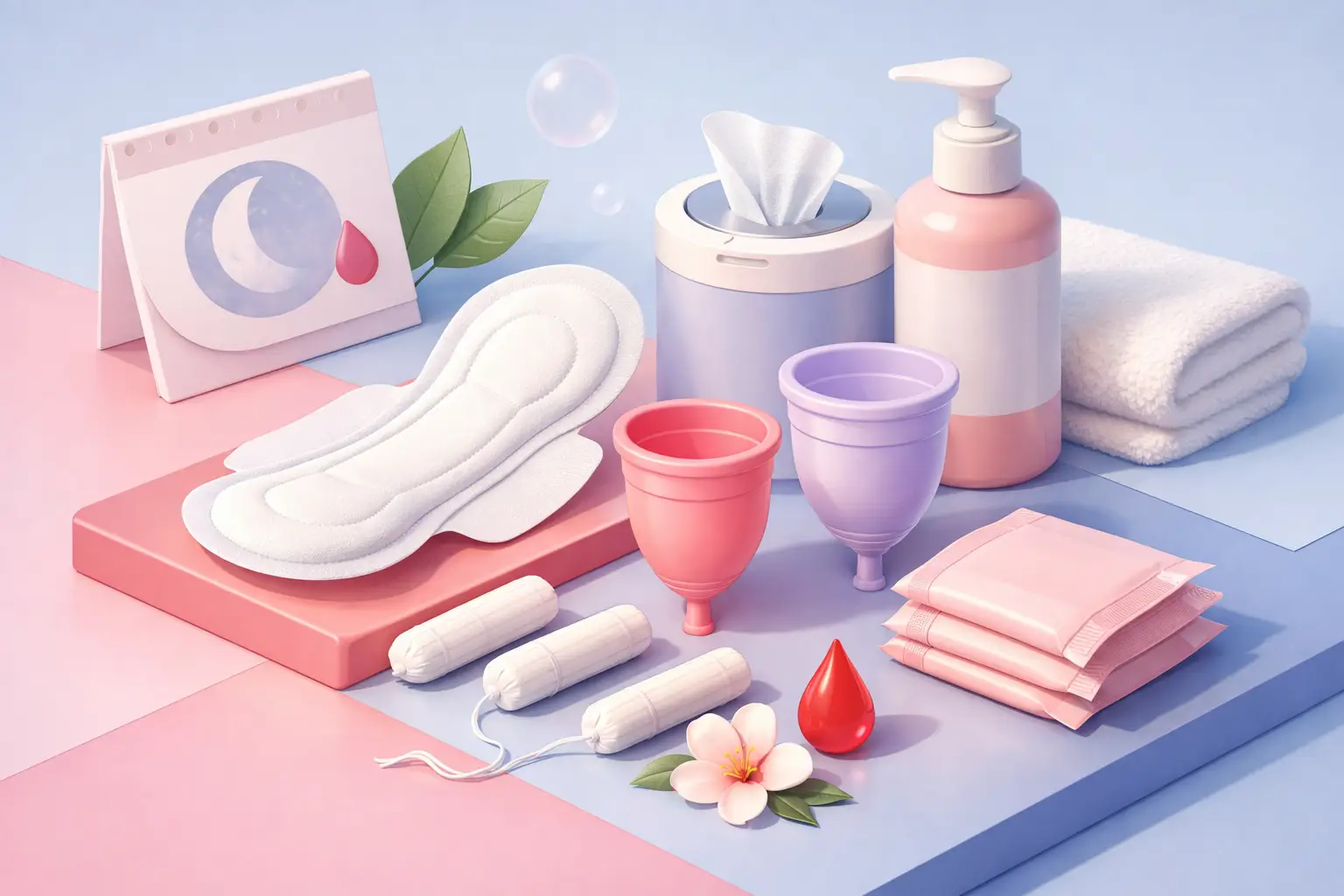
Periods rarely arrive at a convenient moment. Whether you are heading to school, commuting to work, travelling or settling down for the night, a reliable routine can make a real difference. This guide to period hygiene focuses on the small, practical choices that help you feel clean, dry, comfortable and confident throughout your cycle.
Start with the right period product
Good period hygiene begins with a product that suits your flow, your skin and what your day looks like. A light-flow day may call for a slim pad or panty liner, while heavier days and overnight use usually need more absorbency and wider protection at the back.
The best pad is not necessarily the thickest one. It should sit comfortably, stay in place as you move and absorb fluid quickly enough to help you feel dry. If you often experience rubbing, heat or rashes, look for soft, breathable materials and avoid products that feel plasticky or heavily fragranced against the skin.
For sensitive skin, material choices matter. Microplastic-free pads and skin-conscious designs can be a thoughtful option if you are trying to reduce irritation while keeping the protection you need. Elun pads use antibacterial nano ribbon technology to support lasting freshness and dryness, with comfort in mind for busy days and longer nights.
Change pads regularly, even on lighter days
A clean pad is one of the simplest ways to stay comfortable during your period. As a general rule, change your pad every four to six hours, or sooner if it feels full, damp, uncomfortable or has shifted. On heavy-flow days, you may need to change more often.
Regular changes help prevent prolonged moisture against the skin, which can lead to chafing and discomfort. They also help manage odour naturally. Menstrual blood itself does not have to smell unpleasant, but blood exposed to air and bacteria for a long time can develop a stronger scent.
Do not wait for a leak before changing. Keeping a spare pad or two in your handbag, school bag or desk drawer makes it easier to change when you need to, rather than when you are forced to. A small pouch with pads, wipes and spare underwear can be especially reassuring when travelling or spending a long day away from home.
Choose overnight protection with care
Sleeping in the wrong pad can leave you worrying about leaks before you have even fallen asleep. Night pads are designed for longer wear and often have greater absorbency and extended back coverage to protect you in different sleeping positions.
Change into a fresh night pad before bed, then change again when you wake up. If your flow is particularly heavy, it may help to choose a higher-absorbency option or use dark, comfortable sleepwear for extra peace of mind. Persistent flooding through a pad every hour or two is not something to simply put up with – speak to a GP or sexual health professional for advice.
Wash gently, not aggressively
The vagina is self-cleaning, so it does not need internal washing, douching or perfumed products. In fact, these can disturb its natural balance and cause stinging, dryness or irritation.
For everyday washing during your period, gently clean the external area, known as the vulva, with warm water. If you prefer to use a cleanser, choose one that is mild, fragrance-free and made for sensitive skin. Pat dry rather than rubbing, especially if your skin is already sore.
A daily shower is helpful if it makes you feel fresher, but there is no need to wash repeatedly or scrub more firmly because you are bleeding. Period hygiene is about being kind to your body, not trying to erase every sign of your cycle.
Always wash your hands before and after changing a pad. It takes seconds and helps keep both your hands and intimate area cleaner. If soap and water are not available, hand sanitiser can be a useful temporary alternative, though washing properly when you can is best.
Keep freshness simple
Many people feel pressure to smell like nothing at all during their period. That can lead to scented pads, deodorising sprays and perfumed wipes that sound appealing but may not suit sensitive skin. Fragrance can irritate some people, particularly when it is used on skin that is warm, damp or already prone to itching.
Instead, focus on the basics: change your pad on time, wear breathable cotton underwear where possible and choose loose clothing if you are feeling sore or bloated. A fresh pair of underwear can make a surprising difference after a long day, particularly in warmer weather.
If you notice a new or unusually strong odour alongside itching, burning, unusual discharge or pelvic pain, do not try to mask it with fragrance. These symptoms may need medical advice. Your period can make normal body changes more noticeable, but you still know what is usual for you.
Avoid irritation and rashes
Period rashes are common, and they are frustrating. They may be caused by friction, trapped moisture, sensitivity to a pad material or simply wearing the same product for too long. The answer is not always one single change, so give yourself room to work out what helps.
Try changing pads more frequently, choosing a softer or more breathable style and avoiding fragranced products. Make sure the pad is positioned securely so the edges are not rubbing as you walk. If you use panty liners outside your period, avoid wearing them continuously if your skin feels warm or irritated – sometimes underwear needs a little airflow too.
For mild chafing, keeping the area clean and dry and switching to gentle, loose clothing may help. Stop using any product that causes burning, swelling or a rash. Seek advice from a pharmacist, GP or sexual health clinic if symptoms are severe, recurring, spreading or not improving.
Dispose of pads safely and discreetly
Used pads should be wrapped in the wrapper from your new pad, toilet tissue or a disposal bag, then placed in a bin. Never flush pads, wrappers or liners down the toilet. Even products labelled as flushable can contribute to blocked pipes and sewage problems.
At home, a small lidded bathroom bin is practical. When you are out, most public toilets have a sanitary bin in each cubicle. If there is not one available, wrap the pad securely and take it with you until you can find a suitable bin.
There is no need to feel embarrassed about disposal. Menstruation is ordinary, and taking care of your products responsibly is simply part of caring for yourself and shared spaces.
Build a routine that works for your real life
A period routine should support you at your busiest, not add another thing to manage. Think about the moments when changes are hardest: a full day of lessons, a long shift, a train journey, an exercise class or sleeping away from home. Then pack accordingly.
For most people, a few well-chosen essentials are enough: pads suited to both lighter and heavier days, a night option, spare underwear, a discreet disposal bag and any pain relief you safely use. If you are new to periods, trialling a small pack before committing to a larger one can help you learn which shape and absorbency feel right.
Your needs may change from day to day and cycle to cycle. A pad that is perfect for day two may feel excessive on day five. Adjusting your product, changing schedule and clothing for your flow is not overthinking – it is practical self-care.
When to get medical advice
Period hygiene can improve comfort, but it cannot solve every symptom. Contact a GP, pharmacist or sexual health service if you have persistent itching, burning, sores, unusual discharge, a strong new odour, fever, pelvic pain or a rash that does not settle after changing products.
It is also worth seeking support if your periods become much heavier, more painful or more irregular than usual, or if bleeding affects your ability to work, study, sleep or leave the house. You deserve to be heard and to have options that make your cycle more manageable.
The right routine should leave you free to focus on your day, not spend it worrying about your period.