

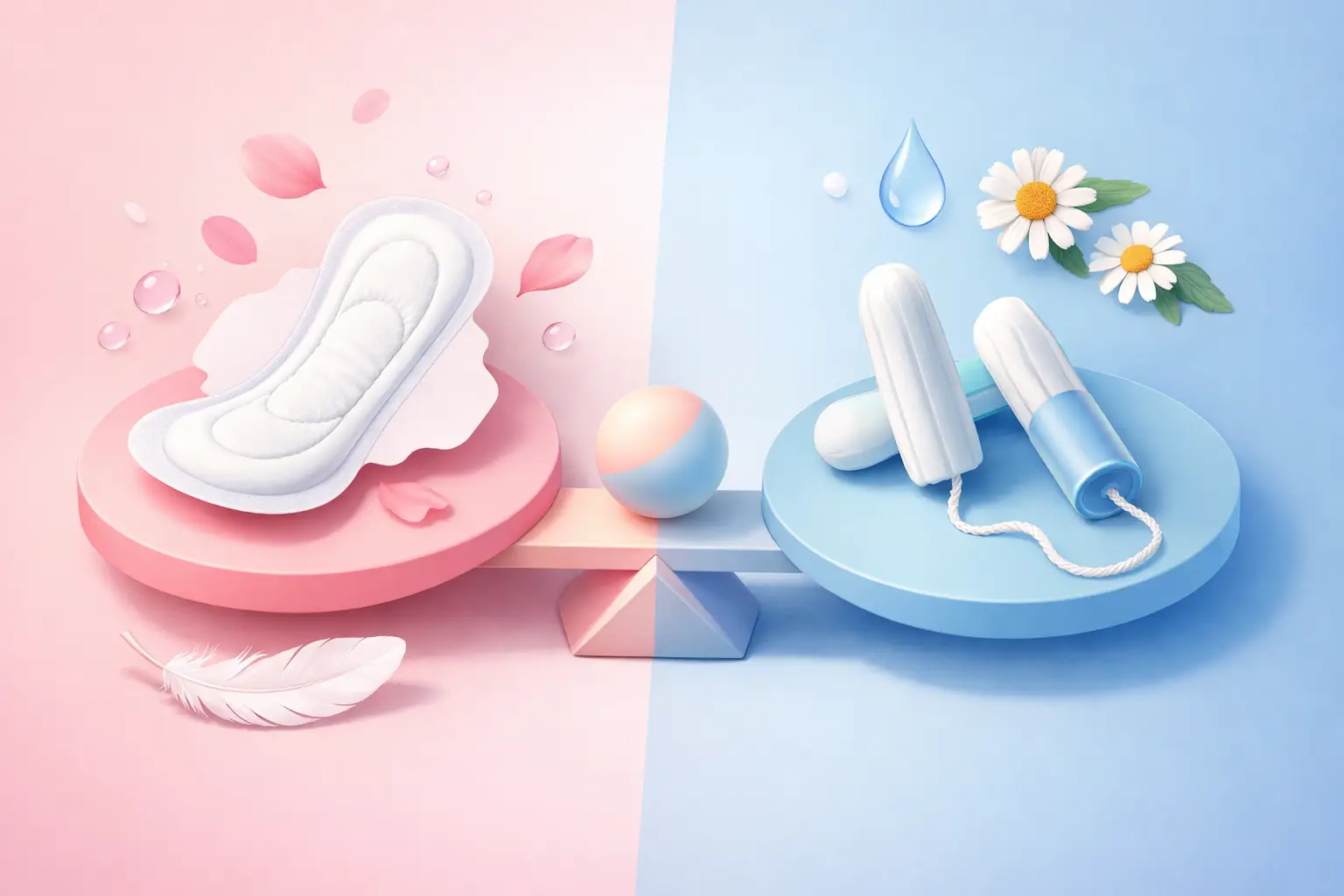
The pads vs tampons sensitive skin question is rarely about which product is ‘better’ overall. It is about what feels calm, dry and comfortable on your body, on your heaviest days and during the hours when you cannot easily change. If periods leave you dealing with itching, chafing, soreness or a rash, the right choice can make a real difference to how confidently you move through your day.
Pads vs Tampons for Sensitive Skin: The Key Difference
Pads sit outside the body and absorb menstrual flow as it leaves the vagina. Tampons are worn internally, where they absorb flow before it reaches your underwear. That simple difference changes where irritation can happen.
With a pad, sensitive skin is most likely to react where the product touches the vulva, groin and inner thighs. Heat, moisture, rubbing and fragranced materials can all contribute to discomfort. A pad that shifts as you walk, feels bulky or stays damp against the skin may cause friction, particularly in warm weather, overnight or on a busy day at school or work.
Tampons reduce the contact between period blood and external skin, which can feel more comfortable for some people with pad-related chafing. However, they can feel drying or uncomfortable internally, especially when the absorbency is too high for your flow or when insertion is difficult. Some people simply find internal products unsuitable for their body or preferences.
Neither option is automatically best for sensitive skin. The kinder choice is the one that matches your flow, fits your routine and does not leave your skin feeling irritated afterwards.
When Pads May Be the Better Choice
Pads are often a reassuring option when you do not want internal protection, are new to periods, are recovering after childbirth, or want a simple solution for sleeping. They also make it easier to see how heavy your flow is, which can be useful when your period is changing or you are tracking symptoms.
For sensitive skin, comfort depends heavily on the pad’s surface and how well it manages moisture. Look for a soft, breathable-feeling top layer and a shape that stays close to the body without bunching. A thin, flexible pad can reduce rubbing, while secure wings help prevent the shifting that causes chafing around the thighs.
Changing regularly matters just as much as the pad itself. Even an absorbent pad can become uncomfortable if it is worn for too long. On heavier days, change whenever it feels wet or full rather than waiting for a leak. For lighter days, a panty liner may be enough, but it should still be changed if it becomes damp or irritating.
Fragrance-free options are often worth considering if you are prone to sensitivity. Period blood has a natural scent, and a fresh pad changed at the right time is usually more useful than added perfume. Fragrance can be a trigger for some people, particularly when skin is already sore.
What to Look for in a Sensitive-Skin Pad
Choose products designed to keep the surface feeling dry, rather than simply adding bulk to absorb more. A comfortable pad should feel smooth against the skin, stay in place and offer reliable leak protection without a stiff, plasticky feel.
Material choices matter too. If you are actively reducing contact with unnecessary plastics or harsh-feeling layers, a microplastic-free option can better align with your skin-conscious routine. Elun pads combine a soft, flexible feel with antibacterial nano ribbon technology to support freshness, odour control and extended dryness, while remaining 100% microplastic free.
That does not mean one pad works for every person. Trialling a small pack first can help you assess comfort during a normal period before committing to a larger supply.
When Tampons May Feel Better
Tampons can suit sensitive skin when external pads are causing rubbing, sweaty discomfort or irritation during movement. They can feel particularly practical for sport, swimming, travelling and days when you want to wear fitted clothing without worrying about a pad moving around.
The main rule is to use the lowest absorbency that comfortably manages your flow. A tampon that is too absorbent can remove more moisture than needed and may feel dry or difficult to remove. On a light day, a lighter absorbency is usually the more comfortable choice. On a heavy day, you may need a higher absorbency, but it should still be changed according to the product instructions.
Insertion should never be forced. If you feel sharp pain, persistent discomfort or resistance, pause and try again later with a different position or a smaller absorbency. Tension can make insertion harder, particularly if you are anxious, new to tampons or experiencing dryness.
Tampons need regular changing and should not be worn longer than the time stated on the pack. Always follow the manufacturer’s instructions and use the lowest absorbency for your flow. Toxic shock syndrome is rare but serious, so seek urgent medical help if you develop symptoms such as a sudden fever, vomiting, diarrhoea, dizziness, confusion or a rash while using a tampon.
Sensitive Skin Is Often About More Than the Product
A rash during your period is not always caused by your pad or tampon. Sweat, tight synthetic underwear, shaving, scented washes, laundry products, thrush, eczema and skin conditions can all play a part. This is why changing only one thing at a time can be helpful. Switch to a simpler, fragrance-free period product, wear breathable cotton underwear and avoid using perfumed products around the vulva for a cycle or two.
It is also worth checking your changing routine. Prolonged moisture can irritate skin, whether it comes from a pad, a liner, discharge or sweat. Gently washing the external area with warm water, patting dry and changing into fresh underwear can help skin feel more comfortable. Avoid scrubbing or using deodorising products internally, as the vagina cleans itself.
If irritation keeps returning, becomes painful, causes swelling, unusual discharge, broken skin or a strong odour, speak to a pharmacist, sexual health clinic or GP. Persistent symptoms deserve proper advice rather than repeated product switching.
How to Choose for Your Flow and Routine
Your period may not need one permanent answer. Many people use pads at night and tampons in the daytime, or choose different protection depending on their flow. A long night pad can offer the coverage needed for sleep, while a regular pad may feel lighter for a quiet day at home. Tampons may suit a gym session or swimming, while pads can feel more comfortable during cramps or when you prefer not to insert anything.
Think about the moments when irritation usually starts. If it appears on the inner thighs after a long commute, a slimmer pad with better stay-put protection may help. If the vulva feels sore after wearing a pad all day, more frequent changes or a tampon for part of the day could be worth trying. If tampons leave you feeling dry, step down the absorbency or return to pads during lighter-flow days.
Comfort is useful information, not something to push through. You deserve period care that lets you focus on your plans rather than checking for leaks, worrying about odour or counting down the hours until you can change.
A Gentler Period-Care Routine
Start with a product that suits your flow, change it before dampness becomes uncomfortable and keep the rest of your routine simple. Choose breathable underwear, avoid fragrance where possible and carry a spare product so you are never forced to wear one for longer than feels right.
For sensitive skin, the best protection is not the one everyone else uses. It is the option that keeps you dry, protected and at ease enough to forget it is there.