

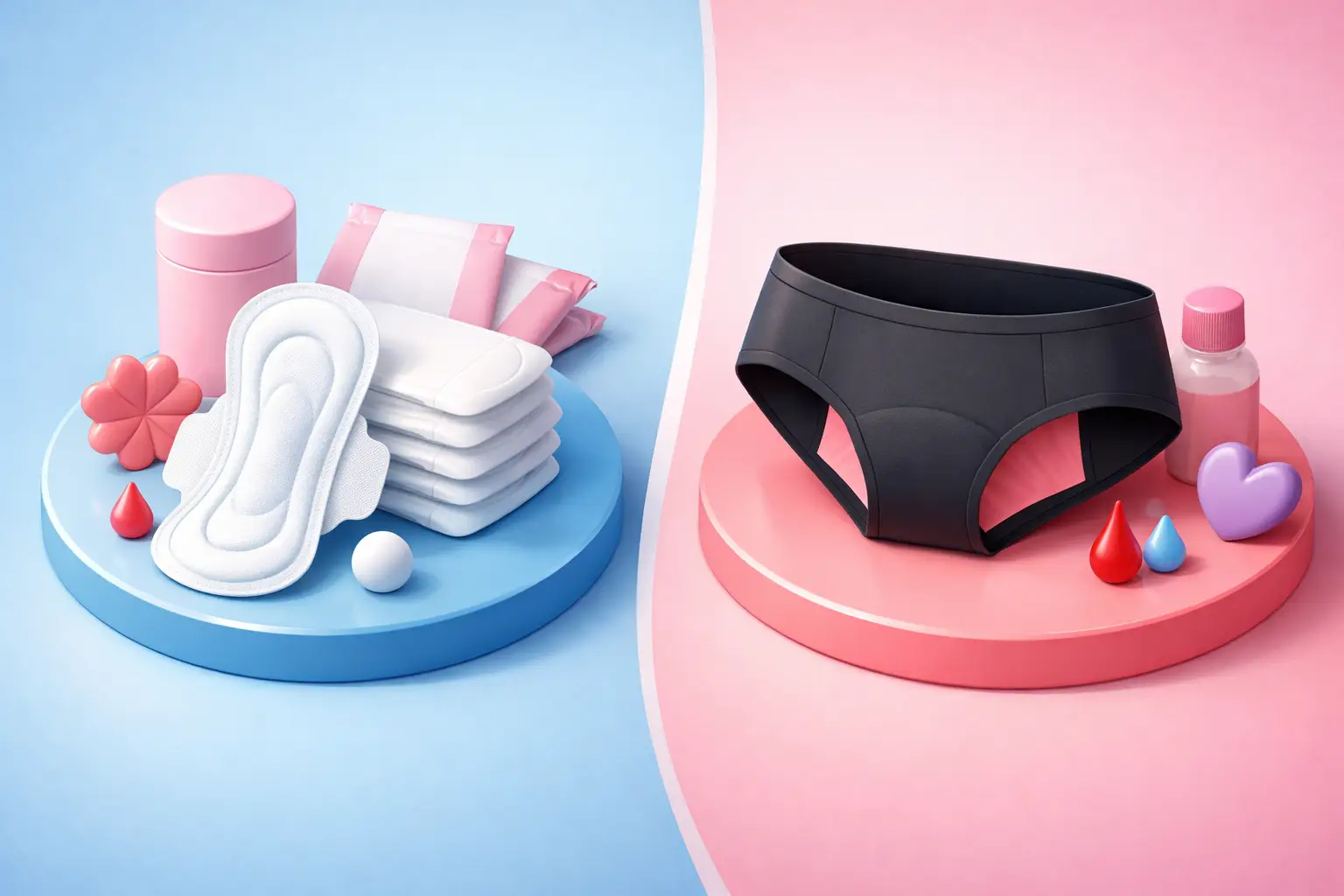
A period product has to work around your real life – the walk to school, a full day at work, a long journey, a restless night. When comparing pads versus menstrual underwear, the best option is rarely about what is universally ‘better’. It is about what helps you feel dry, comfortable and confident on your own flow days.
Both products can offer dependable protection. The differences come down to how they are worn, how they feel against your skin, how much preparation they require and whether they fit the way you move through your period.
Pads versus menstrual underwear: the key difference
A pad is a disposable absorbent layer that attaches to your underwear. You change it throughout the day as needed, then wrap and dispose of it in a bin. Modern pads can be thin, flexible and shaped to stay close to the body, with wings for extra security.
Menstrual underwear looks and feels like regular underwear but contains built-in absorbent layers. After wearing it, you rinse or wash it and wear it again on a future cycle. Some styles are designed for light flow or spotting, while others are made to hold more fluid.
That simple difference affects everything else. Pads give you a fresh product whenever you change. Menstrual underwear gives you a reusable option without needing a separate pad, but it needs washing, drying and enough pairs to cover your needs.
When pads may be the more practical choice
Pads are a familiar, flexible choice for many people, especially if your flow changes from day to day. You can switch from a liner to a regular pad, or choose a longer night pad when you need more coverage. This makes it easier to match your protection to what is actually happening rather than committing to one absorbency level for the whole day.
They are also particularly useful when you are away from home. At school, in the office, on public transport or while travelling, changing a pad is usually straightforward. You only need a spare pad and a bin. There is no need to carry used underwear until laundry day.
For people who value the feeling of a clean change during their period, pads can offer real reassurance. If you have a heavier flow, sweat during warm weather or simply prefer to refresh partway through the day, a new pad can feel more comfortable than continuing in the same absorbent garment.
The quality of the pad matters. A poorly fitting or overly bulky pad can bunch, feel damp or cause friction. Look for a soft top layer, a secure shape, reliable absorbency and materials chosen with sensitive skin in mind. A thin pad does not have to mean less protection when its layers are designed to draw fluid away quickly.
When menstrual underwear may suit you
Menstrual underwear can feel liberating for lighter days, overnight wear, spotting or as backup protection alongside another period product. Because the absorbent layer is built into the underwear, there is no adhesive strip and no separate pad to position.
Some people prefer the all-in-one feel. It can be helpful if pads tend to shift during exercise, or if you dislike the sensation of wearing a pad. For teenagers starting their periods, menstrual underwear may also offer a discreet option for unexpected bleeding at school, provided they have a plan for changing if necessary.
Its biggest benefit is reusability. A well-cared-for pair can be worn across many cycles, which may appeal if reducing disposable waste is a priority. However, reusability is only convenient when washing is convenient too. You need to rinse or wash pairs according to the care instructions, allow time for them to dry, and own enough pairs to avoid running out.
Menstrual underwear is not automatically the right choice for every flow. On very heavy days, many people prefer to change into a fresh pair or use it as backup rather than relying on one pair from morning to night. Absorbency claims vary between brands and styles, so check the guidance carefully rather than assuming every pair provides the same protection.
Comfort and skin sensitivity: what to look for
Comfort is personal, but irritation is a sign worth listening to. Period products sit close to delicate skin for hours, often when heat, moisture and movement are already making you feel more sensitive. Whether you choose pads or menstrual underwear, the goal is to keep the area feeling as dry, fresh and friction-free as possible.
With pads, choose breathable, skin-conscious materials and change regularly. A pad that has reached its limit can feel wet and increase rubbing. Avoid products that make your skin feel itchy, hot or uncomfortable, and consider whether fragranced products are a trigger for you.
With menstrual underwear, fit is especially important. Underwear that is too tight can feel restrictive, while a loose fit may affect how well the absorbent gusset sits against your body. Follow washing instructions closely, as detergent residue or fabric conditioner can be irritating for some people and may affect the garment’s performance over time.
If you experience persistent soreness, rashes, unusual discharge or pain, speak to a pharmacist, GP or sexual health professional. A period product can affect comfort, but ongoing symptoms deserve proper advice.
Protection for work, school, sleep and travel
Your routine can make the decision clearer. Pads are easy to keep in a handbag, desk drawer or gym kit. They are useful for unpredictable periods and busy days when you need a quick, discreet change. Night pads can provide longer coverage and added peace of mind when you sleep.
Menstrual underwear can be excellent for sleeping if you prefer not to wear a pad overnight, though it is worth choosing a style with suitable absorbency and coverage for your flow. It can also work well on lighter days when you want simple protection without carrying supplies.
For travel, pads are usually the lower-maintenance option. They take up little room, can be changed in almost any toilet and do not leave you managing laundry in a hotel room or on holiday. Menstrual underwear can still work for travel, but packing enough clean pairs and a waterproof pouch for used ones takes more planning.
For exercise, it depends on what feels secure. Some people like the close fit of menstrual underwear for yoga or walking. Others prefer a flexible pad that can be changed immediately after a workout. There is no prize for sticking to one method all cycle long.
Cost and environmental considerations
Menstrual underwear has a higher upfront cost because you need multiple pairs, especially if you want to use it throughout your period. Over time, reusable pairs may reduce the number of disposable products you buy, provided they remain comfortable and absorbent after washing.
Pads have an ongoing cost, but they allow you to buy only what you need and choose different absorbencies in each pack. They are also useful for anyone without easy access to private laundry facilities. The most sustainable option is not only about the product itself – it is also the one you can use comfortably, hygienically and consistently.
If material choices matter to you, look beyond broad claims. Consider the product’s ingredients, packaging, durability and your own ability to wash or dispose of it responsibly. For disposable pads, choosing products made without microplastics can be one practical way to align period care with your values.
You can use both
The choice does not have to be pads or menstrual underwear for every single day. A combination often gives the best balance of comfort and convenience. You might wear menstrual underwear for light days or overnight, then use pads when your flow is heavier, when you are travelling or when you want the reassurance of a fresh change.
For sensitive-skin period care, Elun pads are designed to offer a soft, microplastic-free option with antibacterial nano ribbon technology for lasting freshness and dryness. The right product is the one that supports your routine without making you think about your period all day.
Try noticing what you need most on each day of your cycle: easy changing, lighter coverage, overnight protection, reduced friction or extra confidence on the move. Let that answer guide your period care, rather than forcing one product to do every job.