

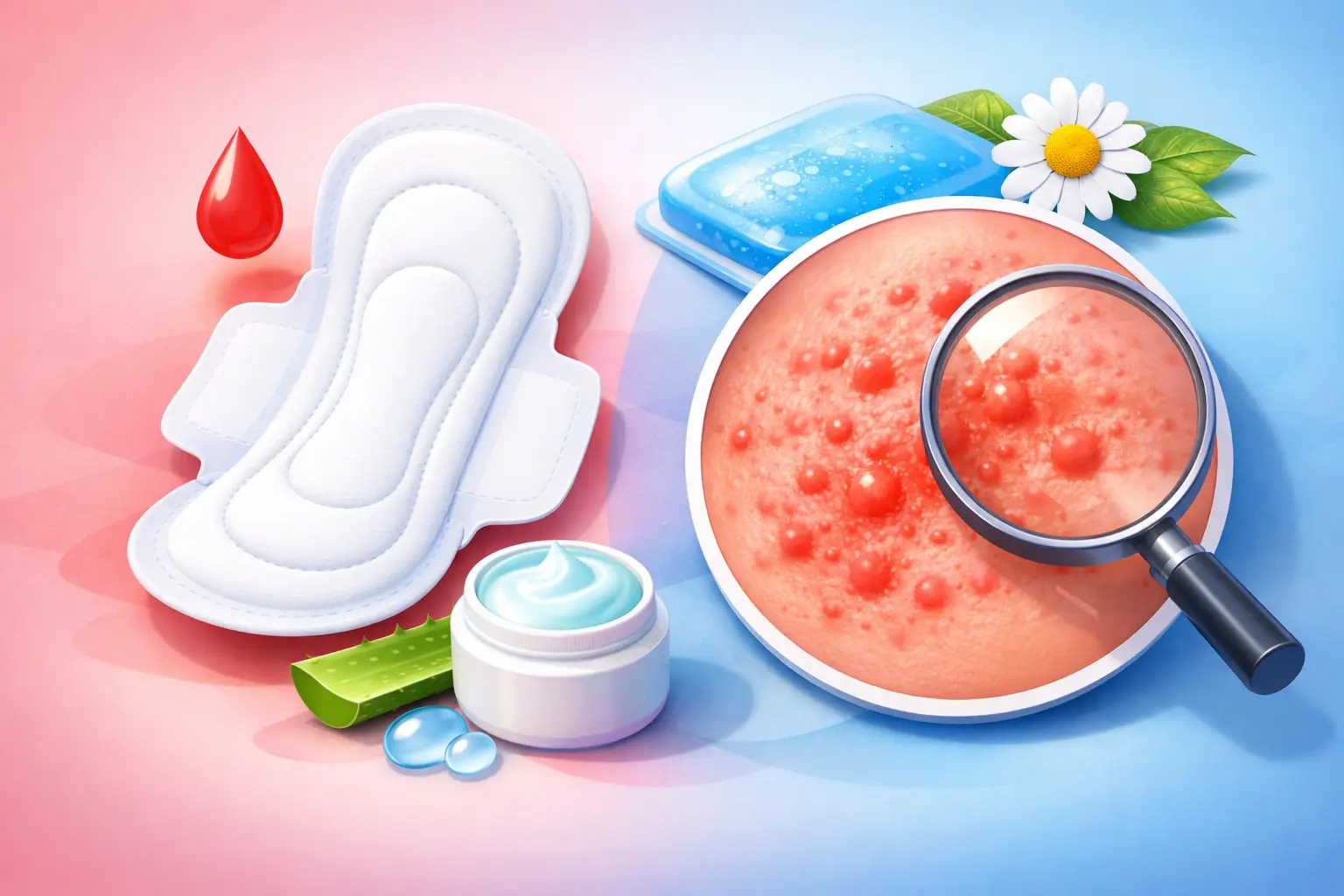
That sore, itchy feeling during your period can make even a reliable pad feel impossible to wear. So, can period pads cause rashes? Yes, they can contribute to irritation for some people, particularly when heat, moisture, friction or sensitivity to certain materials come together.
A pad rash is common, uncomfortable and usually manageable. It is not something you should have to simply put up with. Understanding what may be irritating your skin can help you make small, practical changes that keep you feeling dry, protected and more at ease throughout your cycle.
Can period pads cause rashes or irritation?
Pads do not automatically cause rashes, but the vulval area is delicate and can react when it stays warm or damp for too long. Menstrual fluid, sweat and limited airflow can soften the outer layer of skin. Add movement, a close-fitting pair of knickers or a pad that rubs, and irritation can develop.
Some people are also more sensitive to ingredients or materials used in menstrual products. Fragrance, dyes, adhesives, lotions and the surface material of a pad may trigger contact dermatitis, which is an itchy or inflamed skin reaction. A rash can look red, feel tender or sting when you wee. You may notice tiny bumps, chafed patches or skin that feels unusually dry.
It is not always the pad itself. A new shower gel, scented intimate wash, laundry detergent, tight clothing or an infection can cause similar symptoms. The timing still matters: if discomfort starts after changing pad brands, wearing pads for longer, or using a scented product, that is a useful clue.
Why pad rashes happen
The most common cause is a combination of moisture and friction. During a busy school day, a long shift, a workout or overnight sleep, a pad can hold moisture close to the skin. If it is not changed often enough for your flow, rubbing becomes more likely.
A pad that is too small may move around and chafe. One that is too bulky or not suited to your underwear can also create friction at the edges. On heavier days, leaks and dampness may make the problem worse. On lighter days, a dry pad surface rubbing against sensitive skin can be irritating too.
Fragrance can be another issue. Scented pads may seem appealing for freshness, but fragrance is a known trigger for sensitive skin. The same applies to perfumed wipes, sprays and washes. Your vulva does not need perfume to be clean. Gentle washing with water, followed by careful drying, is usually enough for the external area.
Material choice is personal. Some people feel perfectly comfortable with conventional pads, while others find that breathable, soft-feel and microplastic-free options reduce rubbing and the clammy feeling that can build during the day. If you have had repeated irritation, simplifying your routine and choosing pads designed with sensitive skin in mind is a sensible place to start.
What to do when you have a pad rash
First, give the irritated area a break from anything that may be aggravating it. Switch to an unscented pad with a soft, breathable top layer and change it regularly, even if it is not fully saturated. On a lighter flow, that may mean every few hours; on a heavier flow, you may need to change sooner. The goal is to avoid prolonged dampness and rubbing.
Wash the outer genital area gently with lukewarm water. Do not scrub, use deodorising products or apply harsh soap directly to the vulva. Pat dry with a clean, soft towel rather than rubbing. Loose, breathable cotton underwear and less restrictive clothing can also reduce heat and friction while your skin settles.
A simple, fragrance-free barrier ointment may help protect chafed external skin from moisture and rubbing. If you are unsure which product is appropriate, ask a pharmacist. Avoid using creams inside the vagina unless a healthcare professional has specifically advised it.
Try not to scratch, even when the itch is tempting. Scratching can damage the skin further and make it more vulnerable to infection. If symptoms are mild, they often improve within a few days once the trigger is removed.
When to speak to a clinician
A period pad rash should not be ignored if it is severe, persistent or unfamiliar. Contact a GP, sexual health clinic or pharmacist if the rash lasts more than a few days, keeps returning, spreads, becomes very painful, or comes with swelling, blisters, sores, unusual discharge or a strong smell. These symptoms may point to an infection, eczema or another skin condition rather than simple friction.
Seek urgent medical advice if you feel unwell with a high temperature, dizziness, vomiting or a rapidly worsening rash. Those symptoms need prompt assessment.
How to prevent rashes from period pads
Prevention is often about matching your pad to your flow and your day. Use a more absorbent pad when you need it, especially overnight, rather than relying on one pad for too long. Changing before a pad feels damp or heavy supports both comfort and freshness.
Choose unscented products wherever possible if your skin is reactive. It can also help to avoid switching several products at once. If you try a new pad, keep your wash, detergent and underwear routine the same for a cycle or two. That makes it easier to work out what your skin likes.
Good fit matters as much as absorbency. A flexible pad should stay in place without bunching, while wings can help reduce movement and protect underwear. For nights, use a pad designed for longer coverage rather than layering liners or wearing a daytime pad beyond its comfortable limit.
For people prone to irritation, look for features that support a drier, cleaner-feeling experience: a soft top sheet, dependable absorption, breathable construction and no unnecessary fragrance. Elun period pads are made for skin-conscious comfort, with microplastic-free materials and antibacterial nano ribbon technology designed to support lasting freshness and dryness.
A few habits that make a difference
Your period routine does not need to be complicated. Keep a spare pad in your bag so you are never forced to wear one longer than feels comfortable. Change out of sweaty gym clothes promptly, and choose breathable underwear on the days your skin feels most sensitive.
It is also worth remembering that more washing is not always better. Over-cleansing can disrupt and dry out delicate external skin, leaving it more prone to stinging. Gentle care, dry underwear and a pad that suits your flow are usually far more effective than heavily fragranced products marketed as “fresh”.
If you are a teen or new to periods, a rash can feel worrying or embarrassing, but it is a very reasonable thing to ask about. Speak to a trusted adult, pharmacist, school nurse or GP if you need reassurance. You deserve period care that lets you get on with lessons, work, travel and sleep without constantly thinking about discomfort.
Your skin is giving you useful feedback, not failing you. Choose comfortable protection, change regularly and treat recurring irritation as a reason to adjust your routine or seek advice, so every period can feel a little more confident and a lot less distracting.