

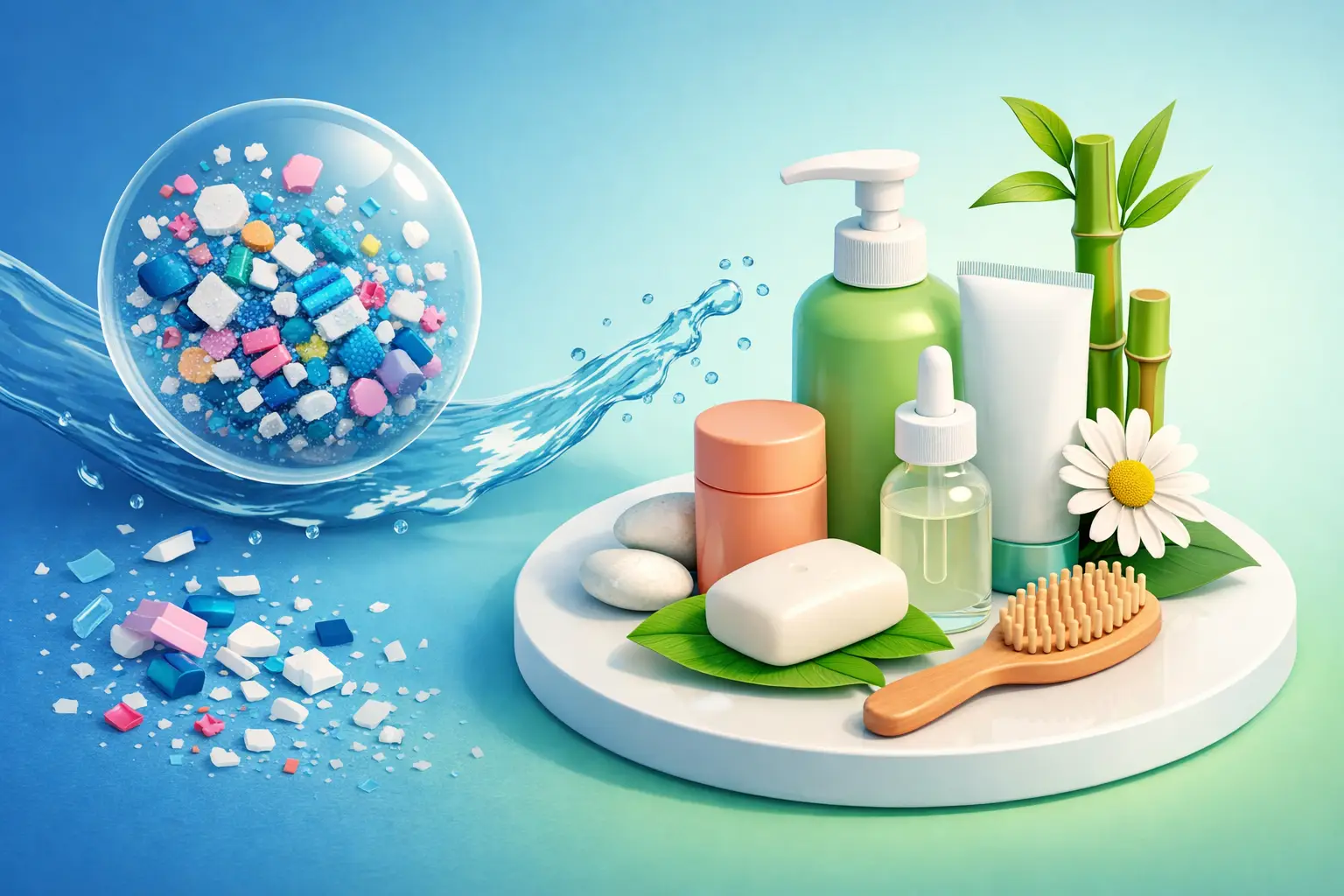
If you have ever turned over a pack of pads, a face mask or a skincare patch and wondered what is actually touching your skin for hours, you are asking the right question. More shoppers are now looking for microplastic free personal care products not because it sounds good on a label, but because daily essentials should feel safe, gentle and genuinely fit for sensitive skin.
That matters even more in products used during your period. Menstrual care sits close to intimate skin, often for long stretches, through busy workdays, school runs, commutes and overnight wear. When comfort, breathability and cleanliness are non-negotiable, the materials inside a product stop being a minor detail and start becoming the whole point.
Why microplastic free personal care products matter
Microplastics are tiny plastic particles that can be intentionally added or shed from certain materials over time. In personal care, concern usually comes down to two things – what sits against your skin, and what eventually ends up in the wider environment.
For skin-conscious shoppers, the first issue is often the most immediate. Sensitive skin does not care about marketing language. It responds to friction, trapped moisture, poor breathability and irritating materials. That is why people comparing period products, patches and other hygiene essentials increasingly want simpler, more considered construction.
The second issue is long term. Choosing products made without microplastics can help reduce unnecessary plastic exposure in items you use again and again. It is not the only sustainability factor that matters, but it is a practical one, especially when these products are part of your monthly routine.
What counts as microplastic free in personal care?
This is where things can get slightly confusing. Some personal care products contain microplastics in formulas, while others may rely on plastic-heavy layers, fibres or components in the product itself. A microplastic free claim should be clear about what part of the item it refers to.
In rinse-off beauty, that may mean no plastic microbeads or synthetic particles. In hygiene and period care, it can mean the product materials are designed without microplastics in the layers that matter most. Because categories differ, it is worth looking beyond a bold front-of-pack promise and checking how the product explains its construction.
A trustworthy brand should make the benefit easy to understand. You should not need a chemistry degree to work out whether a pad, liner or patch is suitable for sensitive skin and aligned with your values.
How to choose microplastic free personal care products
The best place to start is not with trends but with use. Ask yourself where the product sits on the body, how long you wear it, and what your skin usually reacts to.
For period care, comfort comes first
Pads, night pads and panty liners need to do more than absorb. They need to stay comfortable, help skin feel fresh and reduce the chance of irritation across hours of movement. If you have ever dealt with rubbing, stickiness or that unpleasant damp feeling, you already know that absorbency alone is not enough.
Look for soft, skin-conscious materials, good breathability and claims that speak directly to rash reduction, dryness and hygiene. Clinically tested and antibacterial features can also add reassurance, especially if you are prone to discomfort during your cycle. A product can be microplastic free and still need to prove it performs well. The ideal choice gives you both peace of mind and practical protection.
For skincare add-ons, think contact time and sensitivity
Face masks, nose strips and acne patches may seem less significant, but they still sit directly on the skin. If you are using them regularly, material quality matters. Gentle adhesion, clean ingredients and clear product claims are all worth checking.
The rule is simple: if it touches skin, especially sensitive skin, it should earn your trust. That includes products marketed as quick fixes or beauty extras.
The trade-off shoppers often worry about
There is a common assumption that microplastic free means less effective, less comfortable or more expensive. Sometimes consumers expect they will have to sacrifice softness, dryness or wear time in order to get cleaner materials.
That does not have to be true. Better product design can close that gap. In period care, the right structure and absorbent technology can still deliver thinness, flexibility and odour control without relying on materials that leave shoppers questioning what they are wearing.
What does vary is how honestly brands explain the benefit. Some lean heavily on eco language but say very little about comfort. Others focus on performance but ignore material transparency. The strongest products do both. They tell you how they protect your skin, how they support freshness, and why their construction is worth choosing.
Microplastic free personal care products for sensitive skin
Sensitive skin changes the conversation. When your skin reacts easily, you are rarely shopping for abstract sustainability points alone. You are looking for products that help you feel normal, fresh and comfortable throughout the day.
That is why material claims matter most when they connect to lived experience. Less irritation. Better dryness. Fewer rashes. More confidence wearing a pad through school, work, exercise or sleep. Those are not small details. They shape how secure you feel in your own body.
For many women, period discomfort is already enough to manage. You should not also have to worry that the product designed to help you is making things worse. Choosing microplastic free options can be part of a gentler, more considered routine, particularly when paired with antibacterial protection and skin-focused testing.
What to look for on the pack
Good packaging should answer the questions you actually have. Is it suitable for sensitive skin? Has it been clinically tested? Does it offer antibacterial protection? Will it stay dry for longer? Is the microplastic free claim explained clearly?
It also helps when brands offer practical pack sizes. Trial packs and sample options make it easier to switch without waste or guesswork. That is especially useful if you are comparing products for a teenager starting periods, someone with recurring irritation, or your own changing cycle needs.
One of the most reassuring signs is when a product’s benefits are specific rather than vague. Comfort, freshness and hygiene should be backed by real design choices, not fluffy wording.
Why innovation still matters
Cleaner materials are only one part of a better personal care product. Innovation matters because women need products that keep up with real life. That means staying dry on long days, feeling secure overnight, reducing odour and helping skin stay calm.
When technology is used well, it improves comfort instead of complicating it. For example, antibacterial layers or advanced absorbent structures can support freshness and reduce the conditions that often lead to discomfort. That kind of innovation is especially valuable in period care, where confidence often depends on what you do not have to think about – leaks, dampness, rubbing or smell.
This is where brands such as Elun stand out. A 100% microplastic free approach paired with antibacterial nano ribbon technology speaks to what customers actually want: cleaner materials, reliable protection and the reassurance that comfort has not been treated as optional.
A smarter way to shop
If you are moving towards microplastic free personal care products, you do not need to replace everything overnight. Start with the products you use most often and the ones that stay on your skin the longest. Period pads, liners and patches are a sensible place to begin because the benefit is personal as well as environmental.
Pay attention to how your skin feels after switching. Better products tend to be noticeable in a very unglamorous but important way – less fuss, less discomfort and fewer moments of second-guessing. You feel fresher. You feel more at ease. You get on with your day.
It is also worth remembering that no single claim makes a product perfect. Microplastic free is meaningful, but it works best alongside softness, absorbency, breathability and hygiene performance. The right product should not force you to choose between values and comfort.
Personal care is at its best when it feels almost invisible – quietly protective, easy to trust and kind to skin. If a product can give you that while cutting out microplastics, it is not a nice extra. It is a better standard to expect every day.