

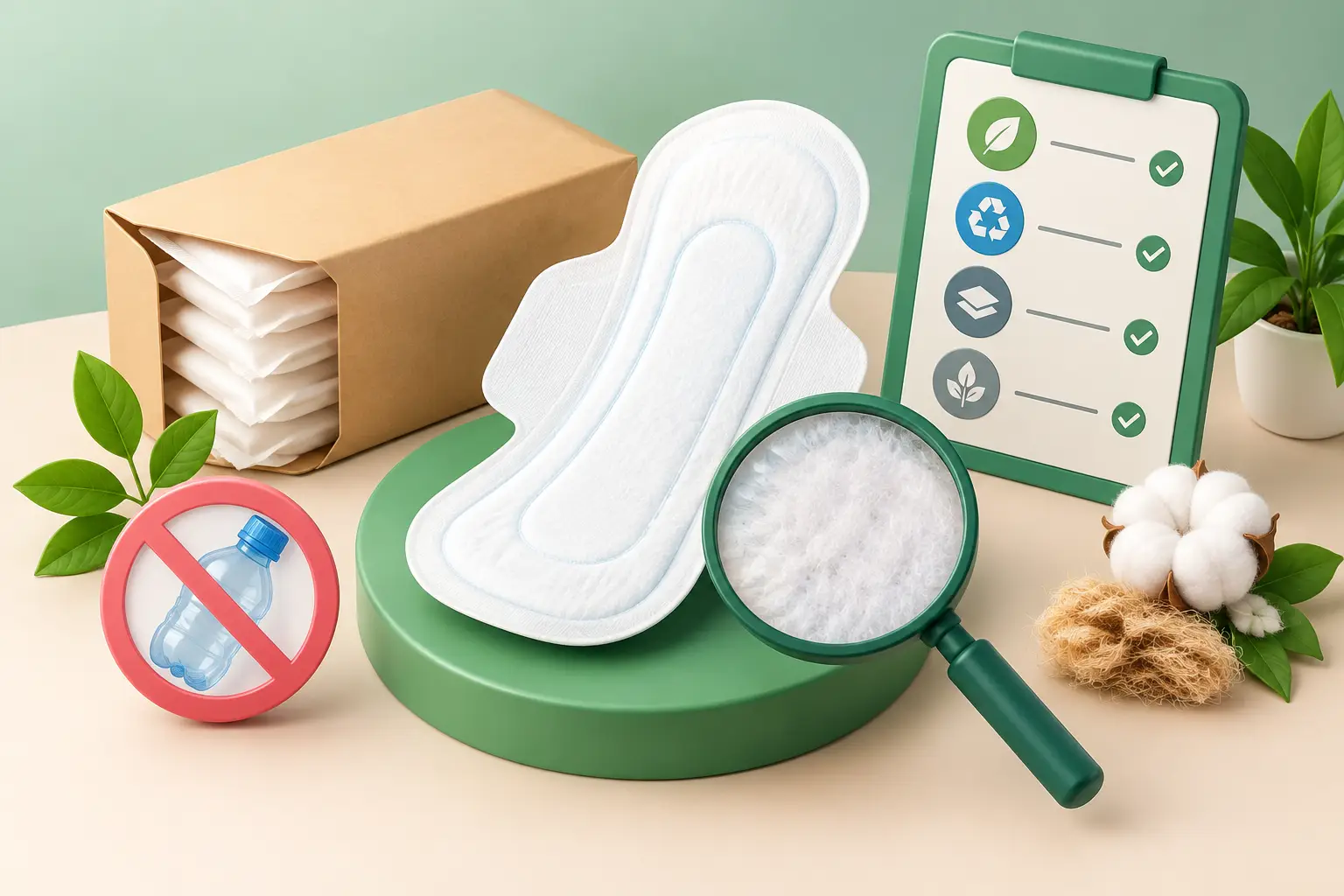
That soft, thin pad in your handbag may look simple, but it is usually made from several different layers. So, are pads plastic free? Often, no. Many conventional disposable pads contain plastic-based materials in the top sheet, absorbent core, leak-proof back layer, adhesive, wrapper or release paper.
That does not mean every pad is the same, or that you need to settle for products that leave you feeling irritated, sweaty or uncertain about what is next to your skin. Knowing what to look for makes it easier to choose period protection that supports your comfort, confidence and values.
Are pads plastic free, or just labelled differently?
“Plastic free” sounds straightforward, but it can mean different things depending on the brand. A pad may be free from certain plastics while still using plastic elsewhere in its construction. Another may use plant-based materials in the top layer but retain a plastic backsheet for leak protection. This is why the wording on the pack matters.
A fully plastic-free disposable pad aims to avoid plastic throughout the pad itself, including the layers that absorb fluid, prevent leaks and hold the pad in place. These products exist, but they can feel different, perform differently and may cost more than standard pads.
Microplastic-free is a more specific claim. It means the product is designed without tiny plastic particles that may be added to materials or shed during use and disposal. It does not automatically mean every part of the product and its packaging contains no plastic at all. Both claims can be meaningful, but they are not interchangeable.
The best approach is to look beyond a front-of-pack promise. Check whether the claim applies to the whole pad, selected layers, or only the packaging. Clear brands should explain this in plain language.
Where plastic can be found in period pads
Disposable pads need to manage moisture, prevent leaks and stay securely in place while you move. Conventional designs often use synthetic materials because they are lightweight, flexible and effective at containing fluid. Plastic may appear in several places.
The top sheet is the layer against your skin. It may be made with synthetic fibres designed to move fluid through quickly and create a dry-feeling surface. For some people, especially those prone to sensitivity, heat or chafing, this layer can be a key comfort consideration.
The absorbent core may combine cellulose pulp with super-absorbent polymers. These materials help turn liquid into gel and reduce the risk of leaks, but their exact composition varies widely from one brand to another.
The backsheet is commonly a thin plastic film. Its job is to stop fluid passing through onto underwear. It is a practical feature, particularly for heavy-flow days and overnight protection, but it is also one of the most common plastic components in a standard pad.
Then there are the adhesives, wings, individual wrappers and release papers. A pad can have a more considered main body while still including plastic in these supporting elements. That is not a reason to dismiss a product outright. It is a reason to understand what you are choosing.
Why material choices matter for your skin
Your period can already bring enough discomfort. A pad should not add rubbing, trapped moisture or a rash to the list. Materials are only one part of the picture, but they can affect how a pad feels over hours of wear.
A pad that stays damp against the skin may feel uncomfortable and can contribute to friction, particularly during long school days, work shifts, travel or warm weather. Breathability, softness and fast absorption all matter. So does the fit: a pad that bunches or shifts is more likely to rub, even if its material list looks impressive.
If you have sensitive skin, consider avoiding products with harsh fragrances or unnecessary additives. Fragrance can mask odour, but it can also be unwelcome near delicate skin. Freshness is better supported by reliable absorption, regular changing and a clean, comfortable surface rather than perfume alone.
It also helps to remember that “natural” does not guarantee irritation-free, and “synthetic” does not automatically mean uncomfortable. Your own skin, flow and routine matter. The most suitable pad is one that feels dry, stays secure and gives you peace of mind without causing discomfort.
Plastic-free pads and leak protection: the real trade-off
Leak protection is non-negotiable for many people, especially overnight or on heavier days. This is where the conversation around plastic-free pads becomes more nuanced. Plastic films have long been used because they create a dependable barrier against leaks. Replacing them requires careful product design.
Some lower-plastic or plastic-free options use alternative barriers and plant-derived materials. These may suit your priorities well, but it is worth trying them during a lower-pressure moment first, such as a lighter day at home. You can then see how they handle movement, your flow and the amount of time you usually wear a pad.
For night-time, look beyond the material claim alone. Choose a pad with enough length, a secure shape and absorption suited to your flow. A pad that is kind to your skin but does not protect your bedding will not feel like a comfortable choice. You deserve both thoughtful materials and dependable performance.
How to choose a better pad for your routine
Start with the claim you care about most. If your priority is avoiding all plastic, seek a brand that clearly states the full pad is plastic-free and explains its materials. If you are focused on reducing exposure to microplastics, look specifically for a microplastic-free claim rather than assuming the two are the same.
Next, think about when you will use it. A slim liner may be enough for light spotting, but it is not designed for a heavy-flow day. Day pads need to stay discreet and flexible under clothing, while night pads need wider coverage and lasting absorbency. Matching the product to the moment helps prevent leaks and reduces the temptation to wear one pad for too long.
Comfort details are worth checking too. Look for a soft top layer, a shape that follows your body and wings that stay put without pulling at your underwear. If you often experience irritation, choose unscented options and pay attention to how your skin feels after a full day rather than judging a pad after just one hour.
Finally, consider the full environmental picture. Materials matter, but so do individual wrapping, outer packaging, how frequently you change products and whether the pad can be disposed of responsibly in your area. Disposable pads should never be flushed, even if a product uses more plant-based materials. Wrap and place them in a bin instead.
A clearer way to read pad claims
Marketing terms can be helpful when they are backed by specifics. Look for brands that answer simple questions clearly: What is the top sheet made from? Does the claim apply to the pad, the wrapper or both? Is it fragrance-free? Is it tested for sensitive skin? How does it manage odour and moisture?
Be cautious with vague phrases such as “eco-friendly” or “natural feel” when no material information follows. A better product description gives you enough detail to make your own decision without asking you to guess.
Elun focuses on 100% microplastic-free period care with antibacterial nano ribbon technology, designed to support lasting dryness, freshness and comfortable protection for sensitive skin. For anyone comparing pads closely, that level of product purpose matters: you should be able to see what a pad is designed to do and why it may suit your routine.
Choosing period products is personal. You may prioritise fully plastic-free materials, a microplastic-free design, sensitive-skin comfort, reliable overnight coverage or a balance of all four. The right pad is not simply the one with the boldest claim on the packet. It is the one that helps you move through your day feeling protected, comfortable and completely at ease.