

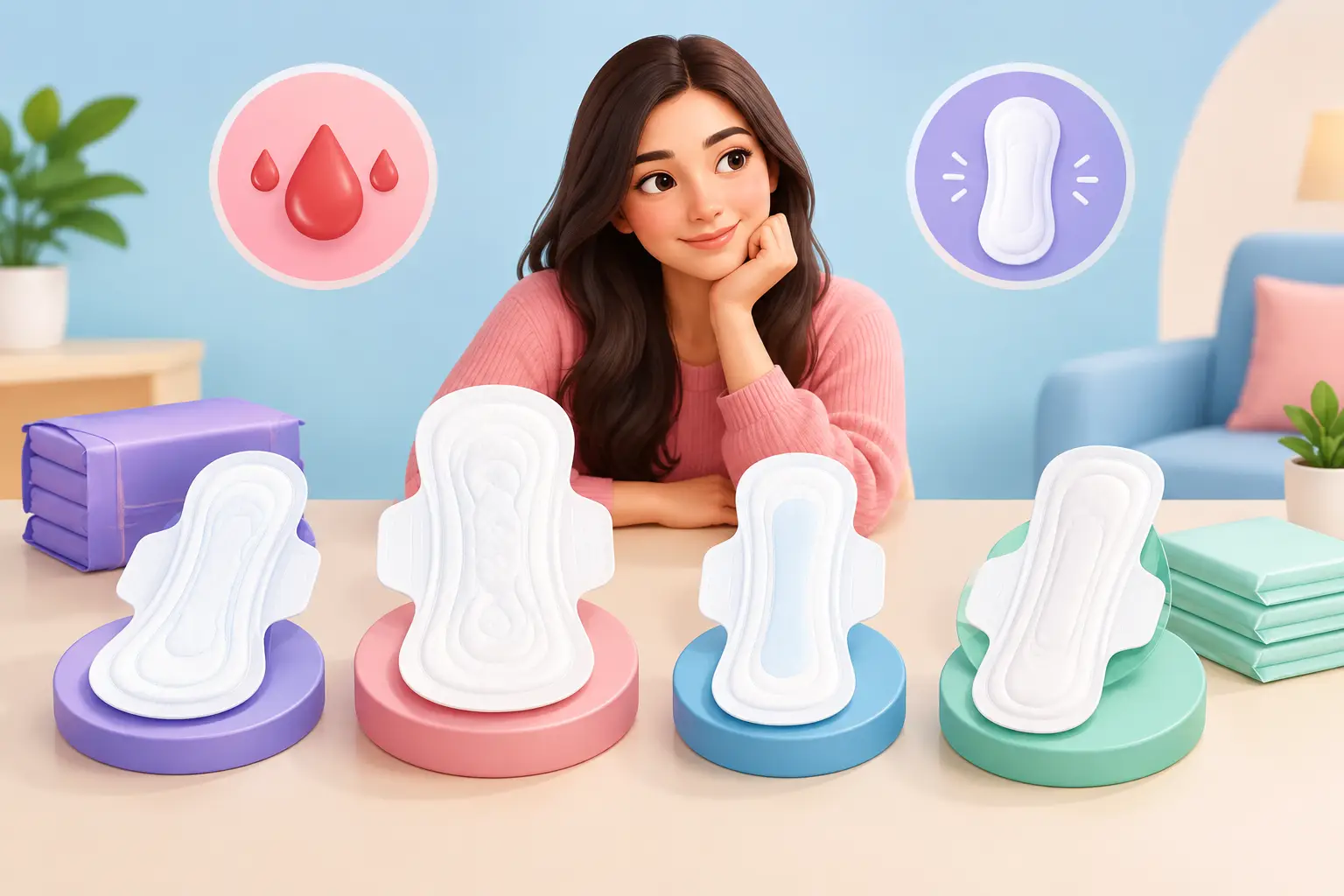
A heavy-flow day should not mean checking your clothes every hour, avoiding a favourite outfit or feeling distracted through work, school or sleep. If you are wondering which pads suit heavy periods, look beyond the word “heavy” on the pack. The right pad needs to manage your flow, stay comfortable against sensitive skin and give you enough coverage for the way you move through your day.
Heavy periods can look different from person to person. You may have one or two very heavy days at the start of your cycle, experience a stronger flow overnight, or find that your period is unpredictable. A dependable pad is not simply the thickest option. It is one with the right absorbency, shape, length and surface feel for the moment you need it.
Which pads suit heavy periods best?
For most people, heavy-flow sanitary pads with wings and extended back coverage are the most reliable choice. They are designed to absorb more fluid than regular pads, while wings help hold the pad in place and protect the sides of your underwear from leaks.
During the day, a long heavy-flow pad may offer the balance you need: enough coverage for commuting, sitting at a desk, walking between appointments or being active, without feeling overly bulky. At night, choose a dedicated night pad. These are usually longer and wider at the back, where leaks are more likely when you are lying down or changing position in your sleep.
The best choice still depends on your body and your flow. If you regularly leak at the front, a pad with more front coverage may feel safer. If leaks tend to happen at the back overnight, prioritise length and a wider rear section. If your pad shifts while moving, wings and a flexible design matter as much as absorbency.
Start with absorbency, not thickness
It is easy to assume a thicker pad means better protection. In practice, thickness alone does not tell you how well a pad will perform. What matters is how quickly the core draws fluid away from the surface, locks it in and helps the top layer feel dry.
A high-absorbency core can make a pad feel thinner and more comfortable than an older-style bulky pad, while still providing strong protection. On your heaviest days, choose pads clearly labelled for heavy flow, super flow or overnight use rather than trying to make a regular pad work harder than it is designed to.
If you find yourself changing a regular pad far sooner than expected, feeling damp shortly after putting it on or seeing fluid spread towards the edges, move up an absorbency level. There is no prize for choosing the smallest pad possible. The right pad is the one that lets you focus on your day with confidence.
Choose the right length for daytime and night-time
Length is one of the most useful features to compare when choosing pads for a heavy period. A longer pad provides a larger area of protection and can reduce the chance of leaks when your flow changes direction as you sit, walk or sleep.
For daytime, many people prefer a long pad that sits comfortably without feeling restrictive. Look for a shape that follows your body rather than one that feels stiff or wide between the legs. Flexibility matters, especially if you are travelling, working long shifts or moving between classes.
For night-time, it is worth using a pad made specifically for sleep. Night pads are generally longer, with extra coverage at the back. That extra protection is useful even if your daytime flow is manageable, because lying down can change where fluid collects. Wearing a night pad before bed can make a real difference to how rested and reassured you feel in the morning.
Wings help prevent movement and side leaks
For a heavy flow, wings are more than an optional extra. They wrap around the gusset of your underwear to help keep the pad centred, which is particularly helpful if you walk a lot, exercise gently or tend to turn in your sleep.
A pad that moves can leak even when it has good absorbency. Wings reduce that movement and add a layer of side protection where leaks often happen. They should feel secure without pulling, bunching or sticking uncomfortably to the fabric.
Pairing wings with well-fitting underwear can also improve protection. Very loose underwear may allow the pad to shift, while underwear that is too tight can make any pad feel less comfortable. A secure, comfortable fit gives the pad the best chance to do its job.
Sensitive skin needs a gentler surface
Heavy periods often mean wearing pads for longer or changing them more frequently. That can make sensitive skin more prone to rubbing, heat, moisture and irritation. If you are dealing with itching, redness or a rash during your period, the pad’s top layer and materials deserve as much attention as its absorbency.
Choose pads designed with a soft, breathable-feeling surface and avoid products that leave you feeling hot or damp. Changing regularly is essential, even with high-absorbency pads. A pad should support freshness and dryness, not encourage you to wear it for longer than feels hygienic or comfortable.
For people who are conscious about materials, microplastic-free pads can be a considered choice. It is also worth looking for products that prioritise skin comfort and hygiene features rather than relying on perfume to mask odour. Fragrance can be an irritant for some people, especially when skin is already sensitive during menstruation.
Elun pads are designed around this balance of dependable absorption, comfort and freshness, with antibacterial nano ribbon technology and a 100% microplastic-free approach for more reassuring period care.
Build a simple plan for your heaviest days
Your period rarely follows the same pattern every month, so it helps to keep more than one pad type on hand. A practical routine may include heavy-flow pads for the day, longer night pads for sleep and a spare pad in your bag for unexpected changes.
On days when your flow is at its heaviest, change before your pad feels full rather than waiting for discomfort. This helps you feel fresher and can lower the risk of leaks. If you are out for several hours, keep a small pouch with pads and a spare pair of underwear. It is a simple preparation that can make a long day feel much less stressful.
If your flow becomes lighter later in your period, you may prefer to switch to a regular pad or panty liner. Using the most suitable absorbency for each stage of your cycle can feel more comfortable than wearing a heavy-flow pad throughout.
When heavy bleeding needs medical advice
A heavy period is common, but it should not be something you feel you simply have to endure without support. Speak to a GP or healthcare professional if you are soaking through a pad every hour or two, regularly bleeding through clothes or bedding, passing large clots, feeling dizzy or unusually tired, or finding that your period stops you from normal daily activities.
It is also sensible to seek advice if your periods suddenly become much heavier than usual, last longer than seven days or are accompanied by severe pain. The right pad can provide valuable protection, but it cannot replace medical care when your body is signalling that something has changed.
The most reassuring choice for a heavy period is one that fits your actual life: high absorbency for your strongest-flow days, reliable wings, the right length for day or night, and a soft surface that treats sensitive skin with care. You deserve protection that lets you move, rest and get on with your plans without second-guessing every step.