

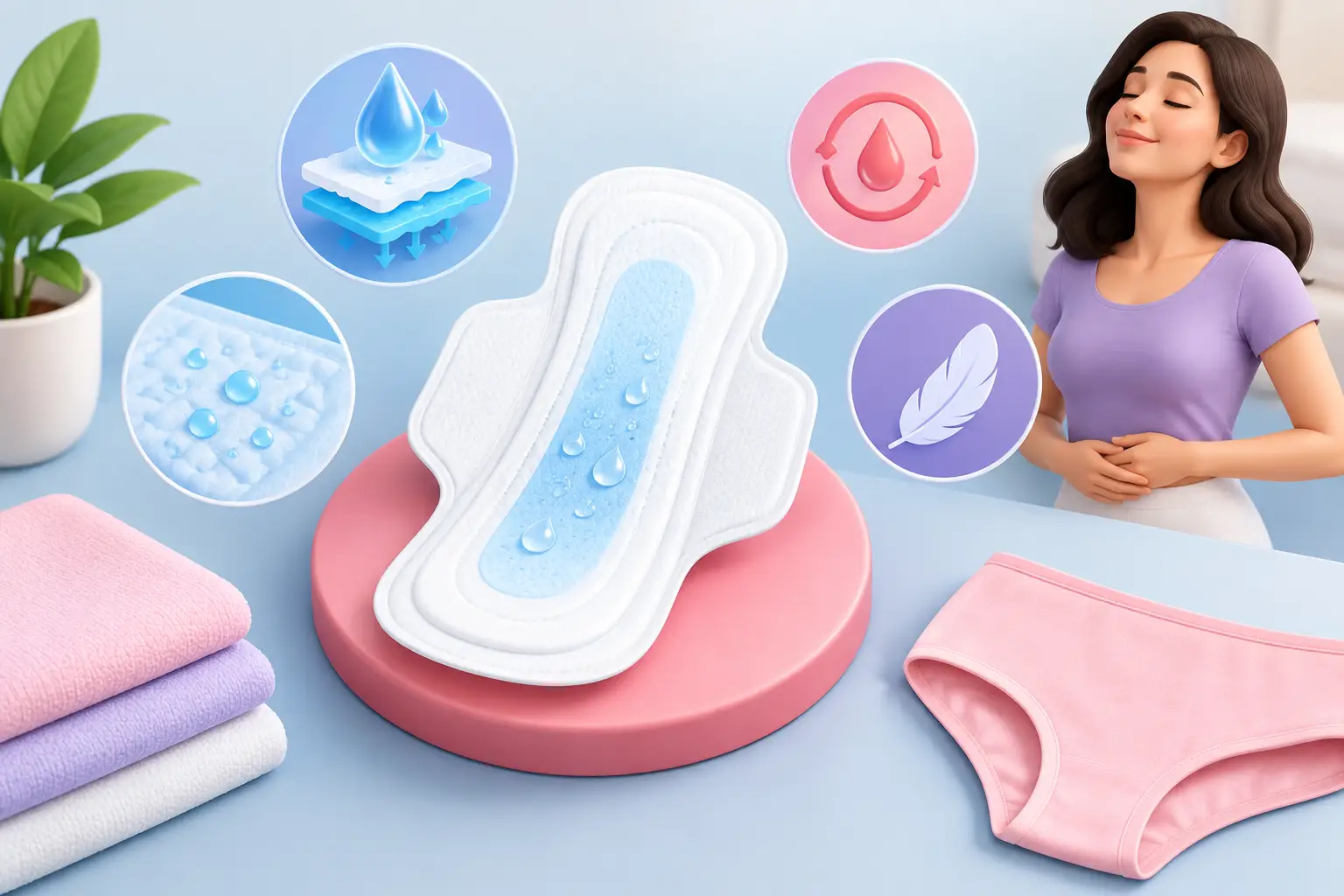
A pad can look as though it is doing its job while still leaving you with an unpleasant damp feeling. If you have ever wondered, why do pads feel wet, the answer is usually a mix of fluid movement, warmth, fit and the pad’s materials – not necessarily a leak. But you should not have to spend your period feeling sticky, uncomfortable or unsure.
A good pad should draw menstrual fluid away from the surface quickly, hold it securely in its absorbent core and help the top layer feel as dry as possible against your skin. When one of those stages falls short, dampness becomes much more noticeable.
Why do pads feel wet during your period?
Menstrual fluid does not behave exactly like water. It can be thicker, contain clots and arrive in sudden gushes, especially when you stand up after sitting or sleeping. A pad may absorb the fluid eventually, yet still feel wet for a short time if the top sheet cannot pull moisture through quickly enough.
The amount and speed of your flow matter too. On a heavier day, fluid can sit near the surface before it reaches the absorbent core. If the pad is close to full, pressure from walking, sitting or crossing your legs can push moisture back towards the top. This is often called rewetting, and it can make a pad feel damp even without visible leakage.
Heat and humidity add another layer. The vulval area naturally gets warm during the day, particularly under close-fitting clothes, tights or synthetic underwear. Sweat, normal vaginal discharge and period fluid can combine, creating a clammy feeling that is easy to mistake for a pad failing.
Normal discharge can contribute
Clear, white or creamy discharge is a normal part of the menstrual cycle for many people. You may notice more of it before your period, around ovulation or during hormonal changes. When discharge mixes with blood, it can increase the amount of moisture your pad needs to manage.
A light pad or panty liner may be enough on low-flow days, but it can feel wet quickly if your discharge is heavier than usual. Choosing protection for your actual needs that day, rather than what you usually wear, makes a real difference to comfort.
The role of pad fit and absorbency
Absorbency is not just about how much fluid a pad can hold. It is also about how quickly it absorbs, how evenly it distributes fluid and how dry the surface remains afterwards. A bulky pad is not automatically more comfortable or more effective. What matters is whether its absorbent layers work with your flow.
Fit is equally important. A pad that is too narrow may allow fluid to gather at the edges. One that is too short can leave you exposed at the front or back, depending on how you sit, sleep and move. If it bunches in the middle, fluid may pool rather than spreading through the core.
For daytime, a thin pad with reliable absorption and wings can stay in place while you walk, work, study or travel. At night, a longer pad with broader back coverage is usually the better choice, particularly if you move around in your sleep or experience a heavier flow overnight.
Your underwear also affects how a pad performs. Snug, breathable knickers help keep it flat against the body without compressing it excessively. Very loose underwear can let the pad shift, while extremely tight clothing may trap heat and press fluid back towards the surface.
Your position can change where fluid goes
Fluid does not always land in the centre of a pad. When sitting, it may collect towards the back. When lying down, it can travel further than expected before it is absorbed. If you regularly find dampness or marks in one area, adjust your protection rather than assuming every pad is the same.
Try a longer option for sleep, or a design with more coverage where you need it most. On a heavier day, changing a little earlier can be more comfortable than waiting until a pad is visibly saturated.
When dampness can lead to irritation
Feeling wet is more than a minor inconvenience. Prolonged moisture, friction and heat can make delicate skin feel sore, itchy or irritated. This is especially frustrating if you are prone to sensitivity, rashes or chafing during your period.
Fragranced products, harsh surface materials and pads that do not stay dry enough for your flow can all make irritation more likely. Your skin deserves gentle contact, not a product that leaves you counting down until your next bathroom break.
Changing your pad regularly helps protect both comfort and hygiene. There is no single timetable that suits everyone because flow varies, but change it whenever it feels wet, full, uncomfortable or after several hours of wear. On heavy days, you may need to change more often. It is also sensible to change after exercise, when sweat can make dampness more noticeable.
For a fresher, more comfortable experience, look for pads designed with breathable, skin-conscious materials and fast fluid absorption. Elun pads use antibacterial nano ribbon technology to support lasting freshness, odour control and a drier feel, while remaining 100% microplastic free and made with sensitive skin in mind.
How to feel drier and more comfortable
Small changes can make your period protection work much harder for you. Start by matching the pad to your current flow. A lighter option can be ideal towards the end of your period, while a more absorbent pad offers better reassurance on days when your flow arrives quickly or heavily.
Pay attention to where your pad becomes wet first. If it is mainly at the back, choose longer coverage. If it gathers at the sides, check that the pad is centred and that the wings are securing it properly. If the surface feels damp all over soon after changing, a quicker-absorbing pad may be a better match.
Breathable cotton underwear and looser clothing can also help reduce trapped heat. If you are exercising, pack a fresh pad so you can change afterwards. During long school days, shifts or journeys, carrying a few spares lets you change when you need to rather than waiting until discomfort distracts you.
It can help to avoid using a pad for significantly longer than intended just because it has not leaked. Dryness, freshness and how your skin feels are valid reasons to change. Period care should support your day, not become something you are constantly managing.
When to speak to a healthcare professional
Most occasional dampness is related to flow, discharge, sweat or the pad itself. However, contact a GP, sexual health clinic or pharmacist if you notice a strong or fishy odour, unusual green, yellow or grey discharge, persistent itching, burning, pelvic pain, sores or a rash that does not improve after switching products.
You should also seek advice if your periods suddenly become much heavier, you are soaking through pads very quickly, or you feel dizzy, weak or unwell during your period. These symptoms do not always mean something serious, but they deserve proper support rather than guesswork.
A period pad should give you quiet confidence: secure enough to protect against leaks, gentle enough for sensitive skin and dry enough that you can focus on your plans. If yours repeatedly feels wet, treat that feeling as useful information. A better fit, the right absorbency and more thoughtful materials can make every period day feel considerably easier.