

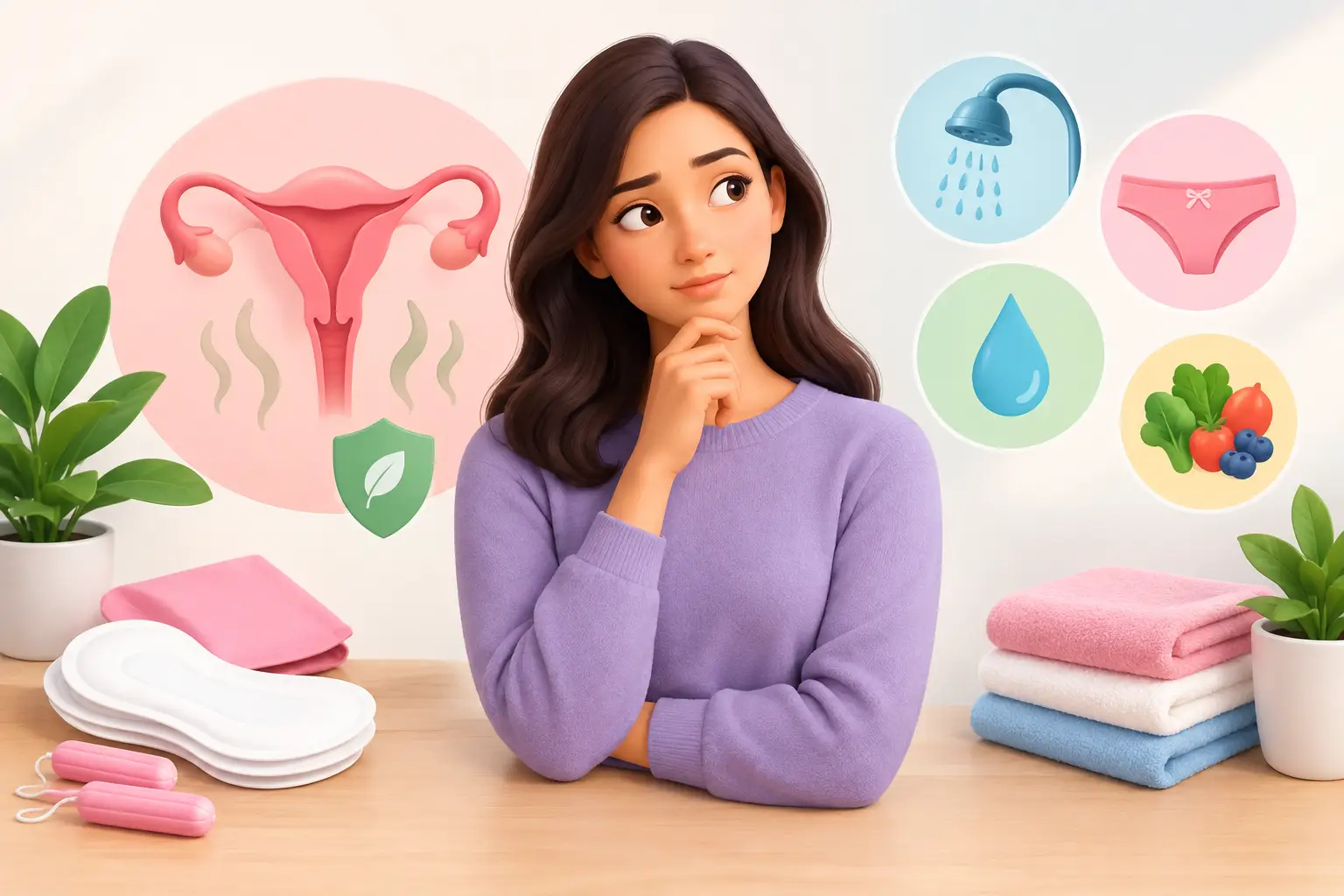
A slight change in scent during your period can feel more noticeable than it actually is, especially when you are busy at work, sitting through lessons, travelling or trying to sleep. This guide to menstrual odour concerns is here to replace worry with clear, practical information. Most period-related odour is normal, manageable and not a sign that you are unclean.
Your body has a natural scent, and menstrual blood does too. The goal is not to smell like nothing at all. It is to feel dry, comfortable and confident, while knowing when a new or strong smell deserves medical advice.
Why period blood can smell different
Menstrual fluid is made up of blood, uterine lining and vaginal fluid. When it comes into contact with air, bacteria and a pad over several hours, it can develop a mild metallic, musky or slightly earthy scent. This is particularly common on heavier-flow days or first thing in the morning after wearing a night pad.
Sweat can make the scent more apparent too. The vulva has sweat glands, and close-fitting underwear, warm weather, exercise and long commutes can trap heat and moisture. That does not mean poor hygiene. It simply means the area needs breathable comfort and regular product changes.
A mild odour that disappears after changing your pad and washing externally with water is usually within the normal range. What matters more is a sudden change, intensity, or an odour that comes with other symptoms.
A guide to menstrual odour concerns: what is normal?
There is no single ‘normal’ period smell. Your scent can vary between cycles and even between days of the same period. A light metallic smell is common because blood contains iron. A slightly stale scent may happen when blood has been exposed to air for longer, especially overnight.
The key difference is whether the smell is mild and temporary, or noticeably strong and persistent. A fishy, rotten or foul odour is not something to cover up with perfume or intimate deodorant. It may signal an imbalance or infection that needs assessment.
When to speak to a GP or sexual health clinic
Arrange medical advice if you notice a strong fishy or unpleasant smell, particularly with unusual discharge, itching, burning, pelvic pain or pain when passing urine. Bleeding between periods, pain during sex, fever, or a sudden change in your usual pattern also deserve prompt attention.
If you use tampons and think one may have been left in, contact a healthcare professional as soon as possible. Seek urgent help if you feel very unwell, develop a high temperature, dizziness, sickness, diarrhoea, a rash or confusion while using a tampon or menstrual cup. These symptoms are rare, but they need immediate care.
Everyday habits that support freshness
Freshness is less about harsh cleansing and more about reducing prolonged moisture. Change pads regularly, ideally every four to six hours, or sooner when your flow is heavy. For night-time, choose a pad designed for longer wear and change it as soon as you wake up.
Wash the outside of your genital area gently once a day with warm water. If you use a cleanser, keep it mild, fragrance-free and only for the external skin. The vagina cleans itself, so avoid douching, scented washes and fragranced sprays. They can disrupt its natural balance and may worsen irritation or odour.
Breathable cotton underwear can be a comfortable choice, particularly during your period. Change out of damp gym clothes or swimwear promptly, and avoid wearing a panty liner all day unless you genuinely need one. Liners are useful for light days or discharge, but a fresh one should be used whenever it feels damp.
Hydration and your general health can play a small part too. Strong-smelling urine may be mistaken for period odour, particularly when you are dehydrated. Drinking regularly throughout the day can help you feel more comfortable.
Your period product can make a difference
A pad that feels damp, rubs against skin or traps heat can leave you feeling less fresh, even when you are changing it on time. Comfort matters because irritation can make you more aware of every sensation and scent.
Look for protection that matches your flow and routine. A thinner daytime pad may suit school, office days or travelling, while a longer, more absorbent night pad can provide reassurance when you move in your sleep. On lighter days, a panty liner may be enough, but it should not replace a pad when your flow is heavier.
For sensitive skin, avoid products that leave you feeling itchy, sweaty or sore. Elun pads are made with antibacterial nano ribbon technology to support odour control and lasting dryness, while offering microplastic-free, skin-conscious protection. The best choice is the one that keeps you comfortable without making you second-guess your body all day.
Do not try to mask the smell
It is tempting to reach for fragranced wipes, perfume or deodorising sprays when you feel self-conscious. These products can irritate delicate skin and may disturb the natural vaginal environment. A floral scent is not proof of cleanliness, and it is not necessary for confidence.
Instead, change your product, wear clean underwear and rinse externally if you want to freshen up. Keep a small period pouch in your bag with spare pads, underwear and unscented wipes for hands or external skin when you are away from home. That practical preparation can make a long day feel much easier.
If odour happens repeatedly
Take note of the pattern for two or three cycles. Consider when the odour starts, whether it improves after changing your pad, and whether there are any other symptoms. This gives you useful detail if you decide to speak to a GP, pharmacist or sexual health clinic.
Repeated odour can have several causes. Bacterial vaginosis is one common cause of a fishy smell, often more noticeable after sex or during a period. Thrush more often causes itching and a thick white discharge, though everyone’s symptoms can differ. Sexually transmitted infections can also alter discharge or scent, so testing may be advised depending on your circumstances.
There is no benefit in self-treating every change as thrush. The right treatment depends on the cause, and a clinician can help you get clarity rather than prolonging discomfort.
Confidence is knowing what your body needs
Period odour is a normal concern, but it should not take up more space in your day than it deserves. Gentle external care, regular changes and a comfortable, absorbent pad are usually enough to manage ordinary cycle-related scent. If something feels distinctly different, painful or persistent, trust that instinct and ask for support. Feeling fresh is not about hiding your period – it is about having protection that lets you move through it comfortably and confidently.