

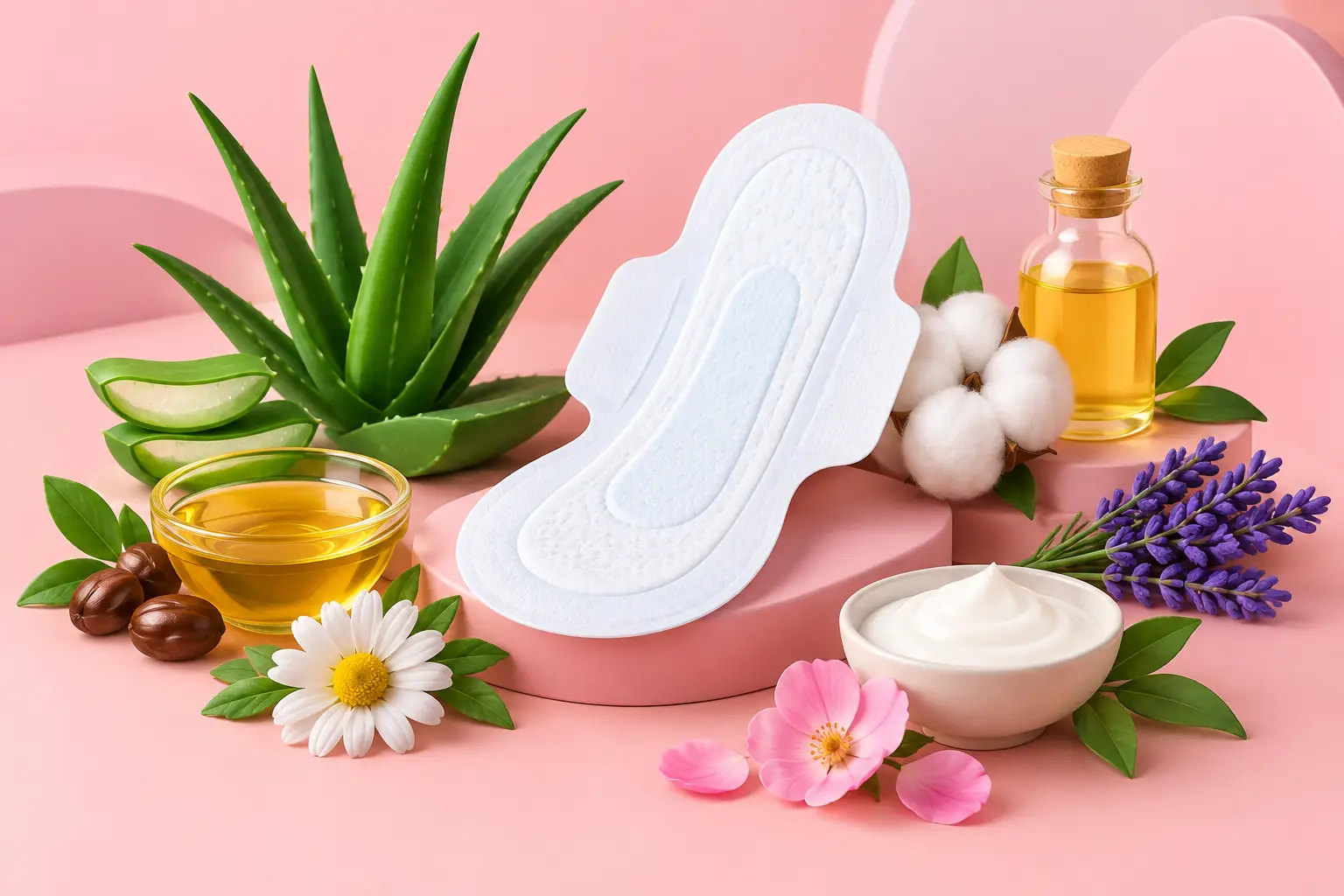
A pad can look simple, but the materials closest to your skin can shape how comfortable, dry and confident you feel through a long school day, commute or night’s sleep. This guide to feminine hygiene ingredients helps you read beyond front-of-pack claims and choose period care that feels right for your body.
You do not need a chemistry degree to shop well. You simply need to know what each layer does, which details matter when you have sensitive skin, and where a product’s claims need a little extra context.
What feminine hygiene products are made of
Most disposable pads and panty liners use several layers, each designed to manage a different part of your period. The exact construction varies by brand and product type, which is why a thin daytime pad and a high-absorbency night pad may feel very different.
The top sheet is the layer against your skin. It is often made from non-woven fibres, such as polypropylene, polyethylene or a blend of synthetic and plant-derived materials. Its job is to let fluid pass through quickly while keeping the surface feeling as dry as possible. A soft, breathable-feeling top sheet can make a meaningful difference if you are prone to rubbing, heat or discomfort.
Below it sits the absorbent core. This may contain cellulose pulp, sometimes called fluff pulp, alongside superabsorbent polymer. Superabsorbent polymers turn liquid into a gel-like substance, helping the pad hold fluid and reduce the chance of it returning to the surface. They are one reason modern pads can be slim without sacrificing absorbency.
The back sheet is the protective base that helps prevent leaks from reaching your underwear. It is commonly a film or fabric-like material, often polyethylene or polypropylene. Wings, adhesive strips and release paper complete the design, keeping the pad secure as you move.
None of these materials is automatically good or bad in isolation. Comfort depends on the full design: how quickly fluid is drawn away, how the pad sits against the body, how much heat and moisture it holds, and whether it stays in place.
A guide to feminine hygiene ingredients for sensitive skin
If you experience itching, redness, chafing or a rash during your period, it is natural to look more closely at what is in your pad. Sensitivity can be linked to friction, trapped moisture, fragrance, adhesive contact, a change in menstrual flow, or an existing skin condition. It is not always possible to identify one single cause.
Fragrance and added scent
Fragrance is often added to create a fresh-smelling experience, but it can be a concern for people with easily irritated skin. The vulval area is delicate, and scented products are not necessary for cleanliness. Menstrual blood has a natural smell, particularly after several hours of wear. A well-designed pad should focus on absorbency and freshness rather than masking odour with a strong perfume.
If scent seems to coincide with discomfort, consider unscented menstrual products and avoid fragranced washes, sprays or deodorants around the vulva too. Freshness should never come at the expense of comfort.
Dyes, lotions and finishes
Some pads include colourants, printed designs, lotions or skin-feel finishes. These can be perfectly acceptable for many users, yet simpler may be better when your skin is reactive. If a product causes repeated irritation, choosing an option with fewer added features can make it easier to work out what your skin tolerates.
This does not mean every unfamiliar ingredient is harmful. It means your own response matters. Keeping a brief note of the products used and when symptoms appear can help you spot a pattern over two or three cycles.
Adhesives and contact materials
Adhesives keep a pad stable, especially during exercise, travelling or overnight movement. They do not normally touch the vulva directly, but wing adhesives and pad edges can still contribute to irritation if they rub or shift. The best option is one that stays secure without feeling stiff, bulky or overly tight against the skin.
A breathable, flexible shape and a smooth top layer are often just as relevant as the ingredient list. Fit is part of skin comfort.
Antibacterial and odour-control technology
Some menstrual products use technology intended to support freshness and help manage odour. These claims should be clear about what the technology is designed to do, rather than suggesting a pad replaces normal washing or treats an infection.
For example, Elun uses antibacterial nano ribbon technology in selected period-care products to support freshness, odour control and a drier feel. If you are considering any antibacterial feature, focus on how it works within the complete pad design and whether the product is suitable for your skin, rather than assuming more active technology is always better.
Understanding “microplastic-free” and material claims
Environmental language can be helpful, but it is worth reading it carefully. “Microplastic-free” generally refers to a product designed without intentionally added microplastics. It does not necessarily mean every component is natural, compostable or plastic-free. Pads need structural and leak-protection materials, so the full product construction matters.
Similarly, “natural”, “organic” and “cotton” can describe one part of a product rather than the whole pad. A cotton top sheet may still sit above an absorbent core and waterproof layer made from other materials. That is not misleading if the brand explains it clearly, but it is a reason to look for specific wording.
Choose claims that tell you something practical. Is the product free from added fragrance? Is the top layer described? Does the brand explain its absorbency, leak protection and testing? Clear information gives you more to work with than vague promises of “pure” or “clean”.
How to choose the right pad for your flow
The best ingredients and materials are the ones that perform comfortably in real life. Start with your flow, then consider your skin and routine.
For lighter days or spotting, a panty liner or light pad may feel more comfortable because it is less bulky. For medium or heavier flow, look for a fast-absorbing core and reliable side protection. At night, length and rear coverage often matter more than thinness, especially if you move in your sleep.
Change your pad regularly, even when it is not full. This helps you feel fresher and reduces prolonged exposure to moisture and friction. On heavier days, carrying a spare in your bag is a small habit that can prevent a stressful rush between lessons, meetings or trains.
If a pad consistently leaves you damp, bunches up or irritates your skin, that is useful information. Try a different absorbency, shape or material profile rather than simply putting up with it. Comfort is not an extra – it is part of dependable period protection.
When irritation needs more than a product swap
A mild irritation may settle after changing products and giving the area time to breathe. However, ongoing itching, burning, unusual discharge, swelling, sores, pain or a strong new odour can point to something other than pad sensitivity. Thrush, bacterial vaginosis, dermatitis and other conditions need the right advice and treatment.
Speak with a pharmacist, GP or sexual health clinic if symptoms persist, are severe or keep returning. Avoid using scented products or harsh soaps to “fix” the problem, as these can make irritation worse. Wash the external area gently with water or a mild, unperfumed cleanser, and remember that the vagina cleans itself.
Your period products should support your day, not make you second-guess your body. Choose clear materials, dependable protection and a feel that keeps you comfortable – then let your confidence do the rest.