

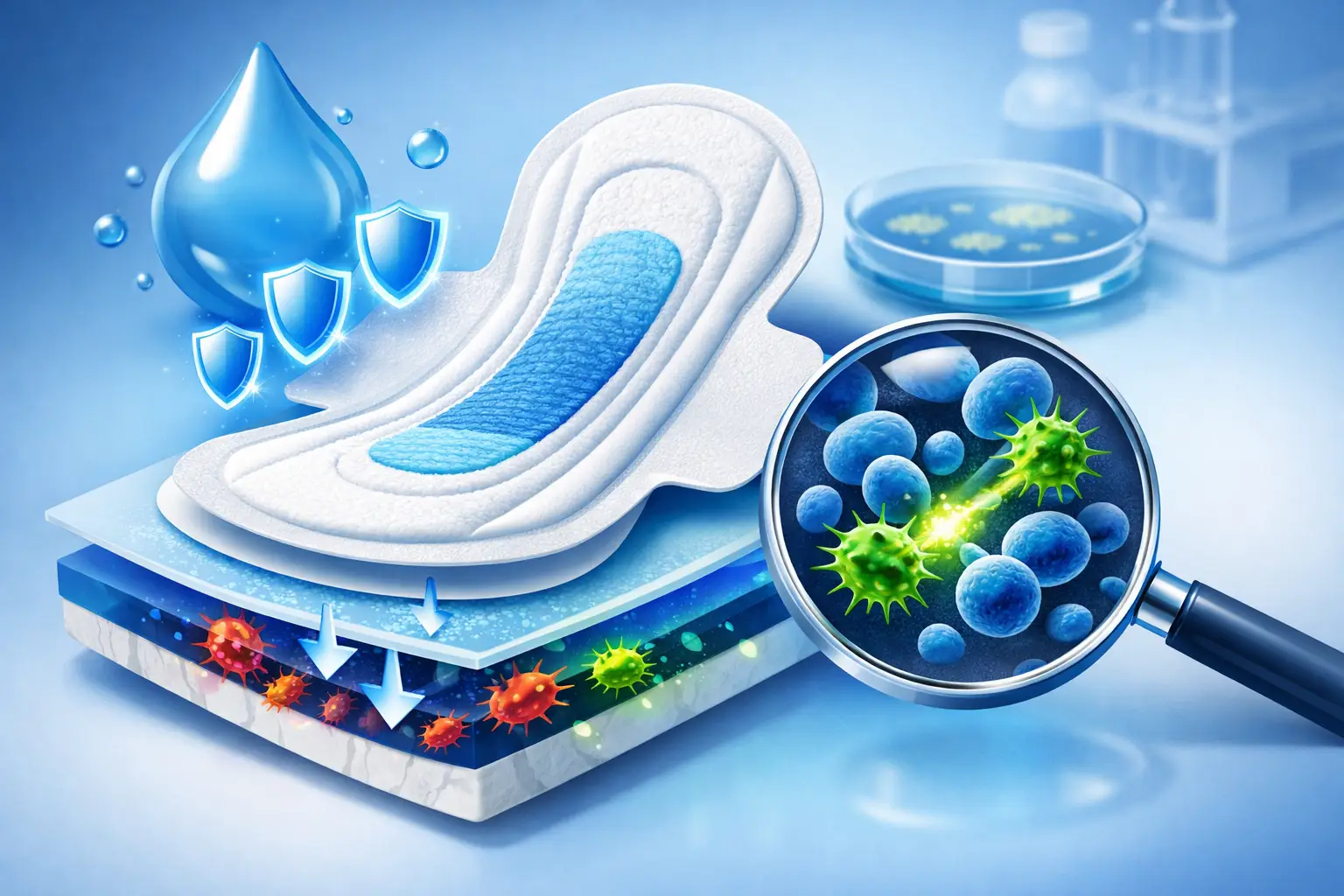
A pad can look thin, soft and absorbent on the shelf, then feel very different after several hours of wear. That is why an antibacterial pad technology review should look beyond a single freshness claim. The real question is whether the technology supports comfort, dryness and confidence without making sensitive skin feel like an afterthought.
For people prone to irritation, sweating, odour concerns or that uncomfortable damp feeling, the materials nearest the body matter. Antibacterial technology can be a useful part of better period care, but it works best when it sits alongside effective absorption, breathable construction and a skin-conscious top sheet.
What antibacterial pad technology is designed to do
Menstrual fluid, warmth and limited airflow can create conditions where odour-causing bacteria multiply more easily. Antibacterial pad technology is designed to help limit bacterial growth on the pad surface or within specific layers. The intended result is a cleaner-feeling pad and better odour control during wear.
That does not mean a pad should be worn indefinitely. Changing your pad regularly remains essential for hygiene, comfort and protecting the skin. Think of antibacterial treatment as an added layer of support, not a substitute for a regular changing routine.
The best approaches aim to provide freshness without relying on heavy fragrance. Scent can mask odour temporarily, but fragranced products may not suit everyone, particularly those with sensitive skin. A well-designed antibacterial layer addresses freshness at its source while allowing the pad itself to remain comfortable and discreet.
Antibacterial pad technology review: what matters most
Not all antibacterial claims mean the same thing. A meaningful review starts with how the technology is incorporated, what other materials surround it and how the complete pad performs on a busy day or overnight.
The treatment should be built into the design
Some pads use a treated layer intended to support hygiene throughout the time the pad is worn. Elun uses antibacterial nano ribbon technology, a fine ribbon-style material designed to support freshness while working alongside the absorbent core. The benefit of this approach is that the hygiene feature is part of the pad construction rather than an afterthought.
For the wearer, the experience should still feel simple: a pad that stays dry, helps manage unwanted odour and does not feel bulky. Technical language only matters if it translates into a more comfortable school day, commute, workout, long meeting or night’s sleep.
Dryness is not optional
Antibacterial technology cannot compensate for a pad that leaves moisture against the skin. A fast-absorbing top layer should draw fluid down into the core, while the core should hold it securely under movement and pressure. This helps reduce the wet, sticky feeling that can contribute to discomfort and chafing.
For lighter days, a thin pad or panty liner may be enough. On heavier days, look for a higher-capacity core and reliable side or back protection. Overnight, length and rear coverage can matter just as much as antibacterial support, especially if you move in your sleep.
Skin comfort needs equal attention
The area around the vulva is naturally sensitive. Friction, trapped moisture, rough top sheets and prolonged wear can all make skin feel sore. If you have previously experienced rash or irritation during your period, choose pads that make clear, thoughtful material choices and avoid features you know your skin dislikes.
Microplastic-free construction may also matter to shoppers who want to reduce unnecessary plastic exposure in intimate products. It is a valuable consideration, although it should not be treated as the only marker of quality. The pad still needs to stay in place, absorb well and feel gentle from the first hour to the last.
Fit changes performance
A highly absorbent pad can still fail if it shifts, bunches or is the wrong shape for your body and underwear. Wings help anchor many pads, but the adhesive should hold without making removal difficult. Flexibility matters too: a pad needs to move with you when you are sitting, walking, cycling or sleeping.
This is where pack variety is genuinely useful. A single style rarely suits every day of a period. Keeping regular pads, night pads and liners available lets you choose protection based on your flow rather than trying to make one product do every job.
The practical benefits, and the limits
A good antibacterial pad may help you feel fresher between changes, particularly on long days when access to a bathroom is not always immediate. It can be reassuring for travelling, working shifts, attending lessons or managing a period overnight. When combined with effective absorption, it may also reduce the anxiety that comes from worrying about odour after hours of wear.
There are limits worth stating clearly. Antibacterial technology is not a medical treatment and should not be used to manage symptoms such as persistent itching, unusual discharge, burning or a strong odour that is different from your normal period. Those symptoms deserve advice from a healthcare professional.
It also cannot make one pad suitable for every flow level. If a pad feels saturated, heavy or damp, change it. If it leaks despite being changed regularly, move up to a more absorbent format or choose a longer pad for greater coverage.
Your personal sensitivity matters as well. Even a carefully designed pad may not suit every person. If you are trying a new product and have reactive skin, starting with a small pack can help you assess comfort across a full cycle before committing to a larger supply.
How to choose a pad with confidence
Start with the moment you need it for. For a standard day at work or university, prioritise a slim profile, secure wings and fast absorption. For a heavy-flow day, focus on capacity and leakage protection. For sleep, choose a night pad with longer coverage and a core designed to manage fluid while you are lying down.
Then check whether the brand explains its antibacterial feature in clear terms. You do not need a chemistry lesson, but you should be able to understand where the technology sits in the pad and what benefit it is designed to provide. Be cautious of vague claims that promise total protection or suggest you can safely wear a pad for far longer than usual.
Finally, pay attention to your own experience. A suitable pad should stay put, feel soft, keep surface moisture low and allow you to get on with your day without constant checking. Comfort is not a luxury feature. It is a practical sign that the product is working with your body.
When antibacterial technology is especially useful
This type of technology can be particularly appealing if you spend long periods away from home, have an active routine or simply want extra reassurance around freshness. It may also be a sensible choice for those who prefer fragrance-free feeling protection over scented pads.
That said, no feature matters more than changing products when needed and choosing the right absorbency for your flow. Freshness works best as part of a complete routine: clean hands, regular changes, breathable underwear and a pad that feels kind to your skin.
Period care should never leave you distracted by dampness, irritation or the worry that someone else might notice an odour. Choose the technology that gives you practical support, listen to what your skin tells you, and keep the right pad within reach for the day you have planned.