

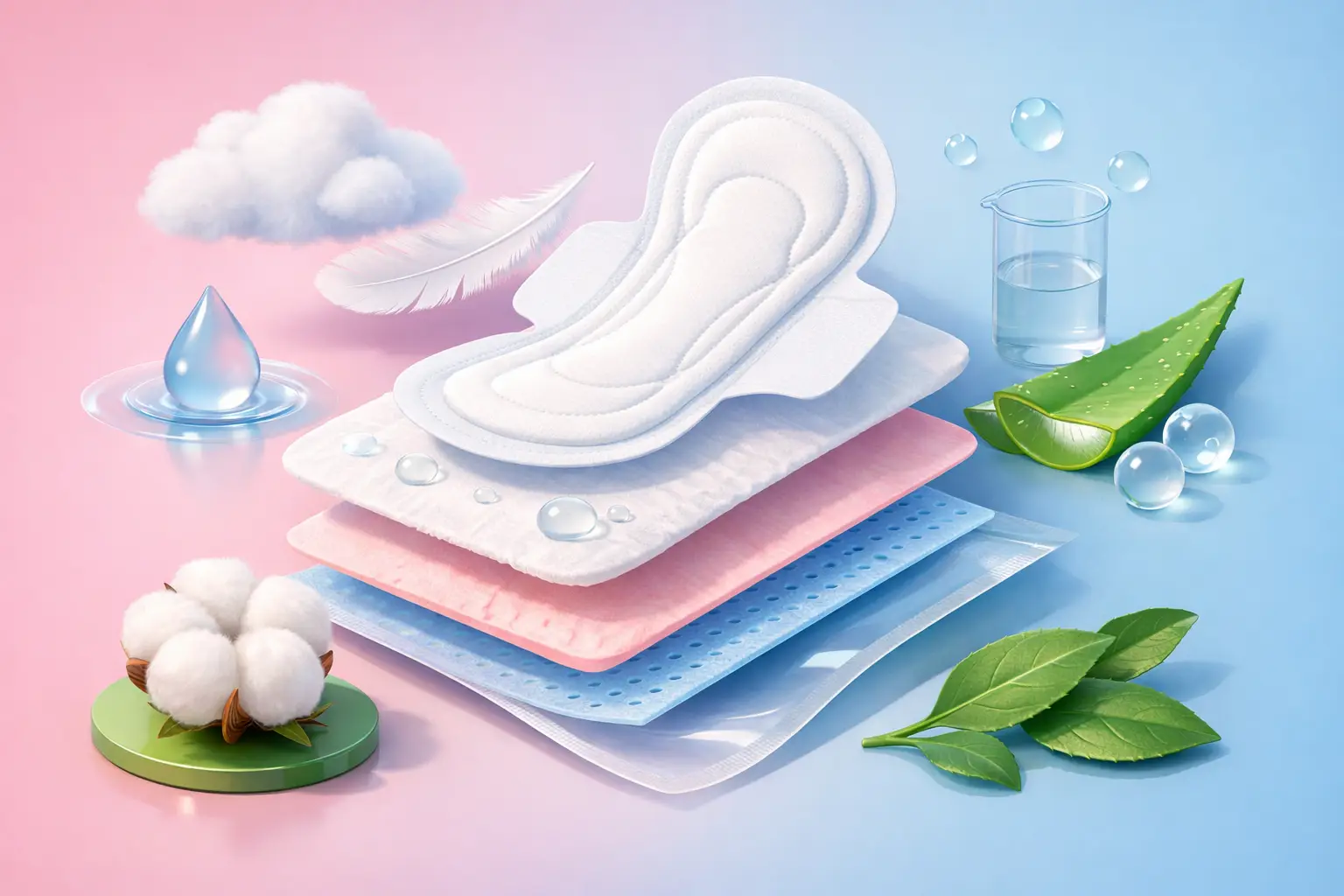
A pad can look thin and simple, yet it is made from several layers that work together against moisture, leaks, odour and friction. This guide to period pad materials helps you look beyond the packet and choose protection that feels comfortable on your skin, whether you are at school, at work, travelling or trying to sleep.
The right material is personal. A high-flow day may call for a faster-absorbing core, while sensitive skin may benefit from a softer, breathable surface with fewer potential irritants. Knowing what each layer does makes it easier to find a pad that supports your body, rather than distracting you from your day.
What period pads are made of
Most disposable pads have four main parts: a top sheet that sits against your skin, a layer that moves fluid into the core, an absorbent centre, and a waterproof base that helps prevent leaks. Wings, adhesives and packaging also play a part in how secure and practical the pad feels.
The materials and finishes used in each part affect dryness, softness, flexibility and breathability. Two pads can have a similar absorbency level but feel completely different because their top sheets, cores or backing layers are designed differently.
The top sheet: the layer your skin notices first
The top sheet, sometimes called the cover layer, is the surface closest to your vulva. It needs to let menstrual fluid pass through quickly while feeling smooth and dry. Common materials include non-woven fabrics made from plant-based fibres, synthetic fibres, or a blend of both.
A soft top sheet can reduce the scratchy or plasticky feeling some people notice during movement. This matters when you are wearing a pad for hours, exercising, sitting through lessons or commuting. If you are prone to irritation, look for a surface designed for sensitive skin and avoid products that leave you feeling damp after a short time.
Dryness is not only about comfort. When fluid sits against the skin, it can increase friction and leave you feeling sticky or sore. A well-designed top layer should guide fluid down into the pad instead of spreading it across the surface.
The acquisition layer: where fast absorption begins
Just beneath the cover is often an acquisition or distribution layer. Its job is to draw fluid away from the top sheet and spread it through the absorbent core. This helps prevent pooling in one area, especially during heavier flow or when you change position.
This layer is easy to overlook, but it can make a noticeable difference. A pad that absorbs quickly can feel drier and more secure, while a slower one may feel wet even if its overall capacity is high. For busy days, faster fluid transfer often matters as much as the total amount a pad can hold.
The absorbent core: cellulose, gel and capacity
The core is the pad’s main absorbent section. It commonly contains cellulose fluff pulp, which is an absorbent material often derived from wood fibres, alongside superabsorbent polymer, often shortened to SAP. SAP turns fluid into a gel-like substance, helping lock it away from the surface.
Cellulose brings bulk and absorbency, while SAP helps create a thinner pad with strong fluid retention. The balance matters. Too much bulk can make a pad feel thick or stiff; too little capacity may mean you need to change more often than expected. A flexible core that conforms to your underwear can provide dependable protection without feeling cumbersome.
For night pads, the core is usually longer and may be wider at the back to offer more coverage when lying down. For liners and lighter days, a slimmer core is often enough. Choosing the right size for your flow is more comfortable than relying on one pad type for every day of your period.
The back sheet: leak protection without the sweaty feel
The base layer is designed to stop fluid passing through to your underwear. It is often made with a moisture-resistant film or a breathable composite material. A completely impermeable backing may offer strong leak protection, but some wearers find it traps heat and moisture.
Breathable designs aim to balance protection with airflow. They can feel more comfortable during long wear, particularly in warm weather or on active days. Still, breathability should never come at the expense of reliable leak prevention. A pad should stay secure, dry and discreet while giving you room to move.
Guide to period pad materials for sensitive skin
If you have ever experienced itching, chafing, redness or a rash during your period, the materials touching your skin are worth a closer look. Skin can be more vulnerable when it is warm, damp or exposed to friction, so comfort-focused pad design is not a small detail.
Start with a soft, fast-drying top sheet and choose a pad that feels smooth when you run your fingers across it. Then consider what has been added to the product. Fragrance can make a pad smell fresh in the packet, but it may not suit everyone, particularly if you have sensitive skin. The same applies to certain dyes, lotions or chemical finishes. A simpler, skin-conscious design can be a reassuring choice when irritation is a recurring concern.
It also helps to change your pad regularly, even on lighter days. No material can stay hygienic and comfortable indefinitely once it has absorbed fluid. Changing before the pad feels full supports freshness, reduces dampness and gives your skin a break.
What does microplastic-free mean for pads?
Many conventional disposable pads use plastic-based components, particularly in the backing, top sheet, wrappers and adhesive elements. When you see a microplastic-free claim, check how the brand defines it. It may refer to the pad itself, specific layers, or both the pad and its individual components.
A microplastic-free pad can be a meaningful option for people looking to reduce unnecessary plastic exposure in their period care. However, it is sensible to read product information carefully rather than assuming every part of the product and its packaging is plastic-free. Material transparency is a sign that a brand takes your questions seriously.
Environmental considerations and performance do not need to compete. The best choice is one that protects your clothes, feels comfortable on your body and aligns with the materials you feel good about using each month.
Freshness and antibacterial pad technology
Period odour is often linked to bacteria interacting with menstrual fluid, especially when a pad is worn for several hours. Good absorption helps by moving fluid away from the surface, but some pads also use antibacterial technology to support a fresher feel.
Elun Hygiene uses antibacterial nano ribbon technology in its pads, designed to support long-lasting freshness, odour control and dryness while remaining gentle for sensitive skin. This type of innovation can be particularly helpful on long workdays, overnight or while travelling, when you want protection that feels dependable from the first hour to the last.
Antibacterial features are not a substitute for changing your pad as needed, and they should not mask discomfort. If a pad starts to feel wet, rubs against your skin or no longer feels secure, it is time for a fresh one.
How to choose the right pad for your flow
Think about your period in stages rather than choosing one all-purpose pad. A lighter day may need a slim liner or regular pad, while heavier days may call for a larger core, wings and extra length. Overnight, choose a longer pad with a wider rear section so you can rest with more confidence.
Pay attention to fit as well as absorbency. Wings help anchor the pad and protect the sides of your underwear, but they should not pull or bunch. A pad that moves with your body is less likely to create friction. If you are trying a new material or design, a smaller pack can help you test it across different flow days before committing to a larger supply.
Your period care should feel like quiet support, not something you constantly have to manage. Choose materials that keep you dry, protected and comfortable enough to get on with the plans that matter to you.