

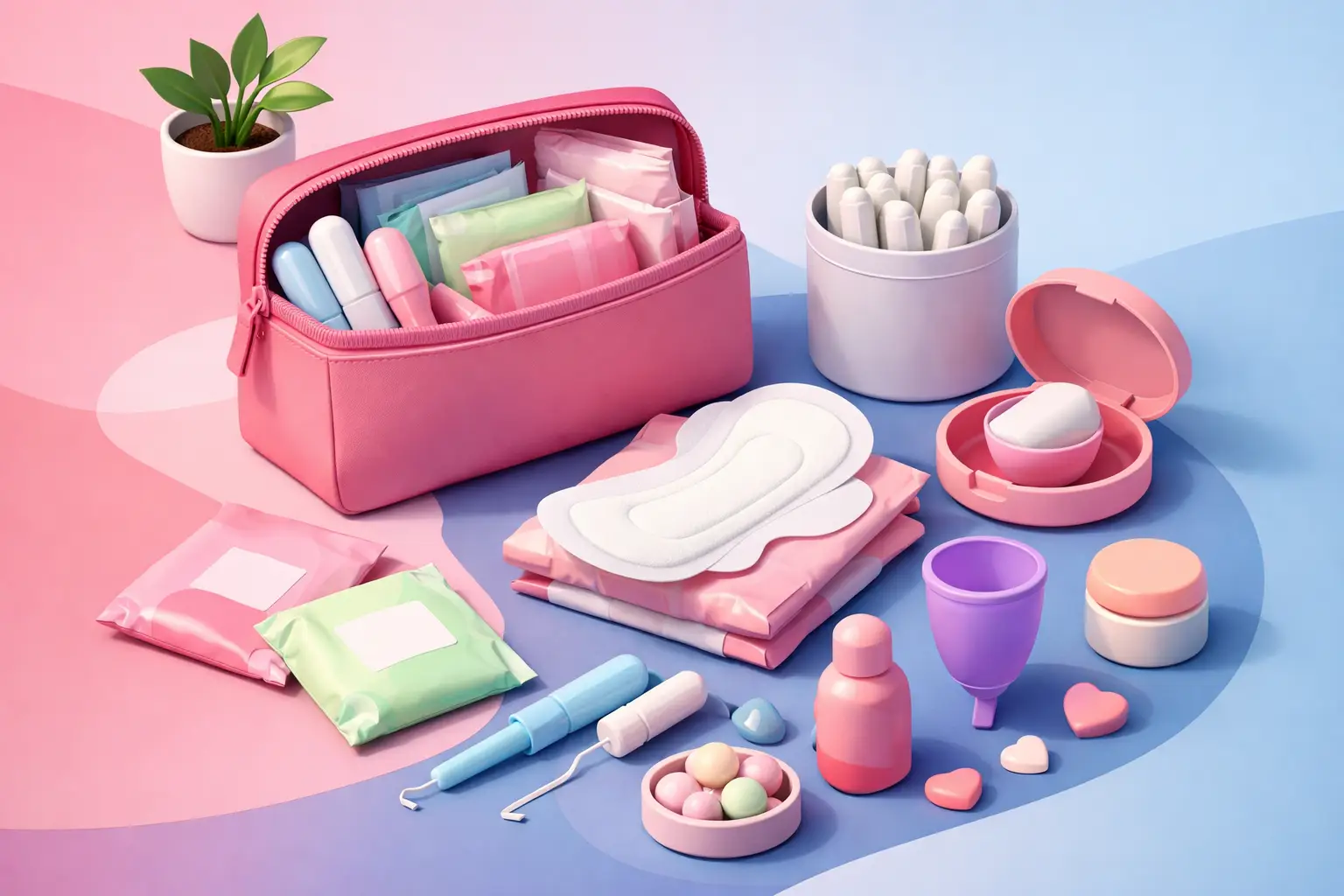
The first period rarely arrives at a convenient moment. It may happen during a school day, on a family holiday or just before a sleepover, which is why a thoughtful guide to period starter packs should focus on calm preparation rather than fear. The right pack gives someone the basics to feel clean, protected and in control, without filling a bag with products they do not yet need.
A starter pack is not about guessing exactly what every period will be like. Cycles, flow and comfort needs can change, especially in the first few years. It is about creating a small, dependable safety net with gentle products that are easy to use at home and discreet enough to carry out and about.
What belongs in a period starter pack?
Start with pads in more than one absorbency. A light or regular pad works well for spotting, lighter days and getting used to the feeling of wearing a pad. A more absorbent pad is useful for heavier days, longer school days and times when changing is not immediately possible. Including both helps avoid the common problem of using a pad that feels too bulky for a light flow or not protective enough for a heavier one.
Night pads are worth including from the beginning. Lying down changes how menstrual flow moves, so a longer pad with fuller coverage can provide more confidence overnight. Even if someone prefers not to use one every night, having a few ready removes one worry when a period starts in the evening.
Panty liners are another useful addition, particularly for the days before or after a period. They can help with light spotting and everyday discharge, but they are not designed to replace a period pad during a normal or heavy flow. Knowing the difference makes it easier to choose the right protection without discomfort or leaks.
It also helps to include a small zip pouch. This keeps products clean inside a school bag, handbag or coat pocket and makes changing more private. A spare pair of comfortable underwear and a small packet of tissues can be reassuring additions, especially for school or travelling.
Choose comfort first, not just absorbency
Periods can bring enough unfamiliar sensations without adding scratchy materials, trapped moisture or a pad that shifts throughout the day. Look for pads that feel soft, stay secure and suit sensitive skin. A thin, flexible design can be particularly helpful for first-time users who are worried a pad will feel obvious under clothing.
Skin-conscious materials matter because pads sit close to delicate skin for hours. Some people are more prone to irritation, sweating or rashes, particularly during warmer weather, sport or long days away from home. A breathable, microplastic-free option may feel like a better fit for those trying to reduce contact with unnecessary materials while still expecting dependable protection.
Freshness matters too, but strong fragrance is not the only answer. A comfortable pad should help manage odour by keeping moisture under control rather than masking it with perfume. If irritation, itching or soreness develops, stop using the product and consider switching to a gentler alternative. Persistent discomfort should be discussed with a pharmacist, GP or sexual health professional.
A simple guide to period starter packs for school
A school-ready pack needs to be practical rather than oversized. It should fit in a bag, be easy to open discreetly and contain enough protection for an unexpectedly long day. For most people, four or five regular pads, two more absorbent pads, one or two panty liners, spare underwear and tissues make a sensible starting point.
A small disposal bag can be useful where bathroom bins are limited or feel inconvenient. Pads should be wrapped and placed in a bin, never flushed down the toilet. It is a small piece of practical knowledge that makes a first period less stressful in shared bathrooms.
If possible, keep a second mini pack in a locker, sports bag or at a trusted friend or relative’s home. Periods are not always regular at first, so being prepared in more than one place can bring real peace of mind. There is no need to carry a whole month’s supply everywhere.
For PE, clubs and busy days
Movement can make fit feel more noticeable. Choose a flexible pad with secure wings for PE, dance, walking or a long commute, and pack a spare if changing clothes is part of the day. For swimming, pads are not suitable in the pool, so it may help to plan ahead with a trusted adult or explore other menstrual products only when the person feels ready and informed.
There is no prize for switching to tampons, cups or period underwear quickly. Pads are a straightforward place to start, and many people continue to prefer them. The best product is the one that feels comfortable, manageable and protective for the individual.
How many pads should a first pack include?
It depends on how the pack will be used. A small on-the-go pouch is for emergencies, while a home starter pack should cover a few days and offer a chance to try different sizes. A first period may be very light, but it can also be unpredictable, so variety is usually more valuable than buying a large number of one type.
For home, consider a mix of regular pads, heavier-flow pads, night pads and panty liners. Sample or mini packs are especially useful because they let someone learn what feels right before committing to a larger bundle. Once they know which style they reach for most, a larger pack can offer better convenience and fewer last-minute shop runs.
Keep an eye on how quickly products are used, whether leaks happen, and whether the skin feels comfortable. That experience is more useful than any one-size-fits-all recommendation. Some people need a longer pad at night but a lighter option during the day; others prefer a little extra coverage for complete reassurance.
Make the first conversation practical and pressure-free
A period starter pack works best when it comes with clear, matter-of-fact information. Explain how to remove the backing, position the pad in underwear, fold the wings underneath if there are any, and change it every few hours or sooner if it feels full or damp. The wrapper can be used to wrap the used pad before placing it in a bin.
It can also help to explain what is normal. Period blood may be bright red, dark red or brown, and small clots can happen. Cramps, tiredness and mood changes are common for some people, but periods should not be something a person is expected to endure in silence. Severe pain, extremely heavy bleeding, dizziness, or bleeding that regularly soaks through protection very quickly deserves medical advice.
Avoid turning the conversation into a lecture. A simple reassurance often lands best: periods are a normal part of growing up, supplies are available when needed, and asking for help is never embarrassing. That message can make a bigger difference than the size of the pack itself.
Build a pack that can grow with them
The most useful starter pack is one that can be adjusted after the first cycle or two. Add more night pads if sleep feels worrying. Keep panty liners on hand for spotting. Swap to a different shape or absorbency if a pad bunches, leaks or feels uncomfortable. Period care should respond to real life, not force someone to adapt to a product that does not suit them.
For families looking for a skin-conscious option, Elun’s pads combine soft comfort with antibacterial nano ribbon technology, designed to support freshness, odour control and extended dryness while remaining 100% microplastic free. Choosing products with care can help turn a necessary routine into one that feels more comfortable and confidence-building.
A well-packed pouch cannot make a first period completely predictable, but it can make the next step feel simple: find a bathroom, choose the right pad, and carry on with the day.