

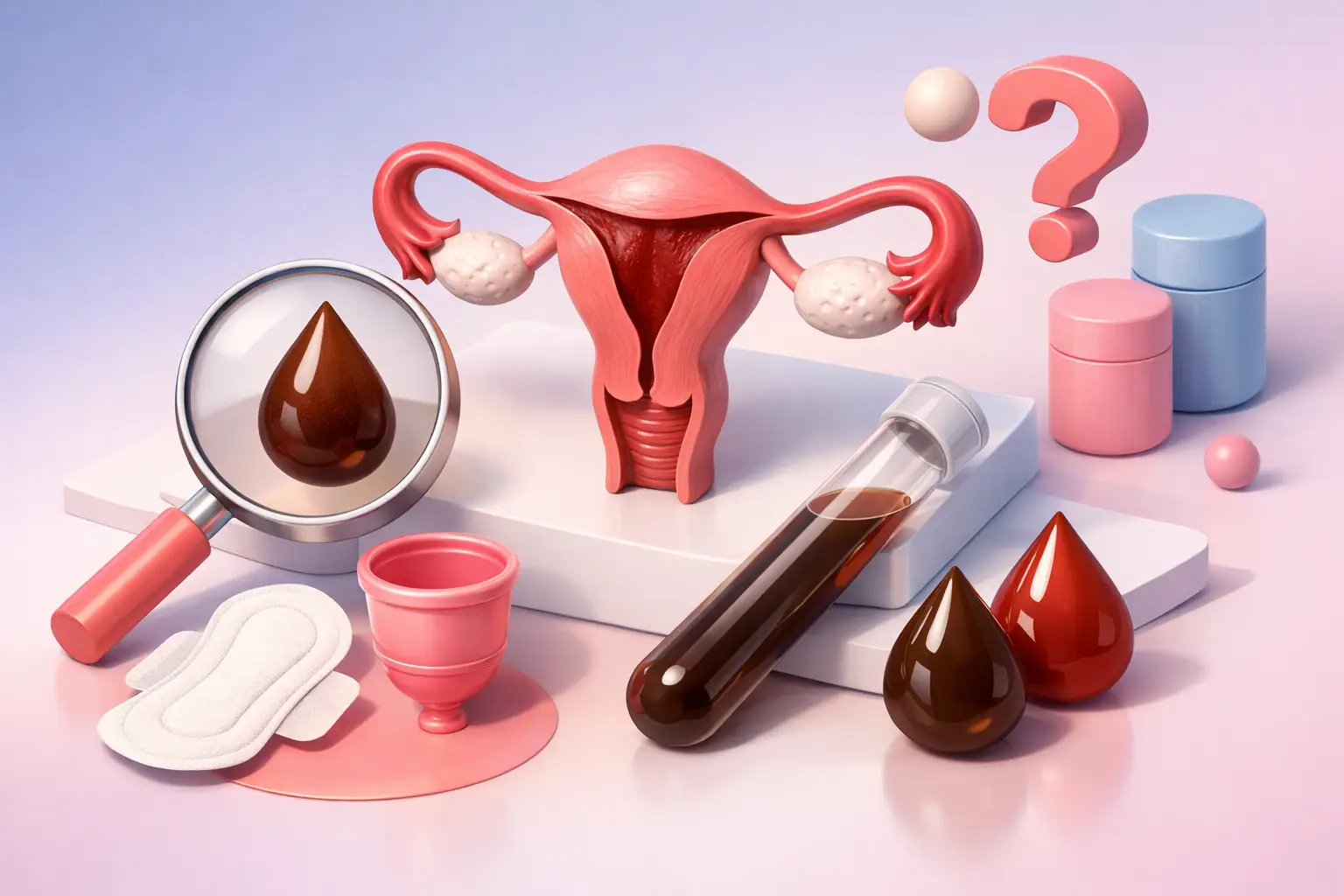
A brown mark on your pad can be unsettling, especially when your period usually looks red. If you have found yourself asking, “is brown period blood normal??”, the short answer is that it often is. Brown blood is commonly just blood that has taken longer to leave the uterus, giving it time to oxidise and darken.
That said, your period is personal. Colour, flow, timing and symptoms can all offer useful clues about what is normal for your body. Knowing what to look out for can help you feel more confident in your cycle and more prepared to seek support if something feels different.
Is brown period blood normal?
In many cases, yes. Period blood does not always leave the body immediately. When blood flows more slowly, it reacts with oxygen and changes from bright red to dark red, brown or sometimes nearly black. This is similar to how a cut apple darkens when exposed to air.
Brown period blood is especially common at the beginning or end of a period, when your flow may be lighter. It can also appear after lying down overnight, when blood has had more time to sit in the vagina before you stand up and move around.
Colour alone is rarely the whole story. Brown blood without severe pain, an unusual smell, fever or other worrying symptoms is usually not a cause for alarm.
Why period blood can look brown
Your menstrual fluid is more than blood. It also contains uterine lining tissue, cervical mucus and vaginal fluid, so its appearance can naturally vary from one day to the next. A lighter flow may look brown or rust-coloured because there is less fresh blood moving through at once.
Brown spotting can happen shortly before your period starts or linger for a day or two after it seems to have finished. Some people also notice it between periods during times of hormonal change, such as starting, stopping or changing contraception.
Stress, disrupted sleep, significant changes in exercise, illness and weight changes can affect your hormones and shift the timing or character of your bleed. A one-off change is often just that – a temporary change. But if spotting keeps returning, it is sensible to discuss it with a GP or sexual health clinic.
Brown blood during a light period
A light period can begin with a little brown discharge before the flow becomes red. It may also finish with brown spotting. This is often older blood leaving the uterus gradually and is particularly common if your cycle is short, your flow is naturally light, or you are using hormonal contraception.
Brown blood after your period
Seeing a small amount of brown blood after your period can be normal too. Your uterus may simply be clearing the last of its lining. Comfortable, reliable period protection can make these final light-flow days feel less disruptive, whether you are at work, travelling or winding down at home.
Brown discharge instead of a period
Brown discharge rather than a full period can have several explanations. It may be spotting related to contraception, a delayed period or hormonal fluctuations. Pregnancy can also cause light spotting for some people, although bleeding in pregnancy should always be discussed with a healthcare professional, particularly if it is heavy, painful or persistent.
If pregnancy is possible and your period is late or unlike your usual cycle, taking a pregnancy test is a practical first step. If you get a positive result and have pain or bleeding, seek medical advice promptly.
When brown period blood needs medical advice
Brown blood itself is usually not dangerous, but it deserves attention when it appears alongside symptoms that are not typical for you. Trust your instincts, particularly if you notice a clear and ongoing change in your cycle.
Speak to a GP, sexual health clinic or another qualified healthcare professional if brown bleeding is frequent between periods, continues for several cycles, happens after sex, or appears after menopause. You should also arrange advice if it comes with pelvic pain, pain during sex, itching, burning or unusual discharge.
A strong, unpleasant or fishy smell is not usually caused by normal oxidised period blood. It can sometimes point to an infection, especially if you also have soreness, fever, pain when urinating or discharge that is grey, green or yellow. Sexually transmitted infections can cause spotting and unusual discharge too, so testing may be recommended depending on your circumstances.
Seek urgent medical care if you are soaking through pads very quickly, passing very large clots, feeling faint, experiencing severe or one-sided abdominal pain, or bleeding during pregnancy. These symptoms need timely assessment rather than watchful waiting.
Your period colour is only one part of the picture
It is easy to fixate on colour, but your overall pattern matters more. Consider how long the bleeding lasts, how heavy it is, whether you have cramps beyond your usual level and whether there are changes in your energy or wellbeing.
A simple cycle note on your mobile phone can be helpful. Record the first and last day of bleeding, whether it is red or brown, the level of flow, pain and any spotting between periods. This is not about monitoring every detail perfectly. It gives you a clearer baseline, which can be useful if you ever need to speak to a clinician.
Teenagers and those in the first few years after starting periods may have more irregular cycles as hormones settle. Equally, periods can change in the years leading up to menopause. Hormonal contraception can also make bleeding lighter, less predictable or more likely to include brown spotting. Context matters.
Feeling fresh and comfortable on light-flow days
Light brown spotting still deserves protection that feels comfortable and secure. The right product depends on your flow and your skin. A panty liner may suit very light spotting, while a pad can offer more reassurance if your flow is unpredictable or you are heading out for the day.
Change your liner or pad regularly, even on lighter days. This supports comfort and freshness, and helps prevent dampness sitting against sensitive skin for too long. Choose breathable, skin-conscious products if you are prone to irritation, and avoid scented products if fragrances tend to make you feel sore or itchy.
For overnight use, a longer night pad can provide extra coverage when blood may pool and look darker by morning. Elun’s microplastic-free pads are designed with antibacterial nano ribbon technology to support long-lasting dryness, freshness and dependable protection, without asking sensitive skin to compromise on comfort.
There is no need to feel embarrassed by brown blood, period odour or the small changes that happen across a cycle. Menstrual blood has a natural scent, and darker blood is not automatically unclean. Good hygiene is straightforward: wash the outer genital area gently with water, avoid douching or scented washes inside the vagina, and change your period product as needed.
A calm approach to an unexpected change
Most brown period blood is simply older blood making its way out of the body. Give yourself permission to observe rather than panic, especially if it happens at the start or end of a period and you feel otherwise well.
But comfort also comes from taking changes seriously when they persist or feel wrong. Keep track of your symptoms, use protection that helps you feel dry and secure, and speak to a healthcare professional whenever you need reassurance. Your period should not leave you second-guessing your body every month.