

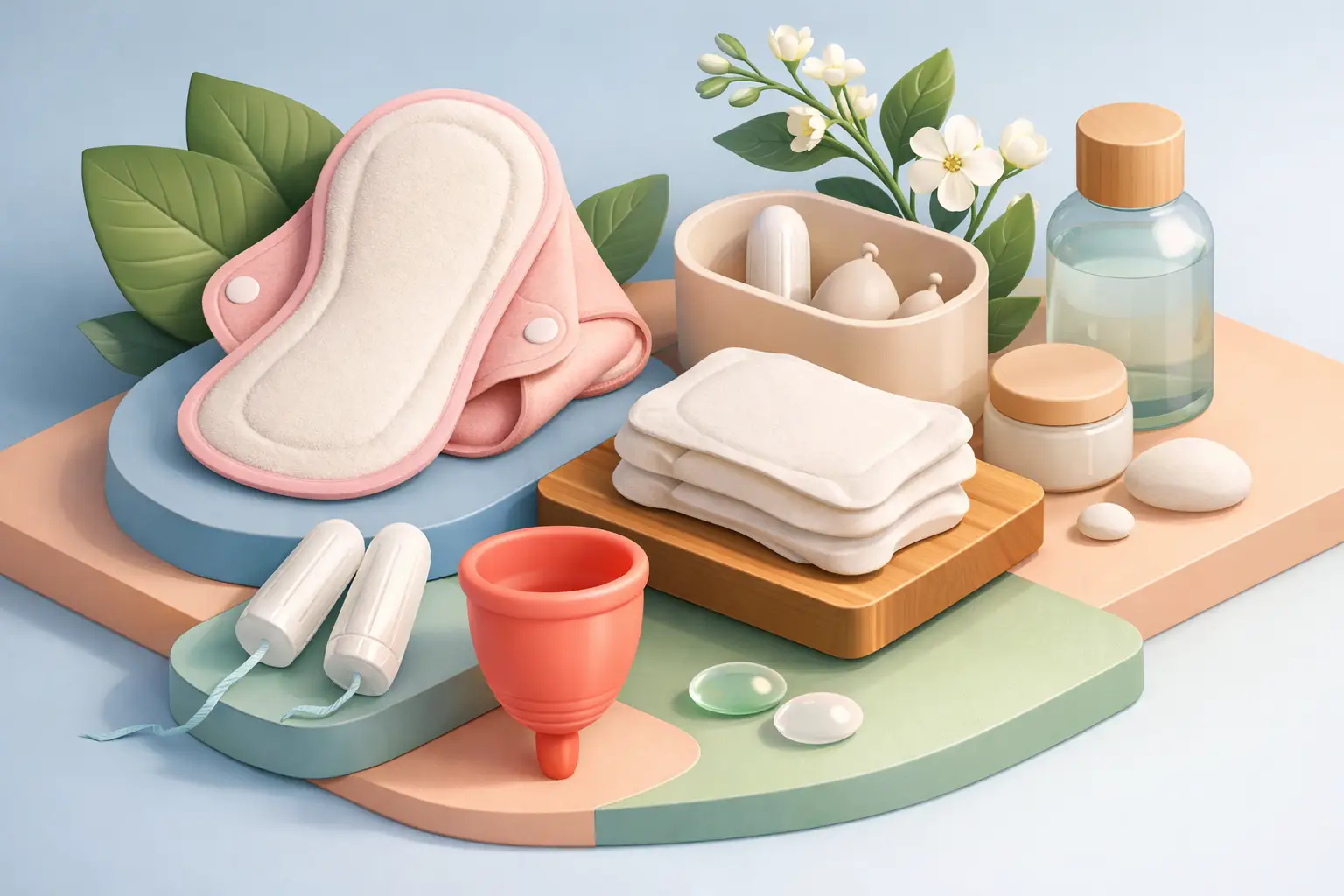
A period pad can look soft, slim and reassuringly white, yet still leave you checking for irritation halfway through the day. For anyone comparing ingredients as carefully as absorbency, finding the best microplastic free period care is about more than choosing a product with an eco-minded label. It is about knowing what touches your skin, how the pad performs when life gets busy, and whether you can feel comfortable from your first meeting to your last train home.
Microplastic-free period care should never ask you to compromise on dryness, leak protection or freshness. The right choice gives you dependable protection while being more considerate of sensitive skin and the materials you bring into your routine every month.
What does microplastic free period care mean?
Microplastics are tiny pieces of plastic that can be deliberately added to products or shed from larger plastic materials over time. In period care, they may be linked to synthetic components used in topsheets, absorbent cores, back layers, adhesives or individual wrapping. That does not mean every conventional pad is the same, but it does mean vague terms such as “natural” or “eco” are not enough on their own.
A genuinely microplastic-free claim should be clear and specific. Look for brands that explain their materials and state what is, and is not, included in the pad. If a product simply highlights one ingredient, such as cotton, without explaining the full construction, there may still be questions about the other layers.
This matters for two practical reasons. First, the vulva is a sensitive area, especially during a period when heat, moisture and friction can make skin feel more reactive. Secondly, many people want their everyday essentials to create less unnecessary plastic exposure and waste. A pad that feels good on your skin and aligns with your values is not an indulgence. It is a sensible standard.
How to choose the best microplastic free period care
The best option depends on your flow, skin sensitivity and daily routine. A light liner for the final days of a period has different demands from an overnight pad on a heavy-flow night. Still, a few checks make comparing products much easier.
Start with the full material story
Read beyond the front-of-pack promise. Seek straightforward information about the layer that sits against your skin, the absorbent core and the protective backing. A clear microplastic-free claim is useful, but transparency is what makes it trustworthy.
If you are prone to rashes, also consider whether the product avoids ingredients that can make a sensitive area feel uncomfortable, such as unnecessary fragrance or harsh additives. Skin is personal, so a product that works beautifully for a friend may not suit you. Give yourself permission to trial a small pack before committing to a larger one.
Comfort should hold up through real life
A pad is not only there for the first hour after you put it on. It needs to stay secure during a school day, a long shift, a workout, a commute or a night of restless sleep. Look for a thin, flexible shape that moves with your body instead of bunching up, plus wings or a secure fit where you need extra confidence.
Breathability and dryness matter too. When moisture sits against the skin for too long, it can contribute to that sticky, rubbed feeling many people know too well. Change pads regularly, even on lighter days, and choose a surface designed to move fluid away from the skin quickly.
Do not treat absorbency as a single number
“Highly absorbent” sounds promising, but the useful question is whether the pad matches your flow. Light-flow pads can feel more discreet, while regular and heavy-flow pads need a more capable core and better side protection. Night pads should offer longer coverage, particularly towards the back, because your body position changes when you sleep.
Using a pad that is too light for your flow can lead to leaks and frequent changes. Using one that is far more absorbent than you need may feel bulky. Building a small mix of liners, day pads and night pads is often more comfortable than trying to make one product do every job.
Freshness needs a skin-conscious approach
Odour is normal, but warmth and moisture can make you feel less fresh as the day goes on. Breathable materials, regular changes and an absorbent pad all help. Some people also prefer added antibacterial technology for extra reassurance, particularly during long days or overnight.
The key is to look for freshness support that does not rely on heavy perfume. Fragrance can mask odour, but it is not always kind to sensitive skin. A clean, dry feel is usually the confidence boost you are actually looking for.
Why sensitive skin deserves more than a basic pad
Period irritation can show up as itching, redness, soreness or a rash. Sometimes the cause is friction from movement, sometimes it is prolonged dampness, and sometimes a particular material or fragrance simply does not agree with your skin. It can also be unrelated to your pad, so persistent or severe symptoms deserve advice from a pharmacist, GP or sexual health professional.
For everyday comfort, think of your pad as a close-contact product, not a disposable afterthought. The softer and drier it feels, the less you are likely to be distracted by it. A skin-conscious choice can be especially helpful after shaving, during warmer weather, when travelling, or on days when your period feels heavier than expected.
Elun Hygiene’s pads are made to bring these needs together, with 100% microplastic-free construction and antibacterial nano ribbon technology designed to support freshness, dryness and rash-free comfort. That combination is valuable because protection should feel reassuring, not restrictive.
Build a period-care routine that works for you
The most comfortable routine is usually a practical one. Keep a couple of spare pads in your work bag, school bag or coat pocket, and choose a compact pack that makes replacements easy. Change when your pad feels damp, full or less comfortable, rather than waiting for a leak to remind you.
At night, switch to a pad designed for longer wear and wider coverage. During lighter days, a slim liner or light pad can offer protection without the feeling of wearing more than you need. If you are trying a new microplastic-free product, test it on an average-flow day first. You will get a clearer sense of its fit, absorbency and feel without the pressure of a particularly heavy day.
It is also worth keeping expectations realistic. No pad can prevent every leak if it is worn too long or does not suit your flow, and no material claim replaces good hygiene habits. The goal is not perfection. It is a period routine that gives you fewer worries and more freedom to get on with your day.
Questions worth asking before you buy
Before adding a new product to your basket, ask whether the microplastic-free claim applies to the whole pad, whether it is suitable for sensitive skin, and which flow level it is designed to manage. Check the pad length and wing shape if leaks tend to happen at the sides or back. If freshness is a priority, look for a clear explanation of how it is supported rather than a vague promise.
Pack size matters as well. Mini packs are useful for trying a product or keeping in a handbag, while jumbo and combo packs can make a dependable routine easier to maintain. Choosing the right format means you are less likely to run out just when you need protection most.
The best microplastic free period care is the care you do not have to second-guess. It should feel soft when your skin is sensitive, stay dry when your schedule is full, and give you the quiet confidence to wear what you want, go where you need and focus on everything beyond your period.