

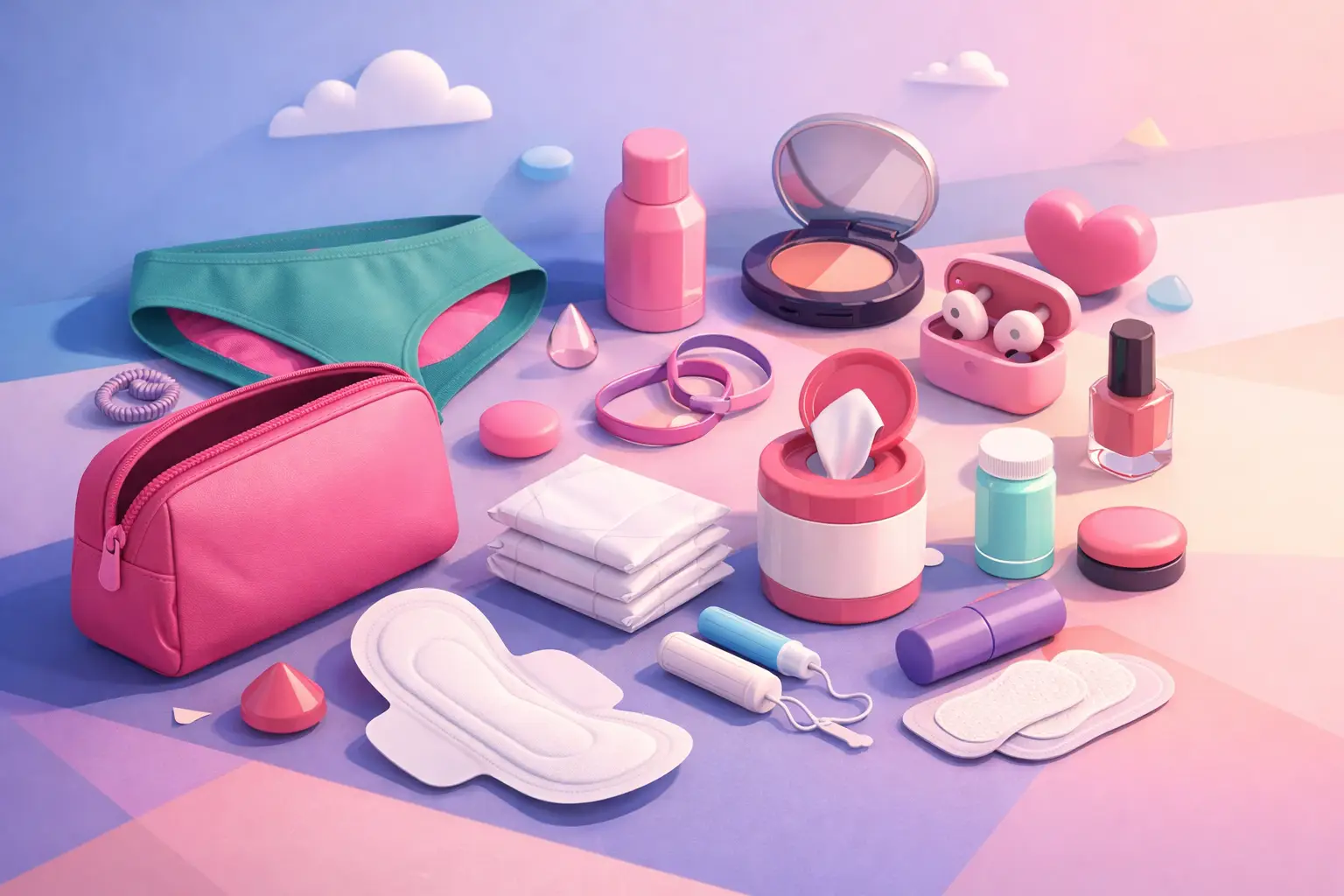
A first period can arrive during maths, at a sleepover or on the walk home – often before a teen feels fully prepared. The right teen first period essentials are not about carrying a huge bag of products. They are about having a few comfortable, reliable basics that make a new experience feel manageable, private and far less stressful.
Periods are a normal part of growing up, but no two are the same. Flow, timing, cramps and emotions can all vary, especially in the first year or two. A small kit, a simple plan and the reassurance that help is available can make a real difference.
What a first-period kit should actually include
A good first-period kit fits easily inside a school bag, PE bag or handbag. Choose a small pouch that does not draw attention and restock it after each period. There is no need to overpack, but it helps to cover the most likely situations.
Include four to six individually wrapped pads in a couple of absorbencies, plus a spare pair of clean underwear. A few tissues or unscented wipes can be useful for hands or a quick clean-up, although they should never be flushed. Add a small disposal bag for used pads when a bin is not immediately available, and a pain-relief option only if it is suitable for the teen and approved by a parent, carer or healthcare professional.
A spare pair of leggings, shorts or tights is worth keeping in a locker or school bag if possible. It may never be needed, but it removes the fear of a visible leak. For some teens, a discreet note with a trusted adult’s phone number or a little emergency cash also offers reassurance.
Start with pads, not pressure
For many teens, pads are the easiest place to begin. They are straightforward to use, do not require insertion and make it easier to notice how heavy or light the flow is. A pad with wings can help hold it in place during lessons, sport and walking between classes.
Thin pads are often more comfortable than teens expect. The best option should flex with underwear, feel dry against the skin and provide dependable coverage without feeling bulky. A regular pad may suit daytime use, while a longer night pad can offer more protection for sleep or for a heavier day.
Tampons, menstrual cups and period underwear may suit some people later on, but there is no deadline to try them. Starting with the product that feels least intimidating is a sensible choice, not a lesser one.
Choosing teen first period essentials for sensitive skin
The skin around the vulva can be easily irritated, particularly when it is warm, damp or exposed to fragranced products for several hours. That is why comfort should be treated as more than a nice extra. It is part of feeling secure enough to get through the school day without constant worry.
Look for pads designed with soft, breathable materials and avoid strongly scented options if they cause discomfort. Change pads regularly, generally every four to six hours or sooner when the pad feels full. On a heavier day, more frequent changes are often needed. Fresh protection helps reduce dampness, odour and the chance of rubbing.
For teens prone to rashes or irritation, it can help to choose skin-conscious period care with clear material information and a comfortable top layer. Elun pads are made for confidence across busy days and nights, combining a microplastic-free design with antibacterial nano ribbon technology to support freshness, dryness and comfort.
It is also wise to keep intimate hygiene simple. The vulva does not need perfumed sprays, deodorants or harsh washes. Warm water is usually enough for external washing, and a mild, unfragranced cleanser may be suitable for some people. If stinging, itching, swelling or a persistent rash develops, speak to a pharmacist, GP or sexual health clinic rather than trying to cover it up with scented products.
A school-day plan that feels discreet
The most useful period plan is one a teen can follow without having to announce it. Before leaving home, put the pouch somewhere easy to reach, such as the front pocket of a school bag. If a period is expected soon, wearing a panty liner or a light pad may offer peace of mind, but it should still be changed regularly.
At school, it helps to identify the toilets with sanitary bins and to know where support is available. This could be a form tutor, school nurse, pastoral lead, reception staff or a trusted teacher. Asking for a pad or a spare uniform is something school staff handle more often than teens may realise.
A quiet script can take the pressure out of the moment: “I’ve started my period and need to visit the toilet,” or “I need a sanitary product, please.” It does not need to be more complicated than that.
For PE, swimming and long journeys, planning matters a little more. A fresh pad before and after activity can feel more comfortable. Pads are not suitable for swimming, so a teen who wants to swim while bleeding may later decide to explore tampons or period swimwear with guidance from a trusted adult. Sitting out is also an option when cramps, heavy bleeding or anxiety make participation feel too difficult.
Know what is normal, and what deserves support
Early periods can be unpredictable. They may be light one month and heavier the next, arrive several weeks apart or skip a month. This is common while the body settles into a rhythm. Periods may last between two and seven days, and mild cramps, tiredness or mood changes can happen too.
Keeping a simple record in a calendar or phone app can make patterns easier to understand. Note the first day of bleeding, how long it lasts, whether the flow is light, medium or heavy, and any symptoms such as cramps or headaches. This information is useful for a teen’s own confidence and helpful if they ever need medical advice.
Some signs should not be brushed off. Speak to a GP or another healthcare professional if pain regularly stops a teen attending school or normal activities; bleeding lasts longer than seven days; periods are extremely heavy; or there is dizziness, fainting, unusual tiredness or breathlessness. It is also worth seeking advice if bleeding is happening very frequently, or if a teen has questions that feel too embarrassing to ask at home.
Heavy bleeding can look different for everyone, but changing a pad every hour or two for several hours, soaking through clothes or bedding often, or passing large clots are good reasons to ask for support. Getting checked is not overreacting. It is a practical way to protect health and peace of mind.
The emotional essentials matter too
A first period can bring relief, pride, embarrassment, confusion or all four before lunchtime. The goal is not to force excitement or make it a big event if a teen would rather keep things low-key. The best response is calm, factual and kind.
Trusted adults can normalise the basics: periods are not dirty, leaks happen, and asking for supplies is ordinary. Avoid teasing, surprise announcements or treating periods as a secret. Privacy should be respected, but shame does not need to be part of the story.
It can help to agree on a simple check-in routine. Perhaps a parent or carer asks whether the period pouch needs restocking, or a teen sends a short message if they need supplies picked up. That small bit of preparation builds independence without making them manage everything alone.
Build confidence one period at a time
The best teen period routine is rarely perfect from day one. A teen may prefer one pad for school, a longer one overnight, or a different style for sport. Their needs can change with flow, activity and comfort, so give products a fair try and adjust without fuss.
Keep the kit stocked, choose protection that feels gentle and secure, and make space for honest questions. With practical essentials close by and support that feels judgment-free, a first period becomes less of an emergency and more of another part of everyday life.