

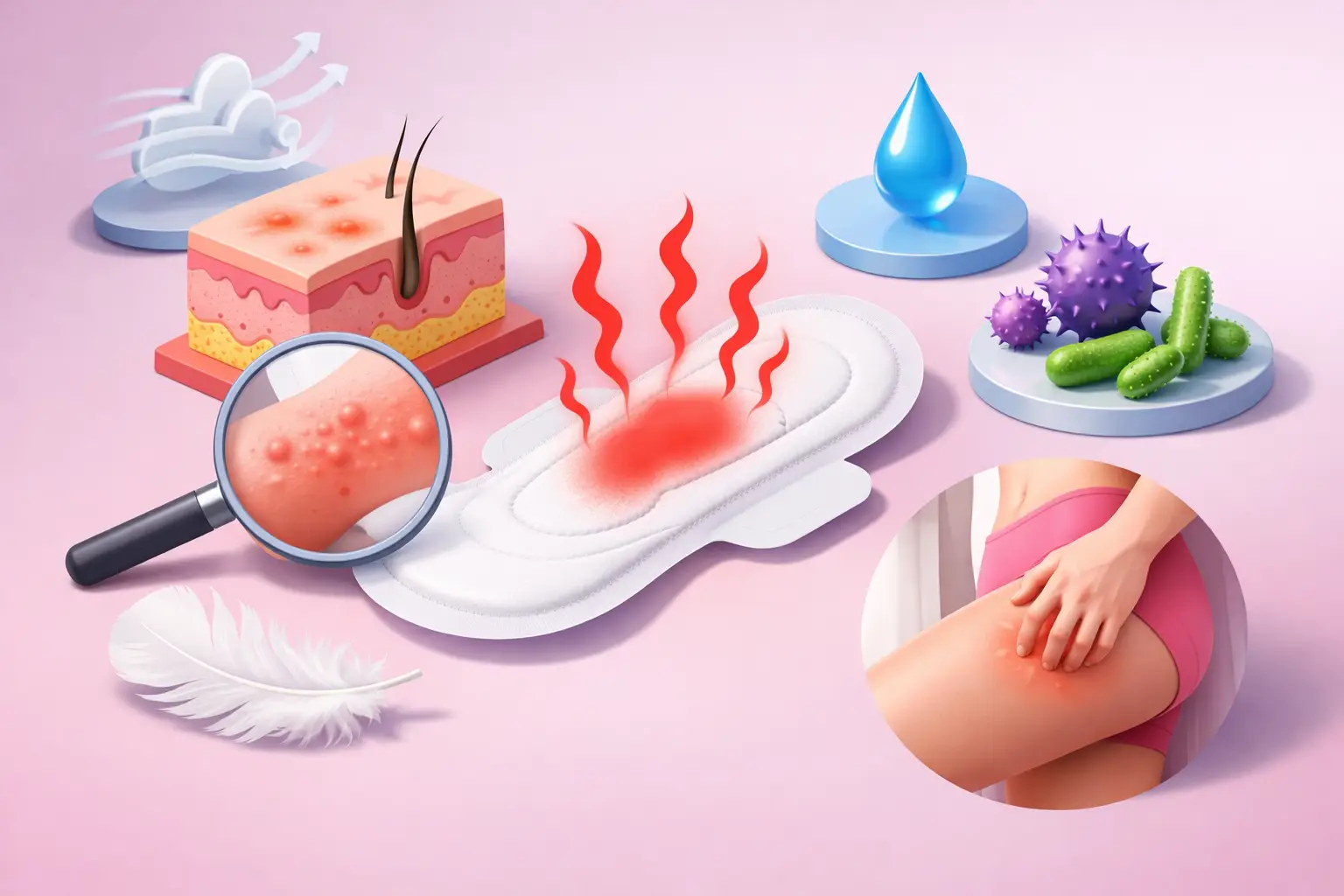
That familiar sting or itch halfway through your period can turn a normal day into a very uncomfortable one. If you have ever wondered why do pads cause itching, the short answer is that it is usually down to friction, trapped moisture, sensitivity to materials, or not changing your pad often enough. The good news is that itching is common, and in many cases, it can be reduced with a few simple changes.
Periods are uncomfortable enough without your pad making things worse. Skin in the vulval area is delicate, warm, and easily irritated, so even a product designed to protect you can sometimes trigger rubbing, dampness, or a reaction. Understanding what is behind the itch helps you choose better protection and feel more comfortable throughout the day.
Why do pads cause itching during your period?
Itching linked to pads is not usually caused by one single thing. More often, it happens when several factors build up at once. Blood, sweat, heat, movement, and prolonged wear can create the perfect conditions for irritation.
One of the most common reasons is friction. A pad sits close against the skin and moves with your body as you walk, sit, sleep, or exercise. If the top layer feels rough, bulky, or stiff, it can rub against the inner thighs or vulval area. That repeated contact may leave skin feeling sore, itchy, or slightly raw.
Moisture is another major factor. Menstrual flow, sweat, and natural discharge can leave the area damp for hours, especially on heavy days or during warm weather. When moisture stays trapped against the skin, irritation becomes more likely. Some people describe this as itching, while others notice burning or a mild rash.
Certain materials can also play a part. Fragrances, dyes, adhesives, plastics, and harsh surface layers may trigger sensitivity in some users. You do not need to have a diagnosed allergy for this to happen. Sometimes skin simply reacts badly to a product that feels too occlusive or contains ingredients it does not tolerate well.
Then there is wear time. Leaving a pad on for too long gives moisture, bacteria, and friction more time to build up. Even if a pad still seems absorbent, the surface may no longer feel fresh against the skin.
Common causes of pad-related itching
Friction and rubbing
Pads that are too thick, poorly fitted, or made with less flexible materials can chafe as you move. This is especially noticeable if you are walking a lot, travelling, or wearing tighter clothing. The skin may first feel warm or tender, then start to itch.
A pad that bunches up can be even more irritating because the same area is rubbed again and again. This is why comfort is not just about softness – shape, flexibility, and fit matter too.
Trapped heat and dampness
The vulval area needs airflow. If your pad holds heat and moisture close to the skin, that humid environment can leave you feeling itchy and less fresh. On heavier-flow days, overnight, or in summer, this can get worse quickly.
Pads designed to keep the top layer drier can make a real difference here. When the surface stays fresher for longer, there is less chance of prolonged wetness irritating the skin.
Sensitivity to fragrances or materials
Scented pads are a common problem for sensitive skin. Fragrance might seem appealing for odour control, but it can be harsh on intimate skin. Some people also react to dyes, synthetic top sheets, or adhesive components.
If itching starts soon after switching brands or trying a new product, sensitivity is worth considering. It does not always come with dramatic redness. Sometimes the main sign is simply ongoing discomfort that disappears when you stop using that pad.
Infrequent changing
Even a high-performing pad should be changed regularly. Once it becomes saturated or starts to feel damp, the skin is exposed to more moisture and more rubbing. This can lead to itchiness, odour, and a general feeling of irritation.
On busy days, it is easy to wait longer than you should. But skin comfort often improves quickly when pads are changed more often and the area is kept as clean and dry as possible.
When itching might be something else
Not every itch that appears during your period is caused by the pad itself. Sometimes the timing overlaps with another issue, and that is why symptoms do not improve even after changing products.
Thrush is one possibility. It often causes intense itching, soreness, and sometimes a thick white discharge. Bacterial vaginosis can also cause discomfort, though it is more often linked with a noticeable odour or unusual discharge than itching alone.
Skin conditions such as eczema, dermatitis, or psoriasis can flare in the genital area too, especially when exposed to heat, friction, or certain materials. If your skin is already reactive elsewhere on your body, this may be part of the picture.
If the itching is severe, lasts beyond your period, or comes with swelling, broken skin, unusual discharge, or pain, it is best to speak to a GP or pharmacist. A persistent itch deserves proper attention.
How to stop pads from making you itch
The first step is usually the simplest one: switch to a pad designed with comfort and sensitive skin in mind. A softer top sheet, better breathability, and a drier feel can all help reduce the triggers that cause irritation in the first place.
It also helps to change your pad regularly, even if your flow is not especially heavy. During the day, that may mean every few hours depending on your flow, activity level, and how fresh the pad still feels. At night, choosing a pad designed for longer wear and dryness can help reduce discomfort by morning.
Keep intimate cleansing gentle. Warm water is often enough. If you use a wash, choose one made for sensitive skin and avoid heavily fragranced products. Over-washing or using harsh soaps can strip the skin and make itching worse, not better.
Your underwear choice matters too. Breathable cotton underwear is usually kinder to irritated skin than synthetic fabrics that trap heat. If you are already sore, looser clothing for a day or two may help reduce rubbing.
And if a particular pad keeps causing the same problem, trust that signal. You do not need to push through discomfort just because a product works for someone else.
What to look for in a pad if you have sensitive skin
If your skin reacts easily, the best pad is usually one that focuses on dryness, softness, and fewer irritants. That means looking closely at what touches your skin, not just absorbency claims on the pack.
A soft, flexible surface can reduce chafing. Good absorbency helps prevent prolonged dampness. Fragrance-free options are often a safer choice if you are prone to sensitivity. It is also worth considering pads made without unnecessary harsh components.
For many people, freshness is not only about scent – it is about staying dry and hygienic. That is where better pad technology can genuinely improve comfort. Products designed to support cleanliness and reduce moisture build-up may help lower the chance of irritation over long wear.
At Elun, this is exactly why sensitive-skin comfort sits at the centre of product design. Pads that are clinically tested, rash-free, antibacterial, and 100% microplastic free can feel like a smarter fit for people who want reliable protection without the trade-off of constant irritation.
Why the right pad can change your whole period experience
When a pad feels wrong, you notice it all day. You shift in your seat, think about it while walking, and lose confidence during school, work, or sleep. That is why itching is not a small issue – it affects how secure and comfortable you feel in your own body.
The right pad should do the opposite. It should help you feel dry, protected, and able to get on with your day without distraction. For some people, that means thinner pads that move more naturally. For others, it means stronger absorbency at night or better odour control during long days out. It depends on your flow, your skin, and how your body responds.
If you have been dealing with irritation, it may be time to stop treating it as normal. Period care should support your comfort, not test it. A few careful changes in what you use and how often you change it can make your cycle feel much easier to manage.
If your pad leaves you itchy more often than comfortable, your skin is asking for something better – softer materials, better dryness, and protection that feels as reassuring as it performs.